
Iris weevil
Mononychus punctumalbum
Description
How to identify
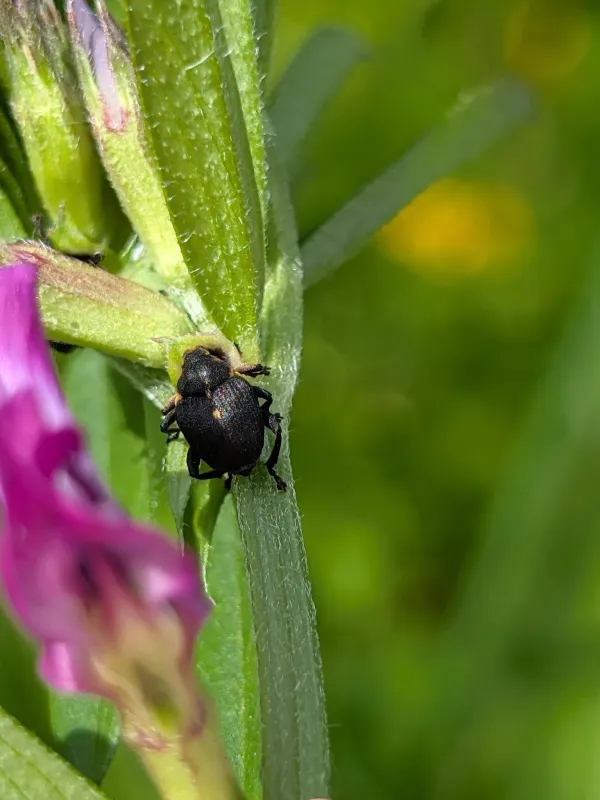
The iris weevil (Mononychus punctumalbum) is a small beetle belonging to the Curculionidae family. Measuring approximately 3–4 mm in length, the insect has a distinct black body with a characteristic white spot on its elytra, which serves as its primary identification mark.
The beetle possesses a long, slender snout typical of weevils, designed for drilling into plant tissues. These beetles are generally active during sunny periods, but when disturbed, they exhibit a characteristic behavior of falling to the ground and feigning death to escape detection.
The larvae of the iris weevil are legless, white in color, and have a darker head capsule. They are strictly endophagous, meaning they live and feed exclusively inside the reproductive parts of the iris plant, specifically within the seed pods or buds.
Pupation occurs within the plant tissue itself. Once the metamorphosis is complete, the young adult beetle bores a clean exit hole through the wall of the seed pod and emerges to begin feeding on the foliage and preparing for the next season.
This pest is remarkably persistent in established iris gardens. Because the adults often hibernate in the soil or under nearby plant debris, the local population can remain active in the same area for many consecutive years if not managed properly.
What it damages
The iris weevil feeds almost exclusively on members of the Iris genus. While it affects both ornamental hybrids and wild species, the damage is most pronounced during the stages of bud development and seed pod formation.
Adult beetles create small puncture wounds on the foliage and flower stalks while feeding. However, the larvae cause the most severe damage by consuming the developing seeds and internal tissues of the seed pods, effectively destroying the plant's reproductive potential.
Infested buds often fail to bloom or may become malformed. In conditions of high humidity, the wounds caused by adult feeding and oviposition can serve as entry points for secondary bacterial or fungal infections, leading to rot.
For gardeners and nursery professionals, the damage is primarily aesthetic and reproductive. A heavy infestation can ruin the seed harvest for commercial breeders and significantly decrease the visual appeal of an iris garden during the flowering season.
The extent of the damage is often proportional to the infestation density. In severe cases, nearly every seed pod on a plant can be colonized by larvae, resulting in the premature drying and shriveling of the seed-bearing structures.
When it appears
The adults emerge from their overwintering sites in the soil during early spring, once temperatures consistently reach 10–12 degrees Celsius. Initially, they feed on the young leaves before migrating to the emerging flower stalks.
The peak mating and egg-laying period coincides with the iris flowering stage. Females use their snouts to puncture the ovary or the base of the bud, where they deposit their eggs, ensuring the larvae have immediate access to nutrients.
The larval stage occurs throughout the summer months. During this time, the larvae grow inside the seed pods, steadily consuming the contents. This is the period when signs of their presence become most evident to the observant gardener.
New generation adults emerge toward the end of summer or early autumn. They feed briefly on the remaining green foliage before transitioning into a state of diapause in preparation for the winter months.
Overwintering takes place in the topsoil or under dense leaf litter. The weevils remain dormant throughout the winter, surviving freezing temperatures until the cycle begins anew with the warmth of the following spring.
Signs of infestation
The first indicator of an iris weevil presence is the appearance of small, circular holes in the leaves and flower buds, caused by adult feeding. A careful inspection of the plants during the early season can often reveal the beetles themselves.
- Small feeding holes on leaves and buds.
- Deformed, stunted, or prematurely wilting flower buds.
- Puncture marks on the surface of developing seed pods.
- Presence of dark excrement near the puncture sites on the plant.
- Internal consumption of seed pods resulting in a powdery, dark residue.
If you suspect an infestation, you can open a seed pod to check for the presence of the white, legless larvae. Their presence is usually confirmed by the hollowed-out interior of the pod and the accumulation of frass within the cavity.
Often, the plant will appear healthy from a distance even while the weevils are actively developing inside the buds. Therefore, a proactive inspection of the reproductive parts is necessary to catch the infestation before the adult beetles emerge.
Control measures
The most effective strategy for managing the iris weevil is good sanitation. Removing and destroying all dead iris foliage and debris in the autumn is crucial, as it eliminates the primary overwintering sites for the adults.
Hand-picking the beetles in the early morning, when they are less active, is a viable control method for small home gardens. Furthermore, collecting and disposing of infested seed pods before the young weevils emerge can significantly reduce the local population.
Chemical control can be implemented using systemic insecticides, which are effective because the larvae are hidden inside the plant tissues. Applications should be timed carefully to avoid harming pollinators that visit the iris flowers.
It is important to rotate insecticide products to prevent the weevils from developing resistance. Always follow the label instructions regarding application rates and the safety intervals required to protect beneficial insects.
Maintaining plant health through proper watering and soil fertilization enhances the irises' ability to withstand damage. When combined with consistent monitoring and diligent cleanup practices, the impact of the iris weevil can be kept to a manageable minimum.
Taxonomy
- Latin name
- Mononychus punctumalbum
- Order
- Coleoptera (beetles)
- Family
- Curculionidae
- EPPO code
- MOONPA
Discussion
No discussions yet — be the first.