
Thickback sole
Monochirus hispidus
Description
How to identify
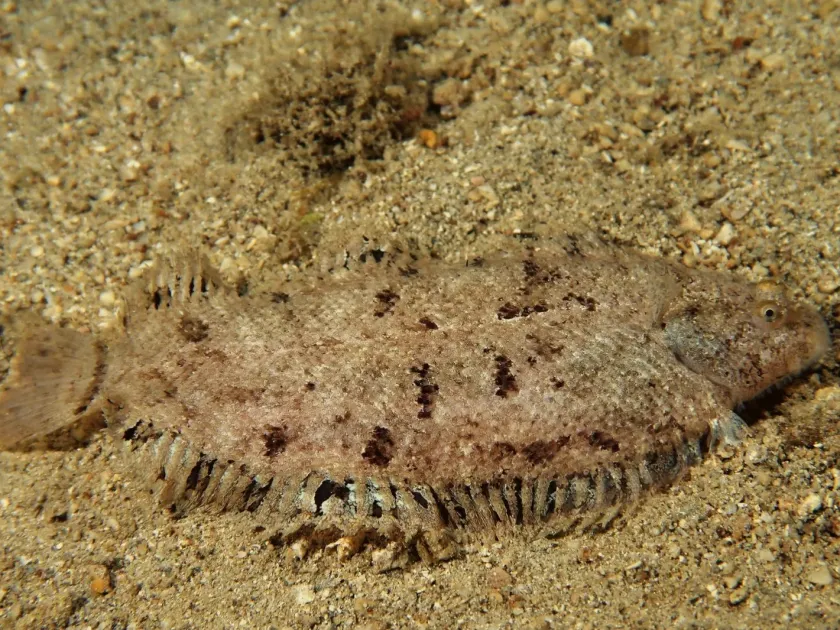
The thickback sole (Monochirus hispidus) is a benthic fish species belonging to the Soleidae family, order Pleuronectiformes. It is a flatfish characterized by its asymmetric appearance, with both eyes located on one side of its head.
Its skin is covered in small, coarse scales that create a rough, bristle-like texture. This unique feature, resembling coarse hair, is the primary reason for its common English name.
Usually growing up to 20 centimeters in length, the fish exhibits a mottled brown or grey color scheme that allows it to blend perfectly into sandy or muddy marine bottoms.
The species is highly adapted for a sedentary lifestyle, frequently burying itself in the substrate to avoid predators and to ambush its own prey.
While ecologically important for the marine ecosystem, its presence can be problematic in managed aquaculture environments where it interferes with human activities.
What it damages
The economic impact of the thickback sole is most significant within the aquaculture industry, particularly where mollusks or other small benthic organisms are farmed.
As a predatory species, it actively consumes the juvenile stages of farmed organisms, directly reducing the overall productivity of the aquatic farm.
The fish acts as a competitor for space and resources, which slows the growth rates of target species and negatively affects the profitability of marine operations.
Physical interference with underwater infrastructure, such as netting and protective enclosures, leads to increased operational costs for repair and maintenance.
In high concentrations, this species can disrupt the local biological balance within an enclosure, leading to further complications for farm managers.
When it appears
The activity of the thickback sole is primarily driven by water temperatures. Higher activity levels occur during the warmer summer months when metabolic rates are at their peak.
Spring marks the peak breeding season, during which the fish migrates toward shallower waters, significantly increasing the risk of interference with aquaculture facilities.
During colder periods, the fish becomes significantly less active and often buries itself deeper into the sediment to conserve energy until conditions improve.
Management teams should adjust their monitoring protocols based on seasonal water temperature changes to better predict when the fish might pose a higher threat.
Tracking the seasonal movement patterns helps in deploying defensive measures before the fish reach sensitive farm areas.
Signs of infestation
One of the earliest indicators of a thickback sole problem is an unexplained decline in the survival rate of juvenile stock within a controlled environment.
Physical evidence of digging or furrowing in the sandy substrate near the farm's perimeter often reveals the presence of these benthic fish.
Underwater camera systems can provide direct visual confirmation, showing the fish navigating around nets or foraging near the culture zones.
Damage to the mesh of protective nets, often appearing as localized tears or worn spots, serves as a strong indication of the fish's attempts to gain entry.
Behavioral changes in other local species, such as fleeing or avoidance, can also alert managers to the presence of an active predator like the thickback sole.
Control measures
The most effective strategy for managing this pest is the installation of high-quality, fine-mesh barriers that prevent the fish from accessing the farming zone.
Acoustic deterrent devices have shown promise in discouraging the fish from lingering near protected structures by disrupting their sensory perception.
Maintaining a clean farming environment by removing accumulated organic waste helps to reduce the local attractiveness for this scavenger and predator.
Consistent monitoring and early detection allow farm managers to react swiftly, minimizing the time the fish has to cause damage to the crop.
- Installation of fine-mesh protective barriers.
- Deployment of acoustic deterrent systems.
- Regular underwater facility inspections.
- Strategic removal of organic debris.
- Implementation of early-warning monitoring cameras.
Taxonomy
- Latin name
- Monochirus hispidus
- Family
- Soleidae
- EPPO code
- MNCHHI
Discussion
No discussions yet — be the first.