
Solenette
Buglossidium luteum
Description
How to identify
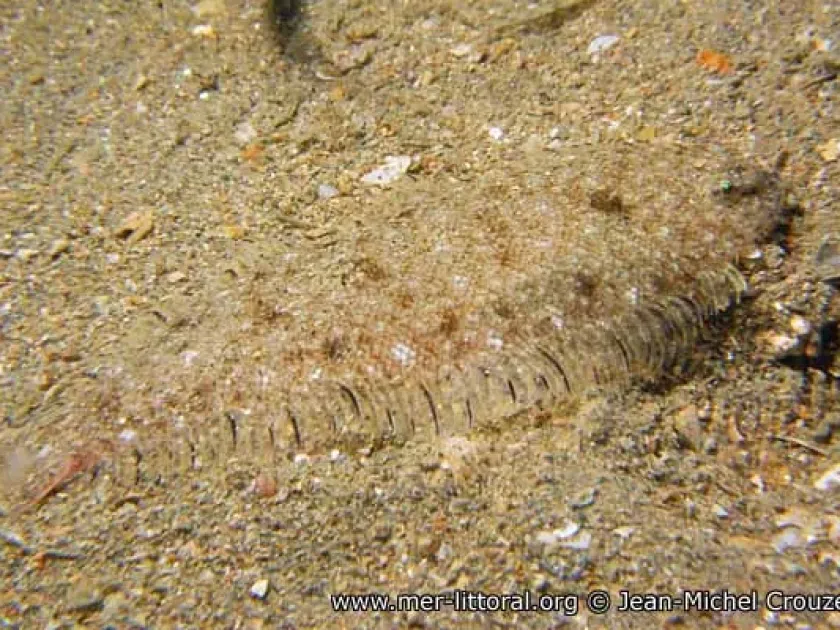
The Solenette (Buglossidium luteum) is a small species of flatfish belonging to the family Soleidae. It is commonly found in the waters of the North Sea and the Mediterranean.
Physically, the fish is characterized by a sand-colored, elongated body and dark, striped patterns on its dorsal and anal fins. It typically grows to a maximum length of 15 centimeters.
This species is strictly a marine organism. Its physiological adaptations, such as its gills and salt regulation systems, require it to live in marine environments throughout its entire lifespan.
The fish lives on sandy or muddy substrates, burying itself for camouflage. It is a benthic predator that feeds on tiny crustaceans and marine worms.
Because it is a marine fish, it has no biological connection to terrestrial agriculture or the cultivation of crops in fields or greenhouses.
What it damages
The Solenette does not cause damage to plants. It is physically impossible for this species to impact agricultural yields as it does not inhabit soil environments where plants grow.
There are no recorded instances of this fish acting as a pest in any agricultural system globally. It feeds exclusively on microscopic marine organisms found on the seabed.
Identifying this fish as a pest is a critical error in agronomic reporting. Farmers and researchers should ensure they are not confusing marine biology with soil-borne pest management.
No crops, whether cereal, vegetable, or horticultural, are affected by this fish. It is an ecologically distinct species with no interaction with human-grown agricultural assets.
Management of crop health should focus on documented pests such as insects, fungi, or weeds, rather than marine life that poses no threat to terrestrial vegetation.
Taxonomy
- Latin name
- Buglossidium luteum
- Family
- Soleidae
- EPPO code
- SOLALU
Discussion
No discussions yet — be the first.