
Small ambrosia beetle
Monarthrum minutum
Description
How to identify
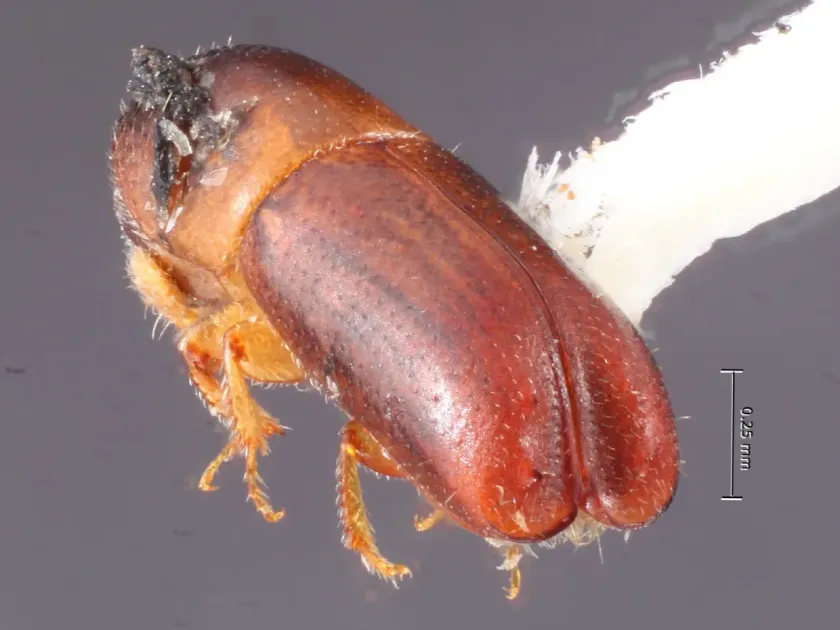
The small ambrosia beetle (Monarthrum minutum) belongs to the order Coleoptera and the family Curculionidae (subfamily Scolytinae). These tiny insects are specialized wood-borers that exhibit a high degree of dependence on symbiotic fungi.
Adult beetles typically possess a cylindrical, robust body shape, which is perfectly adapted for navigating narrow tunnels within the wood. Their coloration usually ranges from reddish-brown to dark brown, providing effective camouflage against tree bark.
These beetles are known as ambrosia beetles because they cultivate specific fungi within their galleries. Both the adults and their larvae rely entirely on these fungi for nutrition rather than consuming the woody tissue itself.
The life cycle involves complete metamorphosis, occurring entirely within the host tree. Females initiate gallery construction, creating a protected environment where they lay eggs and cultivate the fungal crop essential for larval growth.
Due to their sheltered life within the wood, these beetles are well-protected from environmental extremes and many natural predators. This life strategy allows them to successfully colonize various tree species.
What it damages
The small ambrosia beetle primarily targets weakened, stressed, or recently felled hardwood trees. Healthy trees with high resin or sap pressure are typically resistant to attack by these beetles.
The damage is caused by the tunneling activity of the beetles. These tunnels disrupt the tree's vascular system, hindering the movement of water and nutrients, which eventually leads to the decline or death of the affected tree.
Economic damage is largely related to the fungal staining of the wood. The ambrosia fungi that grow in the galleries leave characteristic dark streaks in the timber, significantly reducing its quality and commercial value for high-end lumber products.
In large-scale forest settings, the beetle can become a serious pest if management practices are poor. A high density of galleries weakens the structural integrity of the wood and makes the tree susceptible to secondary infections.
While often considered secondary pests that attack already compromised trees, large populations can overwhelm even relatively healthy trees in dense stands during periods of extreme environmental stress.
Signs of infestation
A primary sign of infestation is the presence of tiny entry holes in the bark of the trunk or branches. These are often accompanied by small piles of frass, resembling fine sawdust, pushed out by the beetles.
Dark, discolored streaks or patches on the surface of the wood, once the bark is removed, clearly indicate the presence of ambrosia fungal growth associated with beetle galleries.
Visible decline in canopy health, such as yellowing leaves or premature wilting, often serves as a secondary indicator that the internal damage to the tree's vascular system is severe.
Close inspection of the wood reveals intricate, branching tunnel patterns. These galleries are the definitive evidence of an active or past infestation by ambrosia beetles.
During the flight season, observing adult beetles landing on stressed trees or using pheromone traps are effective ways to confirm the presence of this species in a specific location.
Control measures
The most effective management strategy is strict forest sanitation. Prompt removal and destruction of infested wood, especially freshly cut logs, prevents the buildup of beetle populations.
Reducing the volume of slash and deadwood in the forest is essential to eliminate breeding sites. Proper site management discourages colonization by ensuring there are no suitable hosts available for the beetles.
Pheromone-based monitoring and trapping programs are useful for tracking population levels and reducing the number of active adults during the peak flight season, minimizing the risk of infestation.
For high-value trees in parks or landscapes, prophylactic insecticide sprays applied to the trunk can create a protective barrier against colonizing adults before they bore into the bark.
Regular forest health assessments are vital for early detection. Implementing a combination of silvicultural practices, such as thinning to improve tree vigor, is the best way to prevent outbreaks.
Taxonomy
- Latin name
- Monarthrum minutum
- Order
- Coleoptera (beetles)
- Family
- Curculionidae
- EPPO code
- MNTHMI
Discussion
No discussions yet — be the first.