
Monarthrum fasciatum
Monarthrum fasciatum
Description
How to identify
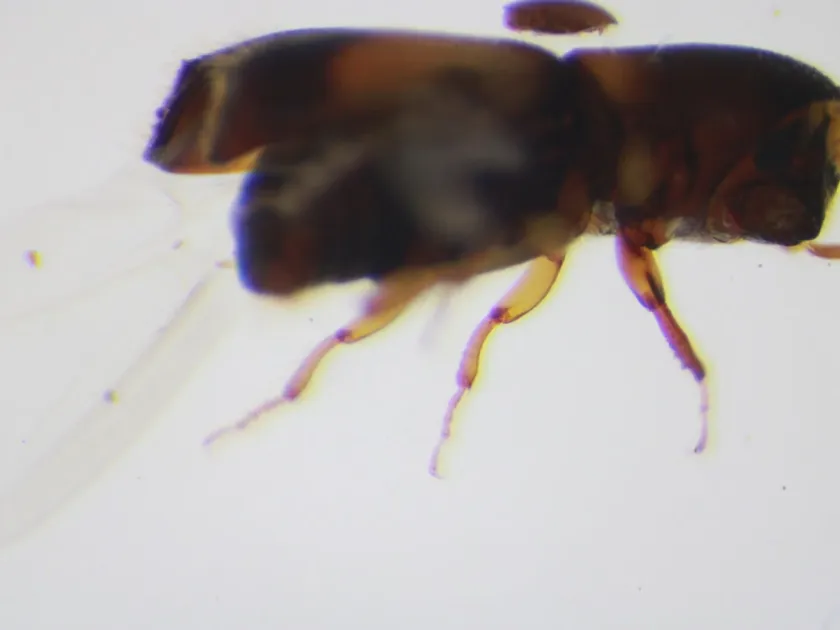
Monarthrum fasciatum is a species of beetle belonging to the family Curculionidae and the subfamily Scolytinae (bark beetles). These are small insects, typically measuring between 2.5 and 3.5 mm in length.
The body of the beetle is cylindrical and possesses a brownish hue. It is named for the distinctive pattern of alternating light and dark bands on its elytra (wing covers).
Adult beetles have functional wings, which allow them to migrate over long distances in search of suitable host trees for colonization and oviposition.
The larvae are legless, white to cream-colored grubs with a well-developed head capsule, specialized for feeding on wood within galleries constructed by the parents.
The beetles lead a cryptic life, spending most of their time beneath the bark or deep within the wood, which makes early detection quite challenging during inspections.
What it damages
The primary hosts for this pest include various hardwood tree species, with a particular affinity for oak trees (genus Quercus).
While the beetle typically attacks weakened, dying, or recently felled timber, high population densities may lead to colonization of relatively healthy trees.
Damage occurs due to the structural disruption of the wood, which degrades its quality for commercial use and renders the tree vulnerable to secondary fungal infections.
As the beetles bore into the wood, they destroy the vascular tissues of the tree, which can lead to the wilting of branches or the total mortality of the host.
The larval galleries often serve as inoculation points for ambrosia fungi, which have a symbiotic relationship with the beetle, further stressing the health of the infested plant.
When it appears
Adult activity typically begins in the spring, once temperatures remain consistently above 15–18 degrees Celsius, signaling the end of the overwintering period.
The reproductive phase and the colonization of new hosts are most intense during the summer months, from May through July, depending on the specific climate.
Depending on local environmental conditions and the availability of food sources, the species may produce one or two generations per year.
By autumn, adults seek shelter for the winter, moving into protected areas within the wood or the forest floor leaf litter to survive the cold season.
Overwintering occurs primarily in the adult stage within a phase of diapause, ensuring high survival rates even during harsh winter conditions.
Signs of infestation
The most visible sign of infestation is the presence of small entry holes, approximately 1–2 mm in diameter, on the surface of the tree bark.
Around these entry holes, one often finds "frass" or boring dust—fine wood particles ejected by the insects as they dig into the timber.
Removing a section of the bark often reveals a complex network of maternal galleries, which typically follow a characteristic radial or longitudinal pattern.
Discoloration of the foliage, including yellowing and premature leaf drop, is a clear indicator that the tree's vascular system has been compromised by the infestation.
Crown dieback and the appearance of secondary fungal stains on the trunk are reliable indicators that the pest colony is actively developing inside the wood.
Control measures
The most effective strategy is timely sanitary logging and the removal of infested trees before the next generation of beetles can emerge.
Maintaining high forest health and conducting regular monitoring prevents the accumulation of stressed or fallen trees that could serve as breeding grounds.
The use of pheromone traps is an effective tool for monitoring population density and capturing adults during their peak flight period to minimize new infestations.
In decorative or urban settings, systemic insecticides may be applied to trunks, although their effectiveness is limited by the beetle's internal lifestyle.
Encouraging natural enemies, such as insectivorous birds and predatory insects, is a sustainable way to keep the population of the pest below an economic threshold.
Taxonomy
- Latin name
- Monarthrum fasciatum
- Order
- Coleoptera (beetles)
- Family
- Curculionidae
- EPPO code
- MNTHFA
Discussion
No discussions yet — be the first.