
Moina macrocopa
Moina macrocopa
Description
How to identify
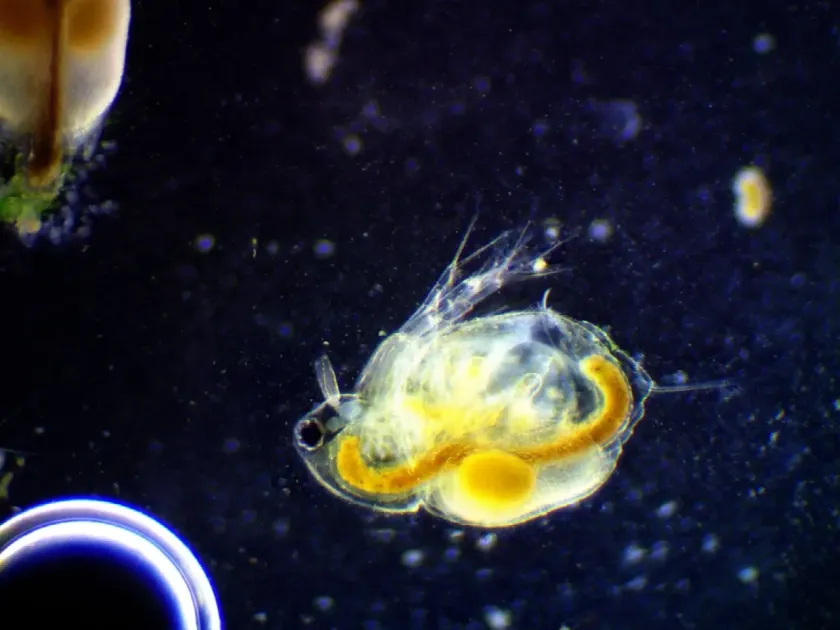
Moina macrocopa is a small cladoceran crustacean belonging to the Moinidae family. These organisms possess a semi-transparent, rounded body that typically reaches lengths between 1 and 1.5 millimeters.
The physical appearance of these individuals varies significantly depending on environmental conditions and life cycle stages. Females are generally larger and feature a dorsal brood chamber for embryo development.
Movement is achieved through jerky motions facilitated by large, feathered antennae. Unlike related species, they lack a prominent rostrum, which serves as a key identifying characteristic for microscopical inspection.
The biology of this species is characterized by rapid reproductive rates when organic nutrients are abundant. During favorable conditions, the population consists primarily of females reproducing parthenogenetically.
Under stressful environmental conditions, the population shifts to sexual reproduction, producing ephippia (resting eggs). These eggs are resistant to desiccation, freezing, and many chemicals, making total eradication highly difficult.
What it damages
This species is considered a pest primarily in aquaculture and hydroponic plant production. Although they do not consume plant tissue directly, their mass presence causes significant instability in aquatic systems.
In hydroponic setups, Moina thrives in nutrient solutions rich in organic matter. They compete with plants for dissolved oxygen and mineral nutrients, which can lead to stunted growth in sensitive crops.
Dense populations of these crustaceans can settle on plant roots, creating a physical barrier that hinders nutrient absorption. This stress often manifests as chlorosis or general wilting of the plants.
The waste products of a large Moina population quickly clog filters, pumps, and irrigation capillaries. This results in the disruption of nutrient delivery and mechanical failure of system components.
The presence of a significant population acts as a marker for excessive organic accumulation in the system, creating a favorable environment for secondary pathogenic infections that can damage plant root systems.
When it appears
The life cycle of this crustacean is closely linked to water temperature. Active reproduction typically occurs at temperatures between 15°C and 20°C, typical of the warm season.
Within enclosed greenhouse and hydroponic environments where a stable microclimate is maintained, Moina macrocopa can remain active throughout the year, causing ongoing management challenges.
Developmental pauses occur when food supplies are depleted or water pH shifts drastically. During these times, the population mass-produces resting eggs to survive until conditions improve.
Ephippia can remain viable on the surfaces of tanks or within substrate remnants for months. These eggs activate instantly once placed into a favorable aquatic environment with appropriate pH levels.
Population spikes are frequently correlated with the application of organic fertilizers, which trigger microbial blooms that serve as the primary food source for these small crustaceans.
Signs of infestation
A visual indicator of a pest presence is the appearance of numerous tiny, whitish dots moving in jerky, erratic patterns within the nutrient solution, creating a cloudy effect in the reservoir.
When the crustacean density reaches critical levels, the fluid becomes turbid. This turbidity cannot be removed via standard mechanical filtration due to the extremely small size of the individuals.
Gradual suppression of plant growth despite optimal nutrient levels is often an indirect sign that the rhizosphere is being overcrowded by these organisms.
Accumulation of biomass on filter elements and pump intakes is a clear sign of an advanced invasion. Clogging of irrigation tubes is a common consequence of such an infestation.
An unusual, foul odor emanating from the nutrient solution indicates the decay of dead individuals, which significantly lowers oxygen levels and negatively impacts the overall health of the system.
Control measures
The primary control measure is maintaining strict sanitary standards. It is essential to minimize the accumulation of organic waste in the system by regularly flushing all hydroponic unit components.
- Installation of UV sterilization systems to neutralize planktonic organisms in the nutrient solution.
- Regular and complete replacement of the nutrient solution upon the first signs of water cloudiness.
- Thorough disinfection of empty reservoirs and irrigation lines between crop cycles using safe, agricultural-grade disinfectants.
- Monitoring and maintenance of proper oxygen levels to eliminate stagnant water pockets.
While biological control agents may be used in large-scale aquaculture, intensive hydroponics requires a focus on rigorous mechanical maintenance and preventive system cleaning to mitigate infestations.
The use of chemical pesticides against these crustaceans must be strictly regulated to avoid phytotoxic effects on the crops and to ensure compliance with food safety protocols.
Taxonomy
- Latin name
- Moina macrocopa
- Family
- Moinidae
- EPPO code
- MOINMA
Discussion
No discussions yet — be the first.