
Mitrastethus baridioides
Mitrastethus baridioides
Description
How to identify
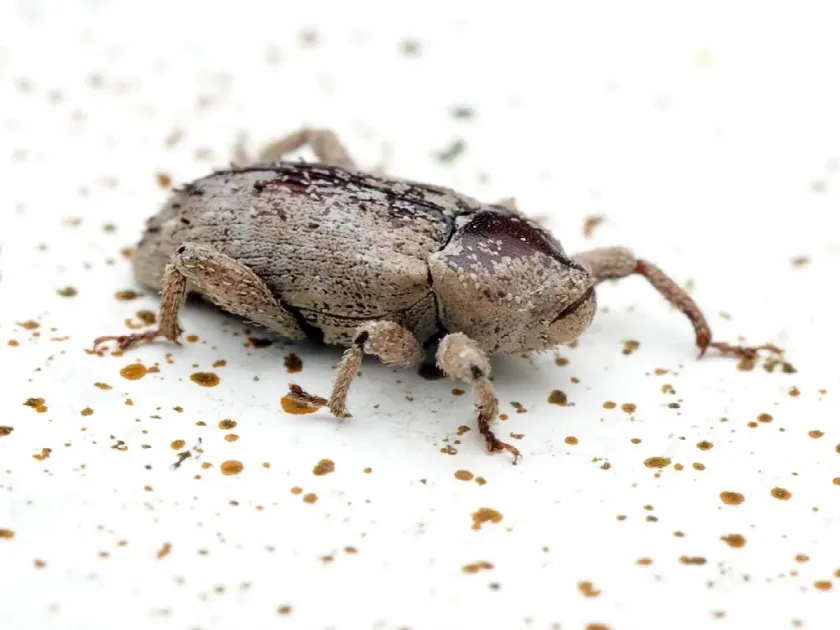
Mitrastethus baridioides is a small species of weevil belonging to the family Curculionidae. These beetles are characterized by their elongated rostrum, which is specialized for feeding on and boring into plant tissues.
The adults are typically dark brown to black in color, providing them with excellent camouflage against the stems and bark of their host plants. Their small size makes them difficult to spot during routine plant care, often remaining unnoticed until significant damage occurs.
The larvae are apodous (legless) and possess a creamy white color, which helps them blend into the internal tissues of the plant stems where they reside. They are rarely seen on the surface, living exclusively inside the plant structures.
Their life cycle is highly influenced by environmental factors, particularly humidity. In greenhouse conditions, where moisture levels are maintained, these insects can complete multiple generations throughout the year, leading to rapid population growth.
Adult beetles are capable of flight, which allows for the rapid colonization of nearby plants within a greenhouse or nursery setting, making isolated infestations difficult to contain without strict measures.
What it damages
This weevil primarily targets epiphytic plants, with a strong preference for various orchid species. The damage occurs when adults feed on the tissues and females lay eggs, which subsequently hatch into larvae that bore deep into the stems and rhizomes.
The internal boring activity of the larvae disrupts the vascular system of the orchid, preventing the effective transport of water and nutrients. This leads to a gradual decline in the plant's health, often manifested as wilting and stunted growth.
Mechanical damage caused by boring creates pathways for secondary fungal and bacterial infections. Once these pathogens enter the plant through the holes created by the weevils, the plant often begins to rot from the inside out.
In commercial orchid production, Mitrastethus baridioides can be a significant threat, causing loss of aesthetic value or complete plant death. Young and weakened plants are particularly susceptible to severe damage due to their delicate tissue structure.
Often, by the time the external symptoms like yellowing leaves or loss of turgor become visible, the internal stem tissue is already heavily compromised, making the recovery of the affected plant extremely difficult.
Signs of infestation
The most noticeable sign of an infestation is the appearance of tiny circular holes on the surface of pseudobulbs or stems. These are usually the exit holes of adult beetles or entry points for oviposition.
Stunted growth or a sudden failure to produce new roots and leaves is a strong indicator of an internal problem. If a healthy plant stops growing without a clear environmental cause, it should be examined for internal pests.
Excrement from the larvae, which resembles fine sawdust, may be found at the base of the plant or around the entrance holes. This fine debris is a characteristic sign of active boring behavior within the plant tissue.
Necrotic patches around the holes often indicate that secondary infections have set in. These areas might feel soft or mushy to the touch, which is a symptom of progressive tissue decay caused by the pest-pathogen complex.
In some cases, adult beetles can be observed resting on the plant or crawling on the substrate, especially during the night or early morning hours. Regular nighttime inspections can be an effective way to confirm the presence of this pest.
Control measures
The first line of defense against Mitrastethus baridioides is a strict quarantine protocol for all new plants entering a collection. Isolating new specimens prevents the accidental introduction of the beetle into established populations.
Chemical control strategies typically involve the use of systemic insecticides. These are absorbed by the plant and translocated into the tissues, where they provide protection by poisoning the larvae that feed internally.
Mechanical control includes the pruning and destruction of infested plant parts. If an infestation is localized, cutting away the damaged portion of the stem or rhizome can sometimes save the plant, provided the infected tissue is completely removed.
Proper hygiene is essential; tools used for pruning should be sterilized between plants to prevent the transfer of pathogens or eggs. Maintaining an optimal environment also helps plants remain resilient to pest attacks.
- Strict quarantine for all new plant acquisitions.
- Use of systemic insecticides to target internal larvae.
- Regular inspection of stems and pseudobulbs for tiny holes.
- Immediate removal and burning of heavily infested material.
- Sterilization of pruning tools to prevent secondary disease spread.
Taxonomy
- Latin name
- Mitrastethus baridioides
- Order
- Coleoptera (beetles)
- Family
- Curculionidae
- EPPO code
- MTRSBA
Discussion
No discussions yet — be the first.