
Mimoschinia rufofascialis
Mimoschinia rufofascialis
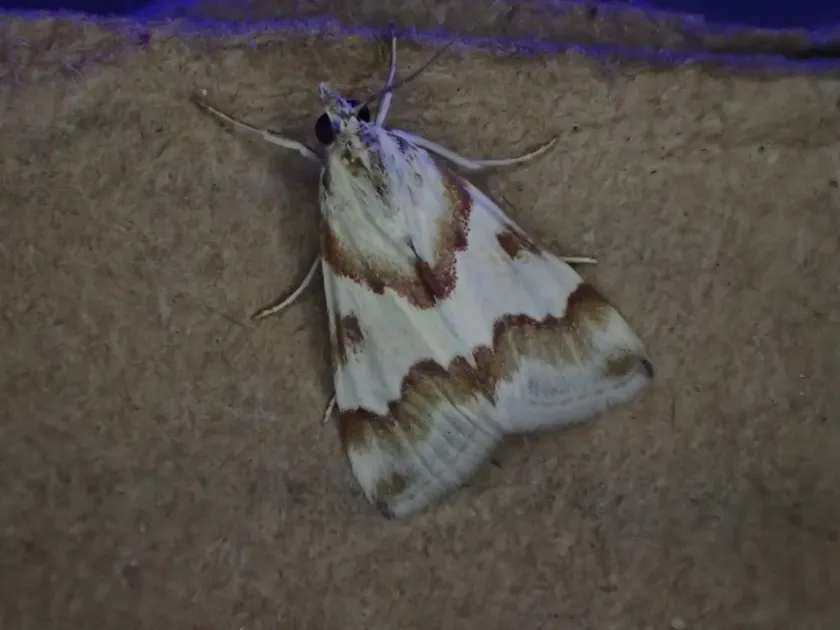
Description
How to identify
Mimoschinia rufofascialis is a moth belonging to the Crambidae family, commonly known for its larvae's impact on agricultural productivity.
The adult moth features a wingspan of approximately 20 to 25 mm with ochreous-yellow forewings decorated with distinctive reddish-brown bands.
The larvae are typically characterized by a cylindrical body shape and the presence of small, dark, sclerotized spots known as pinacula that host fine bristles.
As they develop, the larvae transition through several instars, often changing in color from greenish-yellow to a darker, earth-toned brown.
The pupal stage occurs within a silk cocoon, which is usually buried in the soil or hidden inside damaged plant tissues to survive the winter season.
What it damages
This pest is a notable polyphagous insect that primarily targets plants within the Malvaceae family, most notably cotton crops.
The larvae are particularly damaging because they bore into the generative parts of the plant, such as buds, flowers, and developing bolls.
Once inside a boll, the larvae feed on the developing seeds and fiber, causing irreversible structural damage to the future harvest.
Heavy infestations can lead to massive shedding of buds and flowers, resulting in significant yield loss for the agricultural producer.
Furthermore, the entry holes created by the larvae provide an open pathway for secondary fungal and bacterial infections to enter the plant tissues.
When it appears
Adult moths emerge in late spring or early summer, synchronized with the onset of favorable temperatures that support mating and oviposition.
The life cycle is rapid under warm conditions, allowing the pest to complete a generation in as little as three to four weeks, facilitating population spikes.
Multiple generations can occur throughout the growing season, with the population density often peaking during the mid-summer months.
Activity is largely nocturnal, making the initial stages of the infestation difficult to detect without systematic field monitoring and lighting traps.
The overwintering phase is completed in the pupal stage, buried in the soil, which provides the necessary protection from cold snaps and environmental stress.
Signs of infestation
Early symptoms of an infestation include small, clean holes bored into the buds and flowers, often accompanied by the presence of dark excrement.
Plants infested with larvae often exhibit visible flower drop, a clear indicator that the reproductive development is being disrupted by the pest.
The presence of fine webbing on the surface of bolls or between stems suggests that larvae are feeding or preparing for pupation nearby.
Plants affected by the larvae may show patches of premature yellowing or necrosis on the surrounding leaves due to internal nutrient pathway disruption.
Field inspectors can identify the presence of the pest by performing manual dissection of suspect bolls, where larvae or their feeding tunnels are easily visible.
Control measures
Effective management requires an integrated approach that focuses on both preventive agronomic practices and reactive chemical measures.
Post-harvest plowing is an essential practice to expose pupae in the soil to predators and adverse weather conditions, significantly reducing the starting population.
Sanitation efforts, including the removal of wild Malvaceae weeds around the fields, are crucial for eliminating alternative host habitats.
Chemical control should be applied based on economic thresholds, targeting the early instar larvae before they bore deep into the plant tissues.
- Deploying pheromone traps for consistent monitoring of flight activity.
- Using biological control agents like Trichogramma for egg parasitism.
- Regular field inspections during the critical budding and flowering stages of the crop.
Taxonomy
- Latin name
- Mimoschinia rufofascialis
- Order
- Lepidoptera (butterflies)
- Family
- Pyralidae
- EPPO code
- MIMORU
Discussion
No discussions yet — be the first.