
Mimallo amilia
Mimallo amilia
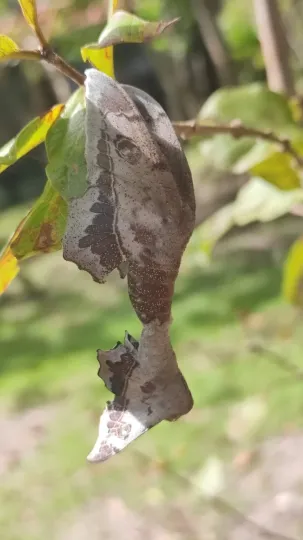
Description
How to identify
Mimallo amilia is a species of moth belonging to the Mimallonidae family. Members of this family are known for their distinct wing structure and morphological adaptations that allow them to blend into their natural environment.
Adult moths are typically stout with dense pubescence, which serves both as camouflage and protection against fluctuating temperatures in their native habitats.
The larvae, or caterpillars, of Mimallo amilia are characterized by their habit of constructing protective shelters out of host plant foliage. This behavior is a primary diagnostic feature for field identification.
Systematically, this species falls under the order Lepidoptera. Detailed morphological examination of the larvae, particularly their mouthparts and body segments, is required for accurate taxonomic classification.
Field monitoring is best conducted using pheromone traps, as adult moths are primarily nocturnal or crepuscular, making them difficult to spot during daylight hours.
What it damages
The larvae of Mimallo amilia feed on the leaves of various trees and shrub species. This defoliation reduces the plant's photosynthetic capacity, directly impacting its growth and vigor.
Severe infestations can lead to significant canopy loss, weakening the host plant and making it more susceptible to secondary infections, diseases, or environmental stress.
Early instar damage often appears as skeletonized leaves, where the larvae consume the soft leaf tissue, leaving behind only the tough vascular vein network.
Repeated damage over several seasons can lead to stunted growth, reduced fruit quality in orchard crops, and, in severe cases, the death of young saplings.
Bud feeding is particularly harmful, as it disrupts the tree's natural development and lateral branching patterns, leading to deformed growth habits.
When it appears
The life cycle of Mimallo amilia is synchronized with the vegetative season of its host plants. Larval activity typically peaks during the spring and summer months when foliage is most abundant.
Overwintering usually occurs in the pupal stage. These pupae are often found encased in protective cocoons hidden within leaf litter or deep crevices in the tree bark.
Emergence of adult moths usually correlates with the full leaf-out phase, ensuring that the next generation of larvae has immediate access to food upon hatching.
Depending on local climatic conditions, multiple generations may occur within a single year, which necessitates careful timing of monitoring and control interventions.
Scouting for early instar activity should begin as soon as temperatures rise and buds start to open in the spring, as this is when control is most effective.
Signs of infestation
The most prominent sign of infestation is the presence of leaves that are folded, rolled, or webbed together to form larval shelters or cases.
Accumulated frass, or larval excrement, on the surfaces of lower leaves or branches often indicates a high concentration of caterpillars in the canopy above.
Irregular, skeletonized patches on leaves that enlarge over time are clear evidence of larval feeding activity occurring within the foliage.
The presence of abandoned or current cocoons attached to twigs or bark serves as a diagnostic sign that the pest has completed or is completing its life cycle in the area.
Using light traps during peak adult flight periods can confirm the presence of the population and help in forecasting potential damage for the next generation.
Control measures
An integrated pest management (IPM) approach is recommended to effectively control Mimallo amilia populations while minimizing environmental impact.
- Sanitation: Remove and destroy infested plant debris and leaf litter to eliminate overwintering pupal sites.
- Biological control: Utilize formulations of Bacillus thuringiensis, which are effective against lepidopteran larvae while sparing many beneficial insects.
- Manual removal: Pruning and disposing of infested branches containing larval shelters can suppress local populations in small-scale settings.
- Natural enemies: Encouraging populations of native predators and parasitoids can provide significant long-term biological control.
- Chemical control: Apply systemic insecticides when monitoring confirms that the larval population exceeds the economic threshold, following local regulations.
Taxonomy
- Latin name
- Mimallo amilia
- Order
- Lepidoptera (butterflies)
- Family
- Mimallonidae
- EPPO code
- MIMLAM
Discussion
No discussions yet — be the first.