
Mimallo
Mimallo
Description
How to identify
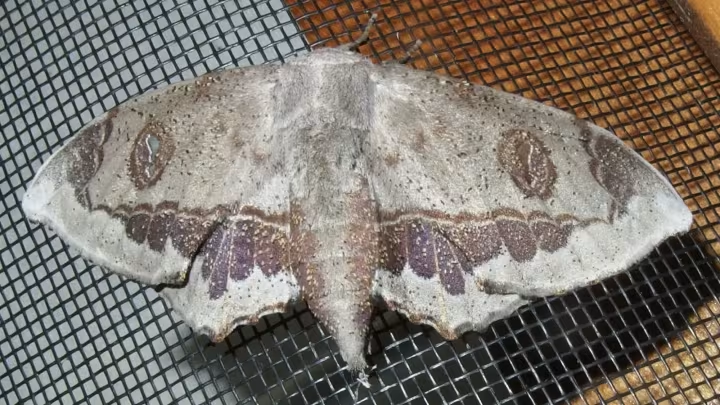
Mimallo is a genus of insects belonging to the order Lepidoptera and the family Mimallonidae. These moths are recognized for their distinct physical characteristics and specific wing venation patterns that define the group.
Adult moths often display cryptic coloration, blending seamlessly with tree bark or withered leaves, which serves as a highly effective camouflage against avian predators.
The larval stage is the primary focus for pest management. Larvae may possess specialized physical structures or warning colors to deter threats during their active feeding periods.
The life cycle follows a complete metamorphosis, including egg, larva, pupa, and adult stages, each adapted to survive in specific environmental conditions.
Identifying the pest requires careful observation of foliage and branches, where caterpillars often seek shelter or feed primarily during the twilight or night hours.
What it damages
The damage is primarily caused by caterpillars that feed on the foliage of various woody plants, leading to severe defoliation if the population density is high.
Feeding behavior often targets both young leaves and tender buds, which significantly reduces the growth potential and overall vigor of the host plant.
While adult moths do not cause direct mechanical damage to plants, their role in reproduction and site selection for egg-laying is critical to the expansion of infestations.
Weakened plants resulting from extensive leaf loss become susceptible to secondary stressors, including opportunistic fungal infections and attacks by wood-boring insects.
Economic losses are particularly high in nursery settings and forest plantations, where the aesthetic quality and growth rate of young trees are essential for commercial value.
When it appears
The seasonal activity of Mimallo is closely tied to the host plants' vegetative cycles, with peak activity coinciding with the abundance of fresh foliage.
Overwintering usually occurs in a protected state, such as a pupa within a tough cocoon or as eggs deposited on the bark, ensuring survival through harsh weather.
Larval emergence typically correlates with the spring flush of leaves, providing an immediate food source that is vital for the rapid development of the first generation.
The number of annual generations is dependent on regional climatic factors, including cumulative temperature and humidity levels, which influence development rates.
Monitoring throughout the spring and summer is essential for detecting the initial presence of the pest and preventing a rapid population buildup in managed areas.
Signs of infestation
Key indicators of an infestation include skeletonized leaves or irregularly chewed margins, which are characteristic of larval feeding activity.
The presence of fecal pellets (frass) on the ground under the tree canopy or silk nests among the leaves are clear signals that larvae are actively feeding nearby.
Deformation or localized tissue death on young shoots often reveals where caterpillars have focused their feeding efforts on emerging buds and tender stems.
Egg clusters deposited on bark or the underside of leaves may be visible upon close inspection and are early signs of an impending larval outbreak.
Abnormal leaf drop or chlorosis during the active growing season can also indicate that the tree is suffering from chronic feeding pressure by the pest.
Control measures
Cultural control strategies include maintaining plant health through proper fertilization and irrigation, which helps trees recover more quickly from defoliation.
Biological control involves the use of environmentally friendly products, such as microbial insecticides based on Bacillus thuringiensis, to target larvae selectively.
When necessary, chemical intervention using systemic insecticides can provide control, although these should be applied judiciously to minimize impact on pollinators.
Promoting a diverse ecosystem by encouraging natural enemies, such as parasitic wasps and predatory birds, can keep populations below the economic injury level.
Regular monitoring with pheromone traps for adult moths allows for the precise timing of control measures, ensuring maximum efficacy during the most vulnerable life stages.
Taxonomy
- Latin name
- Mimallo
- Order
- Lepidoptera (butterflies)
- Family
- Mimallonidae
- EPPO code
- MIMLSP
Discussion
No discussions yet — be the first.