
Southern vole
Microtus rossiaemeridionalis
Description
How to identify
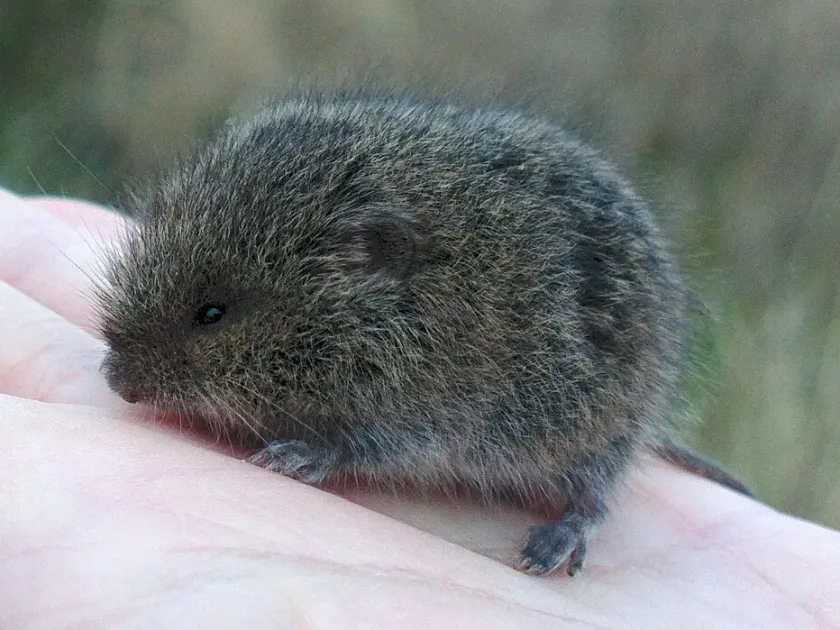
The Southern vole is a rodent belonging to the Cricetidae family. It is a small mammal with a stocky body, short ears, and a tail that usually measures less than one-third of its total body length, helping it to adapt to subterranean life.
The fur color typically ranges from greyish-brown to ocher-grey on the dorsal side, while the belly is lighter. Adults usually reach a length of 10–12 cm and weigh between 30 and 50 grams, making them very agile.
These voles are highly social animals that live in colonies, creating complex burrow systems. These burrows consist of numerous entrances, tunnels, and dedicated chambers for nesting and food storage.
They are primarily nocturnal or crepuscular, meaning they are most active during dawn, dusk, and at night. Their high level of activity allows them to cover significant distances in search of food during the growing season.
Identification of this species is visually difficult compared to other common vole species, often requiring expert analysis of teeth structure or chromosomal counts to distinguish them accurately in field studies.
What it damages
The Southern vole causes significant economic damage by feeding on various field crops. Winter cereals like wheat and rye are particularly vulnerable during their early developmental stages in autumn and early spring.
Perennial grasses, including alfalfa and clover, suffer as voles consume both the foliage and the root systems. This weakens the plants, reduces overall biomass, and significantly lowers the quality of fodder production.
In orchards and nurseries, these rodents represent a major threat during winter. They often strip the bark from the trunks of young trees at the base, which can lead to tree death or permanent physiological impairment.
Vegetable crops and root vegetables such as sugar beets are also frequently targeted. Voles tunnel into the roots, rendering the crop unmarketable and susceptible to rot and secondary fungal infections.
High population densities can cause complete destruction of crop patches, leading to uneven stands and forcing farmers to engage in costly reseeding operations or intensive pest control measures.
When it appears
Southern voles can reproduce almost year-round if the climate is mild and food supplies are abundant. However, the most intense periods of population growth occur in the spring and autumn seasons.
Spring serves as the start of the primary reproductive phase, as warmer temperatures and the availability of fresh green vegetation trigger high breeding rates, with females producing several litters per season.
During the peak of summer, population growth might stabilize or slow down due to heat and potential drought, but in irrigated agricultural ecosystems, the breeding cycle often remains uninterrupted.
Autumn brings a surge in population as young voles migrate from harvested fields toward winter wheat crops, field margins, and stored forage stacks to establish their winter nesting sites.
Winter is a critical season where survival depends on snow cover. Snow acts as an insulator and protects the voles from predators, allowing them to feed on the root collar of plants and winter crops beneath the surface.
Signs of infestation
The most visible sign of infestation is the presence of numerous burrow entrances concentrated in specific areas of the field. These are often accompanied by piles of loose soil thrown out during excavation.
Well-trodden pathways or trails connecting burrows to feeding areas are strong indicators of vole presence. These trails remain visible through tall grass and crop foliage during the active season.
Damaged plants exhibit distinct signs of gnawing, often appearing as cleanly cut stems or chewed roots. In orchards, irregular, jagged wounds on the bark near the soil line are typical signs of vole activity.
The accumulation of small, cylindrical droppings near tunnel entrances is another clear sign of a highly active colony residing in that location.
- Visible networks of surface runways.
- Clusters of burrow openings on field edges.
- Stem and root collar gnawing on young crops.
- Bark damage on saplings.
- Reduced stand density in specific patches.
Control measures
Deep plowing in autumn is the most effective cultural method to destroy burrow systems, expose the rodents to predators, and eliminate their food caches, significantly reducing the local population.
Effective management includes keeping field borders and margins free of weeds and tall grass, as these areas serve as primary refuges for voles before they invade cultivated crop fields.
Chemical control involving the use of rodenticides applied directly into burrows is a common and effective practice. This minimizes the risk to non-target wildlife while effectively treating the colony.
Biological control measures, such as providing nesting boxes or perches for birds of prey like hawks and owls, can help maintain a natural balance and reduce vole numbers during the growing season.
Regular monitoring of burrow density is essential for integrated pest management. Keeping records of infestation levels helps farmers apply interventions precisely when needed, preventing population explosions.
Taxonomy
- Latin name
- Microtus rossiaemeridionalis
- Order
- Rodents
- Family
- Muridae
- EPPO code
- MICRRO
Discussion
No discussions yet — be the first.