
Meadow vole
Microtus pennsylvanicus
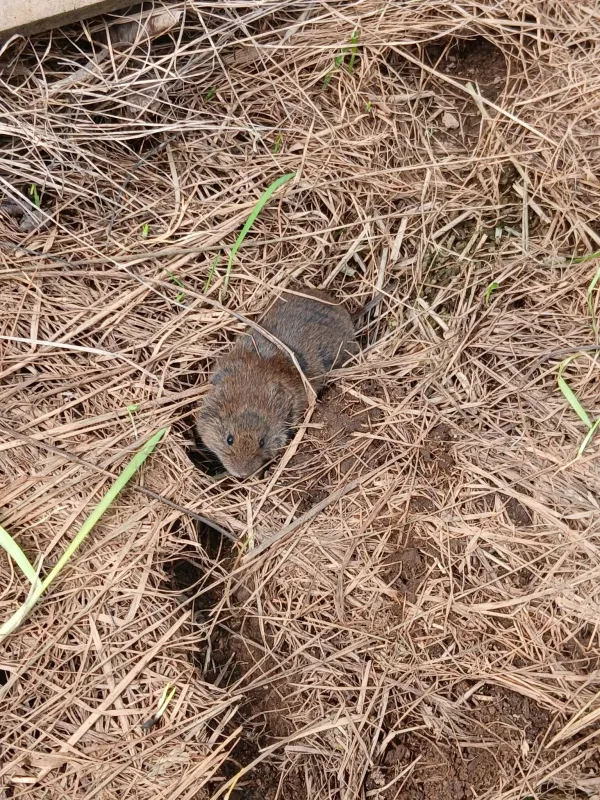
Description
How to identify
The meadow vole (Microtus pennsylvanicus), also known as the field vole, belongs to the Cricetidae family. It is a stocky, short-tailed rodent with small ears that are partially hidden by its dense fur.
Adults typically have a dark brown or greyish-brown dorsal coat, while the underside is usually lighter, ranging from grey to silver. They measure approximately 10 to 13 centimeters in length.
These rodents are active year-round and do not hibernate. They are known for their explosive reproductive potential, which can lead to rapid population booms in favorable environments.
Meadow voles primarily inhabit areas with heavy grass cover, such as meadows, orchards, and field margins, where they construct elaborate surface runways and underground burrow systems.
Their ability to thrive in diverse agricultural landscapes makes them a persistent threat to farmers, especially during cyclical periods of high population density.
What it damages
Meadow voles are significant agricultural pests that destroy cereal crops by feeding on newly germinated seeds and girdling the stems of young plants, leading to stand reduction.
In orchards and nurseries, they cause severe economic damage by gnawing on the bark of fruit trees near the root collar, often leading to the death of the entire tree.
These rodents cause extensive loss to vegetable production, particularly in crops like potatoes, carrots, and sweet potatoes, by feeding on tubers and roots both in the field and in storage.
They severely impact pasture and hay production, reducing the quantity and quality of forage available for livestock and damaging the structural integrity of the soil through burrowing.
Furthermore, their presence causes widespread food contamination, as their urine and droppings introduce pathogens, rendering crops unsuitable for commercial distribution or consumption.
Signs of infestation
A primary sign of infestation is the presence of distinct, well-worn runways through the grass, which are roughly 5 cm wide and connect active burrow entrances.
Multiple burrow openings in the ground, often surrounded by small piles of excavated soil and chewed plant debris, are clear indicators of a vole colony.
Signs of gnawing on the bark of trees near the ground surface, particularly occurring during winter months under snow cover, indicate vole-induced tree damage.
The discovery of spherical nests made of woven dried grass, located on the soil surface under matted vegetation or snow, confirms the presence of active breeding sites.
Frequent sightings of small, dark-colored droppings along the runways or near feeding stations are definitive evidence of a resident meadow vole population.
Control measures
Mowing field margins and removing tall vegetation around agricultural sites is the most effective cultural control method, as it reduces cover and exposes voles to predators.
To protect valuable saplings, installing physical barriers like wire mesh or plastic tree guards around the base of the trunk effectively prevents girdling damage.
Encouraging natural predators such as hawks, owls, and foxes by providing nesting boxes and natural habitats helps maintain lower, more manageable population levels.
When populations exceed economic thresholds, the use of rodenticides applied within bait stations may be necessary, provided that environmental safety protocols are strictly followed.
- Implementing deep tillage to destroy subterranean nest sites.
- Creating vegetation-free buffer strips around grain storage areas.
- Using trapping devices for small-scale garden and nursery protection.
Taxonomy
- Latin name
- Microtus pennsylvanicus
- Order
- Rodents
- Family
- Muridae
- EPPO code
- MICRPN
Discussion
No discussions yet — be the first.