
Tundra vole
Microtus oeconomus
Description
How to identify
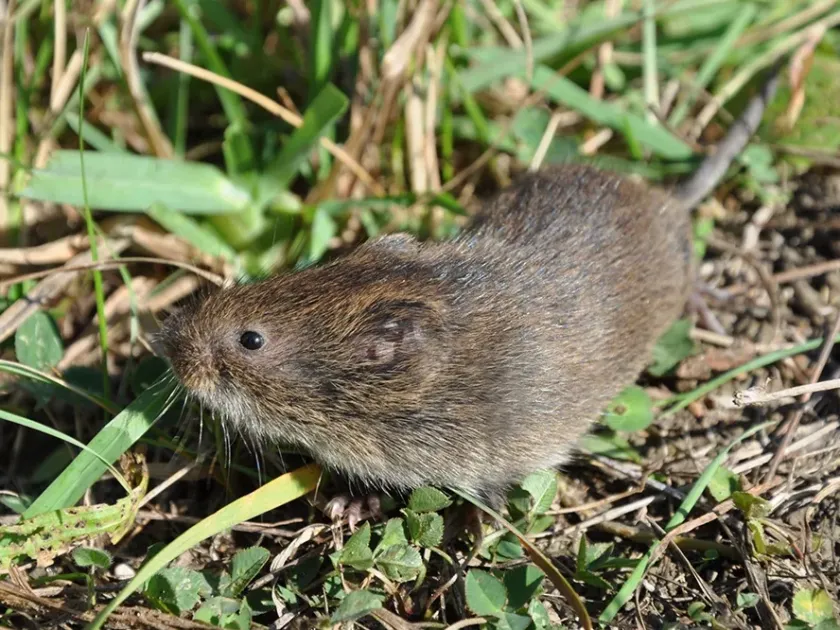
The tundra vole (Microtus oeconomus) is a robust rodent belonging to the Cricetidae family. Adults typically measure between 9 and 15 centimeters in length, with a relatively short tail.
They are characterized by a dense, compact body, a blunt muzzle, and small ears that are mostly hidden within their thick fur. Their coloration ranges from yellowish-brown to dark brown.
This species is highly adaptable, often favoring damp habitats, marshes, and riverbanks. They are semi-aquatic and move easily through wet vegetation and soil.
Their reproduction rate is high during the warmer months, allowing them to rapidly increase their population size when conditions are favorable and food is abundant.
These rodents construct complex tunnel systems with nesting chambers and are known for storing large amounts of food to survive through lean periods.
What it damages
Tundra voles cause significant economic losses by damaging various crops, including cereals, legumes, and forage grasses. They feed on stems, roots, and tillers, often destroying entire patches of crops.
Winter damage is particularly severe for winter crops. Voles continue feeding under the snow cover, gnawing on the root crowns and stems, which prevents the plants from regenerating in spring.
In orchards, these rodents cause lethal damage by gnawing on the bark of young fruit trees. Girdling the trunk near the root collar often kills the tree within a single season.
Root vegetables such as potatoes, carrots, and beets are also targeted. Voles can destroy large amounts of produce both in the field and in storage facilities.
Furthermore, their extensive burrowing activities create numerous holes and tunnels that disrupt soil structure and interfere with the operation of mechanical harvesters.
When it appears
The tundra vole remains active throughout the year. Spring is a critical period when they emerge to feed on the early shoots of winter crops and start their breeding season.
During summer, when vegetation is plentiful, they expand their range and continue to multiply, which can lead to high population densities by late summer.
Autumn is a time of intense foraging as they prepare for winter. This is when they begin to migrate toward orchards, farm buildings, and protected areas for shelter.
Winter does not stop their activity. Underneath the insulating snow, they maintain active tunnels and continue to feed on plant crowns and bark.
Monitoring throughout the seasons is essential, but autumn and early spring are the most effective times to implement control measures to reduce the overall population.
Signs of infestation
A primary indicator of a tundra vole infestation is the presence of numerous circular burrow entrances, usually 3–5 centimeters in diameter, scattered across the field.
Distinctive surface runways or trails are often visible through grass or crop cover, connecting burrow entrances to feeding areas where vegetation has been heavily grazed.
In winter crop fields, dead patches where plants have been chewed off at the base are clear signs of vole damage. Roots or stems may appear neatly cut at an angle.
In orchards, look for fresh gnaw marks on the base of tree trunks. Girdling damage, where the bark is removed down to the wood, is a severe warning sign.
Droppings, nesting material near the surface, and a general smell of musk or rodent activity are common signals of high vole density in a given area.
Control measures
Effective management starts with cultural practices such as deep autumn plowing, which destroys burrow systems, nesting chambers, and the voles' immediate food supply.
Keeping field margins and ditch banks mowed reduces the cover that voles rely on for movement and protection from predators, effectively shrinking their habitat.
Biological control can be enhanced by providing perches for birds of prey, such as hawks and owls, which significantly reduce rodent populations in and around fields.
Rodenticides should be applied strictly according to local regulations, ideally placed directly into burrows to minimize the impact on non-target wildlife and livestock.
Regular field scouting and threshold monitoring are crucial. If rodent populations exceed acceptable levels, integrated pest management programs must be initiated immediately.
Taxonomy
- Latin name
- Microtus oeconomus
- Order
- Rodents
- Family
- Muridae
- EPPO code
- MICROE
Discussion
No discussions yet — be the first.