
Mountain vole
Microtus montanus
Description
How to identify
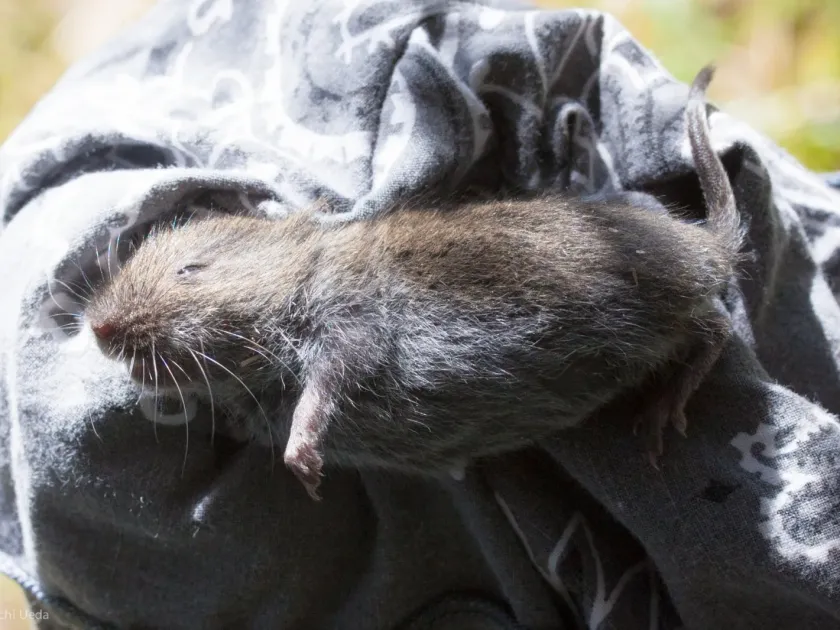
The mountain vole (Microtus montanus) is a small rodent belonging to the Cricetidae family. It is characterized by a stocky body, a relatively short tail, and small ears hidden within its fur.
Adult mountain voles typically measure between 10 and 14 centimeters in length. Their coat color ranges from gray to brownish-brown, providing effective camouflage in their mountainous and foothill habitats.
These rodents are primarily terrestrial and rely on their ability to dig shallow burrows where they build nesting chambers to shelter and raise their young.
Mountain vole populations are known for their cyclic nature, experiencing dramatic fluctuations in numbers that vary from year to year depending on environmental conditions.
Their anatomy is well-adapted for survival in diverse terrain, allowing them to remain active throughout the year regardless of the season.
What it damages
Mountain voles are significant agricultural pests that consume various vegetative parts of crops, often leading to substantial yield losses.
Primary target crops include cereal grains, perennial forage grasses like alfalfa and clover, and various vegetable crops during their early growth stages.
In nurseries and orchards, voles can cause severe damage by gnawing on the bark of young tree seedlings at the base, which often results in the death of the plants.
Their activity on pastures and hay fields is particularly destructive, as high population densities can decimate entire stands of forage vegetation.
Beyond direct feeding, these rodents cause indirect damage through their burrowing activities, which disrupt soil structure and kill the root systems of crops.
When it appears
The reproductive cycle of the mountain vole is closely tied to environmental conditions, but their high fertility allows them to breed throughout most of the warm season.
Breeding usually commences in early spring and continues until late autumn, leading to a rapid increase in population size across agricultural fields.
Unlike many other small mammals, voles do not hibernate and remain active during the winter months, often feeding under the snow cover on dormant vegetation.
During the winter, they are known to damage winter wheat and other overwintering crops by gnawing on roots and crowns, protected from predators by the snow.
In drought conditions, populations tend to congregate near irrigated land and drainage ditches, where they can continue to access succulent vegetation.
Signs of infestation
The most prominent sign of a mountain vole infestation is the presence of numerous small holes in the ground that serve as entrances to their extensive burrow systems.
Visible trails or "runways" worn into the vegetation or soil often connect these burrows, indicating the primary paths taken by the voles when foraging.
Crop damage is often localized, appearing as patches of clipped or eaten foliage, sometimes accompanied by small piles of droppings near the active burrow entrances.
- Multiple small burrow holes scattered across the field.
- Distinctive, well-worn runways through the grass or soil.
- Bark gnawed off the base of tree trunks or seedlings.
- Patches of stunted or destroyed vegetation in the field.
Increased presence of avian predators, such as hawks or owls, circling or perching over specific areas can be an indicator of a high rodent population density.
Control measures
Effective management of mountain voles requires an integrated pest management approach that combines cultural, biological, and chemical strategies.
Deep fall tillage is a primary cultural method, as it disrupts burrow systems and exposes the rodents to adverse weather conditions and predators, reducing survival rates.
Maintaining clean field borders by removing weeds and plant debris is essential to eliminate cover that voles use for shelter during the colder months.
Biological control efforts should focus on encouraging natural predators by installing nesting boxes for raptors and maintaining habitat for predatory mammals.
When populations exceed economic thresholds, rodenticides may be necessary, provided they are applied in a targeted manner that minimizes risk to non-target species.
Taxonomy
- Latin name
- Microtus montanus
- Order
- Rodents
- Family
- Muridae
- EPPO code
- MICRMO
Discussion
No discussions yet — be the first.