
Mexican vole
Microtus mexicanus
Description
How to identify
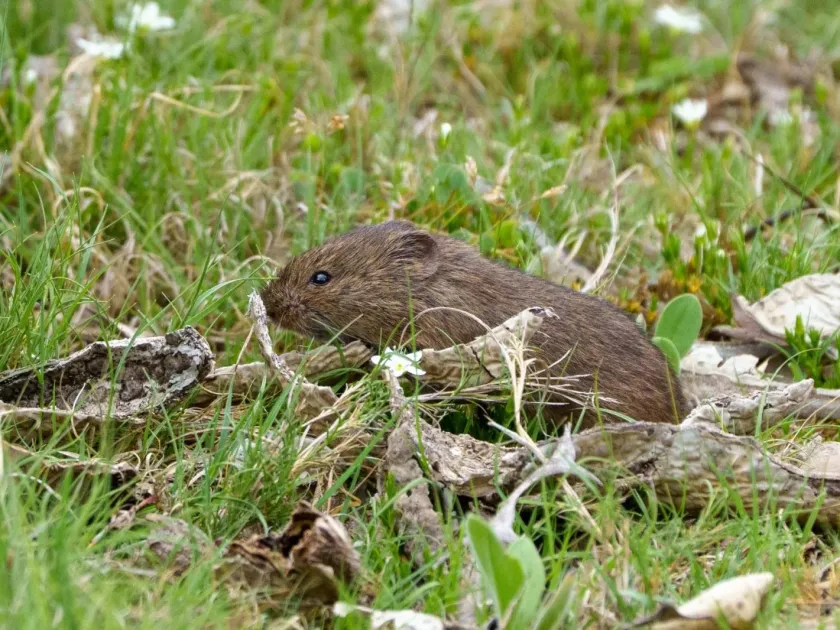
The Mexican vole (Microtus mexicanus) belongs to the order Rodentia and the family Cricetidae. It is a small rodent with a short tail, typically measuring between 9 and 12 cm in body length, with fur varying from grayish-brown to yellowish-tan.
This species is characterized by a compact build, small ears that are nearly hidden within its dense fur, and relatively short limbs designed for active digging and tunnel construction.
Unlike other vole species, this rodent prefers high-altitude meadows, open landscapes, and grassy areas where dense vegetation provides natural cover against predators.
Identification can be confirmed by specific dental structures and tail length, though agronomists in the field usually identify them by signs of activity and characteristic damage to vegetation.
Populations of Mexican voles are known for significant fluctuations, making them unpredictable pests capable of reducing crop yields substantially in a very short period.
What it damages
The primary damage caused by the Mexican vole occurs during the active growing season and fruit maturation. These rodents consume green plant parts, seeds, and underground organs extensively.
Affected crops include small grains, corn, various forage grasses (including alfalfa), and vegetable crops, where root vegetables are frequently targeted for food.
Beyond consuming plant biomass, voles cause indirect damage by gnawing the roots of young trees and shrubs in nurseries and orchards, which often leads to the death or severe weakening of the plantations.
The pest poses a particular danger to stored feed and grain, which may become contaminated with excrement, rendering the supplies unfit for livestock consumption.
Mass reproduction of rodents in fields leads to reduced plant density, damage to irrigation systems due to extensive tunnel networks, and a general decline in the quality of agricultural produce.
When it appears
The peak activity of Mexican voles occurs during the spring and autumn seasons when climatic conditions are favorable for rapid breeding and the availability of food sources.
During the winter, rodent activity does not cease entirely; they switch to feeding on underground plant parts and stored supplies within their burrows, often using tunnels beneath the snow for movement.
Vole reproduction occurs almost year-round provided there is sufficient moisture and food, although peak birth rates typically coincide with the wetter periods of the year.
Migration to agricultural fields often intensifies during drought periods in natural meadows, as cultivated crops become a primary source of succulent forage for the voles.
Agronomists are advised to monitor population levels at the beginning of the growing season to prevent explosive population growth during the grain-filling or vegetable-maturing stages.
Signs of infestation
The first indicator of Mexican vole presence is the appearance of numerous tunnel entrances, approximately 3–5 cm in diameter, located near plant debris or within crop foliage.
Well-worn "runways" or paths are often visible around burrows, which rodents use to commute to feeding areas, along with accumulations of feces and chewed plant remnants.
Damage manifests as stems gnawed at varying heights, incisor marks on root crops, and bark stripped from the base of woody stems, which are critical indicators of high pest density.
In cereal fields, local "bare patches" where plants have been clipped at the base are common, and these patches expand rapidly in the absence of control measures.
The presence of voles may also be signaled by increased activity of raptors, which congregate over areas of high rodent density, often serving as a secondary cue for field assessment.
Control measures
Effective management begins with agrotechnical methods: deep plowing destroys tunnel systems and nests, forcing rodents to abandon the cultivated areas.
Crop rotation and timely removal of weeds from fields are essential, as weeds provide both supplementary food and cover for vole reproduction.
Chemical control involves the use of rodenticides placed directly into burrows to minimize risk to non-target bird and mammal species, strictly adhering to dosage and safety regulations.
Biological control focuses on encouraging natural predators, such as installing perches for raptors and preserving habitats for small predators to help suppress population levels.
Applying protective mesh or wrapping the root zones of young saplings with specialized materials is a necessary precaution to protect orchards during periods of high vole density.
Taxonomy
- Latin name
- Microtus mexicanus
- Order
- Rodents
- Family
- Muridae
- EPPO code
- MICRME
Discussion
No discussions yet — be the first.