
Gunther's vole
Microtus guentheri
Description
How to identify
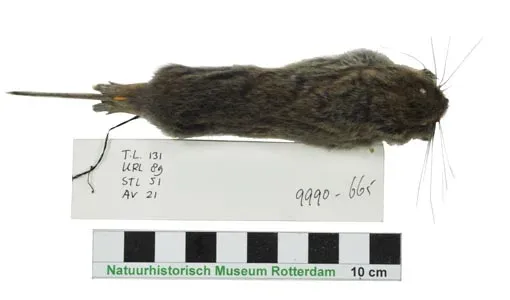
Gunther's vole (Microtus guentheri) is a rodent belonging to the Cricetidae family. It is a small mammal characterized by a robust body, a short tail, and small ears hidden within the fur.
Adult specimens typically measure between 10 and 13 centimeters in length. The dorsal fur ranges from grayish-brown to sandy-brown, providing camouflage in its natural habitat.
The eyes and ears are small, reflecting an evolutionary adaptation to both surface movement and burrowing in the soil, typical of the Microtus genus.
Identification is often confirmed by examining the molar teeth, which possess distinct enamel loops that differentiate this species from other sympatric vole species.
These animals are primarily crepuscular and nocturnal, although they can adapt their activity cycles based on food availability and the presence of natural predators.
What it damages
Gunther's vole is a significant pest in agricultural ecosystems, causing substantial damage to cereal crops such as wheat, barley, and oats by consuming foliage and seeds.
The vole also targets forage crops like alfalfa and clover, which are essential for livestock feed, leading to reduced yields and degraded pasture quality.
In vegetable gardens, these rodents feed on tubers, roots, and bulbs, including potatoes, carrots, and sugar beets, often destroying the entire underground part of the plant.
Orchards and nurseries are at high risk, as voles gnaw the bark of young tree trunks near the root collar, which can cause severe dehydration and tree mortality.
During winter months, they feed on the subterranean parts of winter crops, causing invisible damage that often leads to total crop failure during the spring thaw.
When it appears
The reproductive cycle of Gunther's vole is highly opportunistic, allowing for rapid population growth throughout the year if environmental conditions are favorable.
Spring is the peak season for reproduction, driven by the flush of green vegetation that provides necessary nutrients for raising offspring.
During the dry summer months, population growth may stabilize, though irrigated fields remain hotspots for high rodent density and continued breeding activity.
Autumn marks a critical period where voles expand their burrow systems and store resources to ensure survival through the upcoming winter months.
Winter does not necessarily stop the breeding cycle; with sufficient snow cover providing insulation, these rodents can continue to reproduce and feed on crop roots.
Signs of infestation
Evidence of infestation is marked by the presence of numerous circular burrow entrances connected by well-trodden, cleared runways through the grass.
Soil mounds near burrow openings and the presence of clipped grass segments are reliable indicators of high vole activity within a field.
Areas of the field with dead or sparse vegetation reveal where the voles have intensely grazed the plants down to the root level, leaving visible patches.
In winter, winding tunnels beneath the snow surface indicate where the voles have moved and fed, often covering large distances to reach new food sources.
Girdled trunks of saplings with visible tooth marks at the base are a clear sign that the voles have turned to woody stems due to a lack of preferred forage.
Control measures
Deep plowing in the autumn is the most effective mechanical control method, as it collapses burrow systems and forces the population to disperse or perish.
Integrated pest management strategies include maintaining clean field borders, which removes the habitats and cover necessary for vole population expansion.
Biological control methods involve installing nesting boxes or perches for birds of prey, such as owls and hawks, which are natural predators of voles.
Chemical control via rodenticides should be used judiciously, with baits placed inside active burrows to minimize exposure to non-target wildlife and domestic animals.
- Regular monitoring of burrow density to calculate the economic threshold.
- Early harvesting of crops to minimize the availability of feed leftovers.
- Installation of physical guards around tree trunks to prevent bark damage.
Taxonomy
- Latin name
- Microtus guentheri
- Order
- Rodents
- Family
- Muridae
- EPPO code
- MICRGU
Discussion
No discussions yet — be the first.