
Cabrera's vole
Microtus cabrerae
Description
How to identify
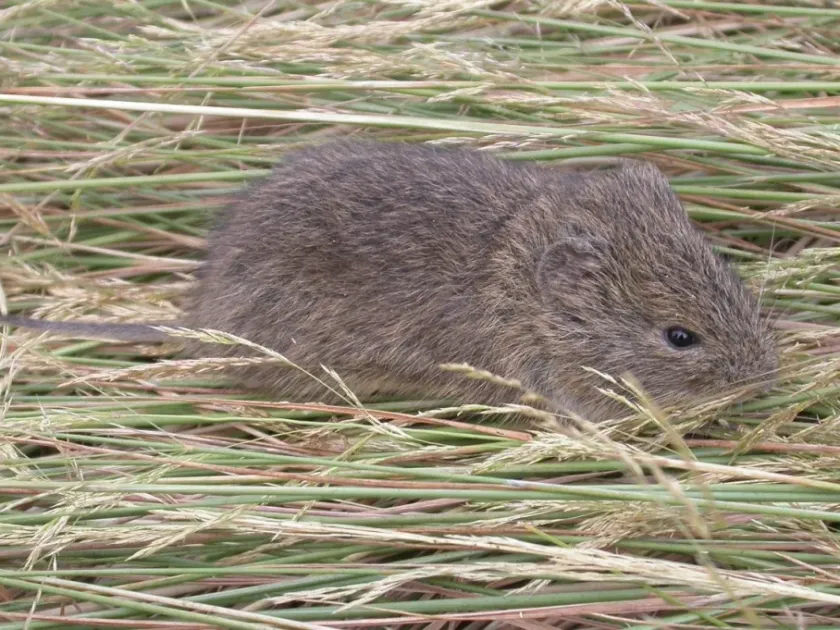
Cabrera's vole (Microtus cabrerae) is a rodent species belonging to the Cricetidae family. It is distinct from other common voles due to its larger size and specific cranial morphology.
These animals possess dense, dark-brown or buff-colored fur and have relatively short tails. Adults typically reach lengths between 12 and 15 centimeters, though size can vary by habitat quality.
The species is primarily endemic to the Iberian Peninsula, where it thrives in specific humid environments, such as meadows near streams or irrigated land.
Unlike some other vole species that inhabit dry plains, Cabrera's vole requires high grass density and moisture for optimal survival and colony maintenance.
Its biological cycle is characterized by consistent breeding when resources are available, allowing populations to expand rapidly in favorable agricultural settings.
What it damages
Cabrera's vole causes substantial economic losses by feeding on various agricultural crops. Cereal crops, including wheat and barley, are particularly vulnerable to their grazing behavior.
The rodents consume vegetative parts of the plants, often cutting stems near the base. This can lead to severe lodging of crops and significant reductions in harvest yields.
Fodder grasses are another primary food source, and their destruction can devastate pastures and hay fields, leading to reduced livestock support capacity.
In orchards and vineyards, these voles can damage the bark of young trees and shrubs, which stresses the plant and creates entry points for various fungal and bacterial infections.
Furthermore, they damage root systems of root vegetables, causing plants to wither and die prematurely, often leading to total loss of small patches of vegetable crops.
When it appears
Cabrera's vole remains active throughout the year, as it does not hibernate. This continuous activity means they pose a threat to both summer crops and winter cereals.
The breeding season typically peaks from spring through autumn. During these months, rapid population growth puts significant pressure on agricultural land.
The most critical damage occurs during the ripening phase of cereals, when the rodents concentrate in fields to harvest seeds and succulent stems for their food stores.
After harvest, the voles move to field margins, drainage ditches, and grassy buffers where they continue to feed on weeds and residues until the next growing season.
Winter survival is facilitated by snow cover or thick vegetation, allowing them to continue foraging on winter crops and underground roots without significant interruption.
Signs of infestation
The most reliable indicator of a Cabrera's vole infestation is the presence of distinctive runways or trails through the grass, connecting feeding areas to their burrows.
Small soil mounds near burrow entrances are clear signs of their presence. These burrows usually appear in groups and are characterized by several entry points.
Vegetation that looks as if it has been "mown" unevenly, with stems showing sharp, slanted bite marks, confirms that a vole colony is active nearby.
Accumulations of shredded grass, straw, and debris near burrow openings are common, as the voles bring material back to their hiding spots to feed safely.
Patches of withered or dead crops in a field, especially those that can be pulled from the ground with ease due to destroyed roots, indicate heavy localized infestation.
Control measures
Deep plowing remains one of the most effective mechanical methods to destroy burrow systems and eradicate local colonies that have established themselves in fields.
Maintaining clean field edges by removing weeds and tall grass reduces the habitats available for voles, effectively limiting their ability to colonize agricultural areas.
Crop rotation practices help to disturb the vole's habitat and disrupt its food source, making it more difficult for established populations to survive over multiple seasons.
When infestation levels reach an economic threshold, targeted application of rodenticides inside the burrows is used to minimize risks to birds of prey and other wildlife.
Promoting a healthy environment for natural predators, such as owls and small carnivores, provides an excellent long-term biological control solution for maintaining low vole numbers.
Taxonomy
- Latin name
- Microtus cabrerae
- Order
- Rodents
- Family
- Muridae
- EPPO code
- MICRCA
Discussion
No discussions yet — be the first.