
Field vole
Microtus agrestis
Description
How to identify
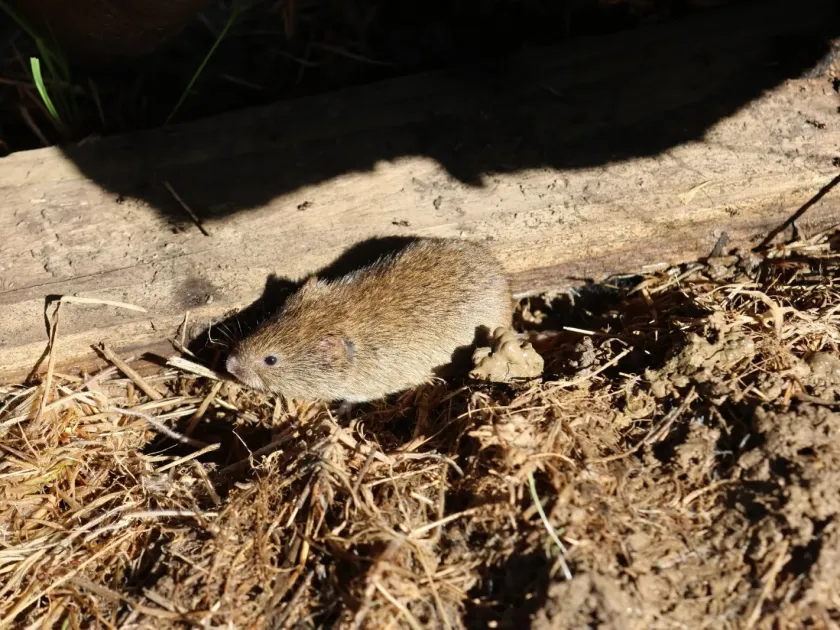
The field vole Microtus agrestis belongs to the order Rodentia and the family Cricetidae. It is a small rodent, typically reaching lengths of 9 to 13 cm with a relatively short tail.
Physically, it is characterized by a reddish-brown or grayish-brown coat on the upper side, while the belly is often a lighter, grayish-white color. Its ears are short and largely hidden within its fur.
Field voles are predominantly found in moist habitats, including grassy meadows, forest edges, and agricultural fields. They are known for their intricate burrow systems and surface runways.
They exhibit high reproductive rates during the breeding season. A single female can produce multiple litters per year, which allows the population to rebound quickly after environmental stressors.
In winter, they remain active beneath the snow cover, using tunnels to navigate between feeding areas, which ensures their survival in harsh climates where other species might hibernate.
What it damages
This species is a significant agricultural pest, causing extensive damage to cereal crops like wheat, barley, and rye by feeding on stems and developing grains.
Perennial grasses, such as clover and alfalfa, are particularly susceptible to vole grazing, which leads to reduced yields and loss of livestock fodder in pastures.
Orchards are often severely impacted during winter months when food resources are scarce; voles strip the bark from young tree trunks, effectively girdling and often killing the plants.
Root crops like sugar beets and potatoes are also vulnerable, as voles may burrow into the soil to consume roots, tubers, and the lower sections of the stems.
Beyond direct consumption, the contamination of crops with feces and urine creates significant sanitary issues, often rendering stored or harvested produce unsuitable for consumption.
Signs of infestation
The most reliable sign of a field vole infestation is the presence of numerous small holes in the ground connected by a network of well-defined, grass-covered surface runways.
One may observe clipped vegetation around the burrow entrances, with stems showing the characteristic angled cuts made by the incisors of these small rodents.
Bark damage on young trees, typically found at the base, indicates rodent activity. Look for gnaw marks that may penetrate deep into the cambium layer of the bark.
The accumulation of rodent droppings near burrow exits or along frequently traveled runways is a clear indicator of a resident population inhabiting the area.
Nests constructed from shredded grass, often found on the surface of the ground in dense vegetation, are typical during periods of peak population density.
Control measures
Cultural control methods such as deep plowing help disrupt burrow systems and force voles out of their sheltered environments, making them vulnerable to predators.
Keeping field margins, ditch banks, and fallow areas free of heavy weed cover significantly reduces the suitability of these habitats for vole colonization.
Promoting local predator populations, such as owls and hawks, by installing perches or nesting boxes around fields can provide natural and sustainable population suppression.
When population thresholds are exceeded, targeted application of rodenticides inside burrows is necessary, ensuring the bait is covered to protect non-target wildlife.
- Conduct regular monitoring of burrow activity per hectare.
- Practice timely harvesting to minimize grain waste on the ground.
- Use protective sleeves for tree trunks in orchards to prevent bark damage.
- Implement integrated pest management (IPM) to balance chemical and biological controls.
Taxonomy
- Latin name
- Microtus agrestis
- Order
- Rodents
- Family
- Muridae
- EPPO code
- MICRAG
Discussion
No discussions yet — be the first.