
Common vole
Microtus
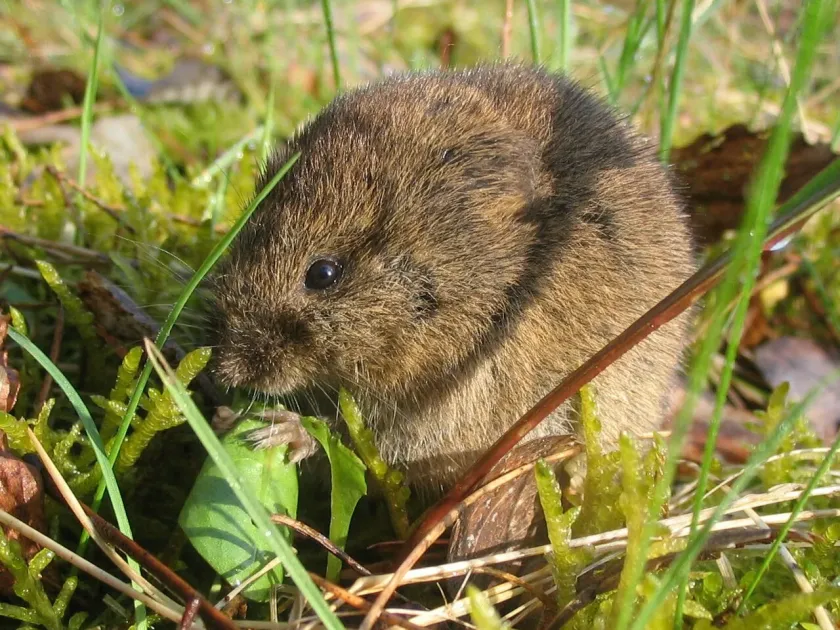
Description
How to identify
The common vole, known scientifically as Microtus, is a small rodent belonging to the Cricetidae family, widely distributed across temperate regions.
They typically reach 8 to 12 centimeters in length, characterized by a blunt nose, small ears hidden in their fur, and a relatively short tail.
Their coat color varies from grayish-brown to reddish-brown, which provides excellent camouflage within agricultural fields and tall grass.
These rodents are highly social, living in complex colonies and creating extensive tunnel networks with dedicated chambers for food storage.
Their reproductive rate is among the highest in rodents, allowing populations to expand rapidly under favorable food availability and climatic conditions.
What it damages
The common vole is a significant threat to various agricultural sectors, including cereal production, vegetable gardening, and orchard management.
They consume seeds, stems, and leaves of various crops, often causing severe thinning of stands, particularly in winter wheat and rye fields.
In orchards and nurseries, they are notorious for gnawing the bark of fruit trees at the root collar, which can lead to the death of young saplings.
Root vegetables like carrots, potatoes, and sugar beets are heavily targeted by these pests, both during the growing season and in storage.
The damage caused by voles goes beyond immediate consumption, as their presence also contaminates produce and facilitates secondary fungal infections.
When it appears
Unlike many other mammals, voles do not hibernate and remain active and reproductive throughout the year, including the winter months.
Spring and summer are periods of peak activity and population growth, fueled by the abundance of succulent green forage in the fields.
As autumn approaches and temperatures drop, voles seek shelter in haystacks, agricultural storage facilities, and deep burrows to survive the cold.
Winter is a critical season when voles rely on tunnel systems beneath the snow, feeding on roots and protected crops until the spring thaw.
Early spring scouting is essential as it reveals the extent of damage accumulated during the winter, allowing for timely intervention in the fields.
Signs of infestation
The most prominent sign of infestation is the presence of numerous circular burrow entrances, usually 3 to 5 centimeters in diameter.
Distinct, well-worn runways or paths through the vegetation connect burrow entrances to feeding areas, clearly visible when the grass is short.
The appearance of girdled bark around the base of trees or shrubs is a definitive indicator of vole presence and potential structural damage.
Patches of mown-down vegetation in cereal fields, resembling closely cropped grass, show where the rodents have been feeding intensively.
Droppings scattered near burrows and the observation of the animals themselves during early morning or evening hours confirm their activity.
Control measures
Effective management requires a multi-pronged approach that combines cultural practices, natural predator encouragement, and chemical controls.
Deep autumn plowing remains the most effective cultural method to destroy burrow systems and reduce the survival rate of the population during winter.
Keeping field margins and ditch banks clear of heavy weeds and brush removes critical habitat refuges for vole colonies throughout the year.
Supporting local predator populations, such as owls and hawks, by providing nesting sites or perches is a sustainable biological control method.
- Use of anticoagulant rodenticides placed inside protective bait stations to target the pests while ensuring safety.
- Installation of physical wire guards around the base of valuable tree trunks to prevent bark gnawing.
- Regular monitoring and trapping in small-scale areas to prevent the initial establishment of a breeding colony.
Taxonomy
- Latin name
- Microtus
- Order
- Rodents
- Family
- Muridae
- EPPO code
- MICRSP
Discussion
No discussions yet — be the first.