
Microperus beetle
Microperus
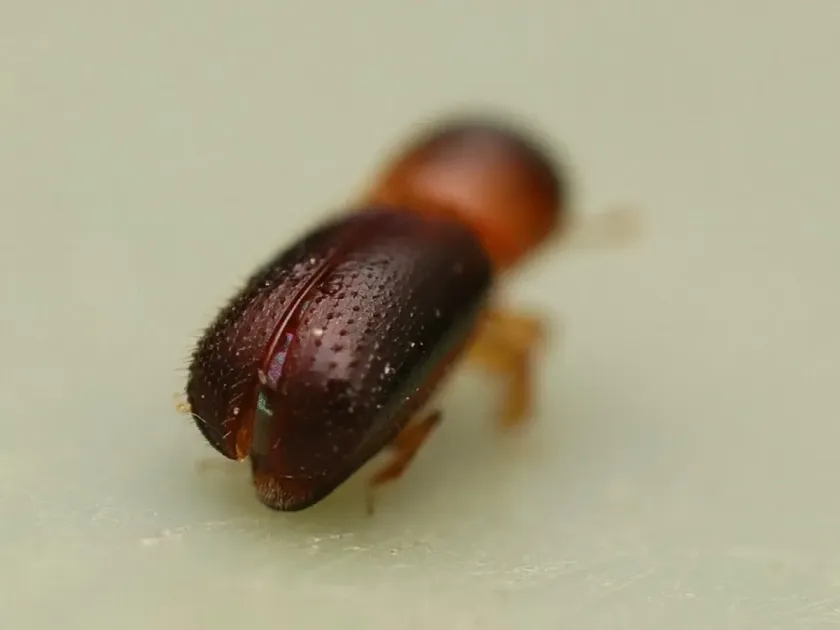
Description
How to identify
The genus Microperus belongs to the Curculionidae family, subfamily Scolytinae, which comprises highly specialized wood-boring insects.
These beetles are characterized by their tiny size, typically measuring only a few millimeters in length, and a cylindrical, compact body structure.
Their head is usually retracted into the pronotum, a common morphological trait that protects their delicate mouthparts while burrowing into hard wood.
A key biological feature of this genus is their reliance on symbiotic fungi, which they transport into the wood to serve as a primary food source for their larvae.
Diagnostic identification requires microscopic examination of the elytral declivity, where specific sculptural patterns distinguish them from other closely related genera.
What it damages
Microperus beetles primarily target stressed, weakened, or recently fallen trees, making them a secondary pest that accelerates the decline of host plants.
They tunnel deep into the sapwood, which disrupts the tree's vascular system, hindering the transport of water and nutrients throughout the plant.
The galleries created by these beetles are often colonized by pathogenic fungi, which can cause significant staining and further degrade the structural integrity of the wood.
In forest nurseries and plantations, severe infestations can lead to rapid wilting and the death of young saplings that have not yet established strong defenses.
While they avoid healthy, vigorous trees, they can overwhelm host plants during periods of prolonged drought or following severe environmental disturbance.
When it appears
The primary activity of adult Microperus beetles begins in spring when rising temperatures trigger the emergence from winter hibernation sites.
The flight period is synchronized with the physiological activity of host trees, as the beetles are highly sensitive to volatiles released by stressed trees.
Larval development occurs throughout the summer months inside the protective galleries, where they graze on the cultivated fungal layer.
As autumn approaches, the beetles typically overwinter within their tunnels or move into bark crevices to protect themselves from harsh cold weather.
The number of generations per year is highly climate-dependent, with warmer regions allowing for overlapping lifecycles and higher population growth rates.
Signs of infestation
The most reliable indicator of an infestation is the presence of fine, sawdust-like frass accumulating at the entrance of small, perfectly round boreholes.
Peeling away a small section of bark often reveals a complex, labyrinth-like pattern of tunnels stained dark by the presence of symbiotic ambrosia fungi.
Visible decline in the canopy, such as yellowing or premature leaf drop, suggests that the tree's internal plumbing has been severely compromised by beetle activity.
Early-stage infestations may manifest as localized dieback of specific branches before the entire tree shows symptoms of distress.
The entry holes are often accompanied by tiny resin droplets or bark discoloration, depending on the specific host tree species involved.
Control measures
Sanitation is the most effective management tool, involving the prompt removal and destruction of infested logs or trees to eliminate breeding sites.
Monitoring using ethanol-based traps is highly effective for detecting the presence and timing of the beetle's flight activity in sensitive forest areas.
Maintaining tree vigor through proper irrigation, fertilization, and limiting mechanical injuries is the best long-term strategy for preventing colonization.
Chemical control with systemic insecticides can be applied during peak flight periods, but such measures are often difficult to implement effectively on a large scale.
Encouraging natural predators and maintaining biodiversity in plantation areas can help keep beetle populations below economic injury thresholds.
Taxonomy
- Latin name
- Microperus
- Order
- Coleoptera (beetles)
- Family
- Curculionidae
- EPPO code
- MIPRSP
Discussion
No discussions yet — be the first.