
Flax weevil
Miccotrogus lineellus
Description
How to identify
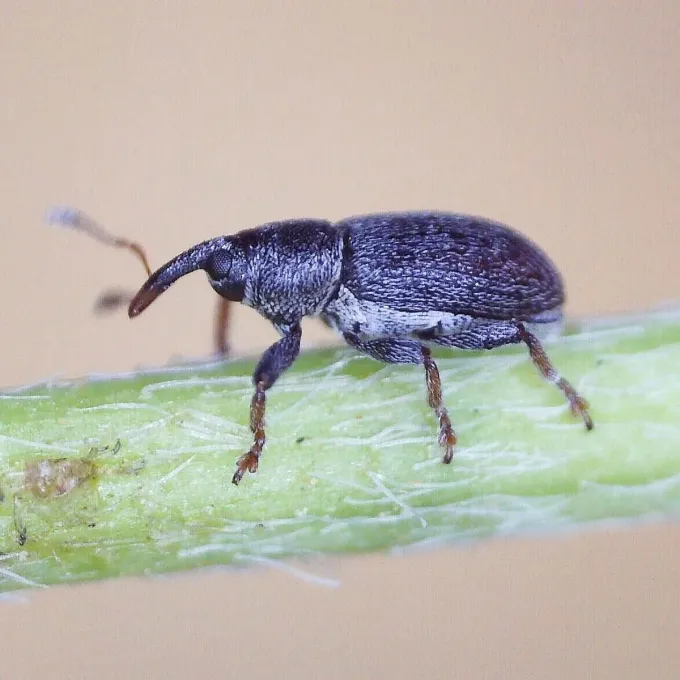
The flax weevil (Miccotrogus lineellus) is a beetle belonging to the Curculionidae family. It is a small insect, typically measuring 2 to 3 mm in length, characterized by the prominent snout common to its family.
The beetle has an oval shape and is covered in fine hair or scales, giving it a dull grayish-brown appearance. This protective coloration helps it blend seamlessly into the soil and crop residue.
The larvae are legless, white to yellowish grubs with a distinctive dark head capsule. They spend their entire developmental phase hidden inside the flax seed capsules or within the soil.
As a member of the Coleoptera order, the flax weevil undergoes a complete metamorphosis, progressing through the stages of egg, larva, pupa, and adult.
Identification is primarily based on its host-specific association with flax plants (Linum), which distinguishes it from other weevil species found in arable land.
What it damages
The primary hosts of this pest are fiber flax and oilseed flax. Both the adult beetles and their larvae cause significant agricultural damage to the crop throughout its growing season.
Adult beetles feed on the leaves and growing points of young plants, which can stunt early development. However, the most severe economic impact is caused by the larvae.
Larvae bore into the flax bolls and consume the developing seeds. This direct destruction of the reproductive organs leads to a significant decrease in total seed yield and quality.
In addition to quantitative losses, damaged bolls are often susceptible to secondary fungal infections, which further degrade the overall quality of the flax fiber and seed harvest.
Under favorable environmental conditions, infestation can result in substantial crop failure, making the flax weevil a critical pest to monitor in commercial flax production.
When it appears
Overwintered adults emerge from the soil in the spring, coinciding with the emergence of young flax seedlings. They begin feeding on the young tissues to build energy for the upcoming reproductive phase.
The peak activity of the pest typically occurs during the budding and flowering stages of the flax plant. During this time, the beetles migrate to the blooms to feed and deposit eggs.
After eggs are laid in the seed capsules, the larvae hatch and begin their internal feeding cycle, which lasts for several weeks as they mature inside the protective boll.
Pupation generally occurs within the damaged seed capsules or in the upper soil layers. By late summer, the new generation of adults emerges and seeks suitable sites for overwintering.
Agricultural scouting should be intensified during the critical phenological stages, specifically from seedling emergence until the formation of the flax bolls.
Signs of infestation
One of the earliest signs of infestation is the presence of small, circular holes in the leaves, often referred to as "shot-hole" damage, caused by adult beetle feeding.
As the crop matures, infested bolls may exhibit premature yellowing, drying, or distinct deformation, signaling that the interior seeds are being consumed by larvae.
Opening an affected capsule often reveals the presence of white larvae or, if they have already vacated, frass and empty, hollowed-out seed husks.
Uneven stand development or clusters of stunted plants within the field can also suggest localized pest pressure, requiring closer inspection of those specific areas.
Detection is often difficult because the adult beetles are cryptic; when disturbed, they exhibit thanatosis (playing dead) and drop to the ground, where they become nearly invisible.
Control measures
Crop rotation is the cornerstone of flax weevil management. Moving flax fields to non-host areas every few years significantly disrupts the lifecycle of the pest and reduces population buildup.
Deep fall tillage is an effective cultural practice, as it buries overwintering sites, making it difficult for the adults to emerge successfully during the following spring.
The use of insecticide-treated seeds can provide early-season protection, safeguarding the young seedlings from adult feeding pressure and allowing the crop to establish itself.
If population thresholds are exceeded during the growing season, authorized insecticides may be applied. It is essential to choose products that minimize impact on beneficial pollinators.
- Consistent weed control to remove alternative hosts or shelter for the weevils.
- Monitoring field edges and interior zones using sweep nets during the budding stage.
- Selecting flax varieties known for vigorous early growth and resistance.
Taxonomy
- Latin name
- Miccotrogus lineellus
- Order
- Coleoptera (beetles)
- Family
- Curculionidae
- EPPO code
- TYCHLI
Discussion
No discussions yet — be the first.