
Mesovelia furcata
Mesovelia furcata
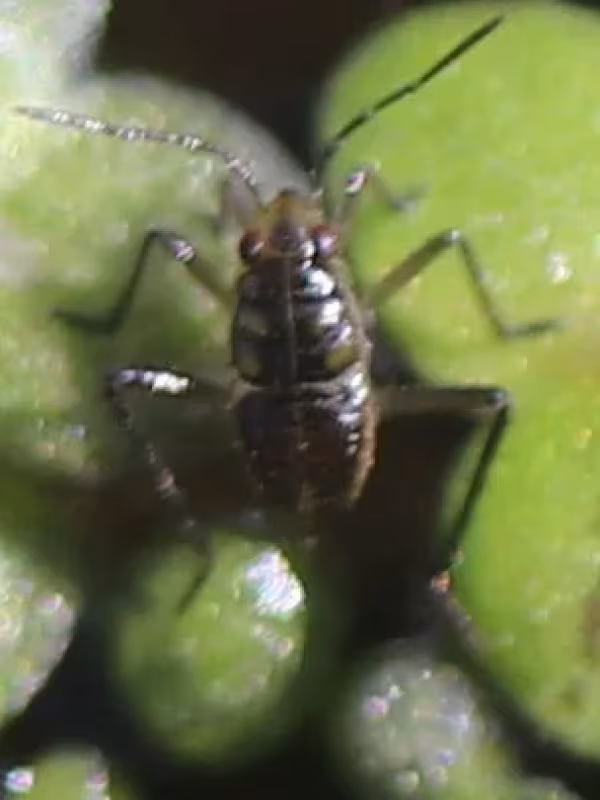
Description
How to identify
Mesovelia furcata is a small hemipteran insect belonging to the family Mesoveliidae. Physically, it is a slender bug measuring about 2–3 mm in length, featuring an elongated body and long legs adapted for moving across the water surface.
The coloration of individuals varies from light green to yellowish-brown, providing excellent camouflage among aquatic vegetation. These insects possess well-developed sensory organs that allow them to detect vibrations on the water surface.
The life cycle of this species is closely tied to ponds and slow-moving water bodies. Depending on environmental conditions, the insect can be either macropterous (winged) or apterous (wingless), which influences the population's dispersal capabilities.
For species identification, it is important to observe the antennae structure and the specific tarsal characteristics that allow the insect to stay on the water meniscus without sinking.
Nymphs resemble the adults in appearance but are smaller and lack developed reproductive organs, passing through several instars before reaching the adult stage.
##damage##The primary damage from Mesovelia furcata is recorded in rice paddies and other hydrophytic crops grown in flooded fields. The bug prefers to feed on the sap of young plants growing in the water or along the shoreline.
The pest pierces the epidermis of leaves and stems with its piercing-sucking mouthparts, extracting cell sap. This disrupts metabolic processes within the plant tissue.
In addition to direct sap extraction, Mesovelia furcata may act as a vector for secondary infections that enter through the micro-wounds created during feeding.
The most significant damage occurs during the tillering and stem elongation phases, when weakened plants become less resilient to adverse abiotic environmental factors.
In areas of high pest density, stunted growth is observed, ultimately leading to a reduction in total crop yield and the quality of the grain product.
##season##Insect activity begins with the onset of sustained warmth, once water temperatures in the basins rise to values optimal for the development of eggs and nymphs.
The first generation appears in spring, and under favorable weather conditions, several generations can develop over the summer, posing a threat of continuous impact on crops.
The peak population density usually occurs in mid-summer when vegetation density in the water is at its maximum, providing the pest with secure shelter and a food source.
In autumn, as temperatures drop, the insects slow their metabolism and enter a state of diapause, hiding in plant debris or the upper layer of the bank soil.
During the winter, survival depends on the depth of soil freezing and the presence of protective snow cover, which determines the starting population size in spring.
##signs##The first sign of infestation is the appearance of small chlorotic spots on leaf blades, which may merge over time, causing yellowing and premature wilting of plant parts.
When inspecting the water surface or leaves near the water's edge, one can notice the insects themselves, which move very quickly when disturbed.
The presence of exuviae (cast-off skins) of nymphs on the water surface or damp leaves serves as direct evidence of an active pest population development.
In cases of severe infestation, deformation of young shoots and stunted growth of the plant's overall habit are observed, which is clearly visible when compared to control plots.
Specific punctures on stems, visible through a magnifying glass, confirm the activity of mesoveliid bugs rather than other phytophages.
##control##The primary method of control is adherence to agrotechnical rules, including thorough field preparation and the removal of weeds along the banks of water bodies.
Effective practices include periodic short-term draining of the paddies, which disrupts the insect's life cycle and forces them to leave the habitat.
The use of biological control agents, such as entomopathogenic fungi or bacterial preparations, helps significantly reduce the pest population without harming the ecosystem.
In cases where the economic damage threshold is exceeded, the application of contact-stomach insecticides approved for use on aquatic sites may be necessary.
- Regular monitoring of adult populations using light traps.
- Adherence to optimal planting dates to ensure vulnerable growth phases pass before the peak of pest activity.
Taxonomy
- Latin name
- Mesovelia furcata
- Order
- Hemiptera (bugs, aphids, leafhoppers)
- Family
- Mesovelidae
- EPPO code
- MESVFU
Discussion
No discussions yet — be the first.