
Mesovelia
Mesovelia
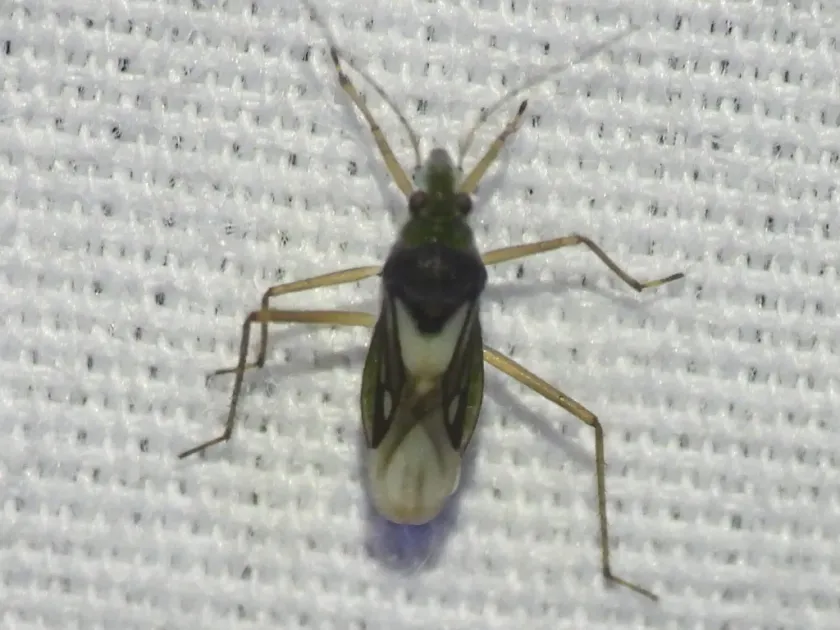
Description
How to identify
Mesovelia is a genus of insects belonging to the family Mesoveliidae, order Hemiptera. These are tiny, semi-aquatic bugs, typically measuring 2 to 4 mm in length.
The body is slender with long, delicate legs that allow them to skate across water surfaces or crawl on damp vegetation with great agility.
They generally exhibit a light green or yellowish-brown coloration, which provides excellent camouflage within their aquatic or marshy habitats.
Their head features four-segmented antennae and a piercing-sucking mouthpart designed for feeding on plant sap or small prey.
A notable characteristic of this genus is wing polymorphism, where individuals may be macropterous (full-winged), brachypterous (short-winged), or apterous (wingless).
What it damages
Mesovelia primarily targets rice plants, especially in flooded paddies, where they find an ideal environment for feeding and reproduction.
They damage crops by piercing the leaves and stems to extract cell sap, which can interfere with the plant's nutrient transport system.
Beyond rice, these insects can infest various aquatic and semi-aquatic plants, causing tissue damage and reduced plant vigor.
High infestation levels lead to stunted growth, leaf discoloration, and decreased photosynthetic efficiency, directly impacting crop development.
While they are sometimes facultative predators, their primary role in agroecosystems is that of a phytophagous pest when population densities are high.
When it appears
The life cycle of Mesovelia is inherently tied to water, with females depositing their eggs directly into the tissues of aquatic plants.
The development consists of five nymphal stages that feed actively in the water or on floating vegetation during warmer months.
Adults overwinter in protected areas near water bodies, such as under decaying plant debris, logs, or in soil crevices.
Their population peaks during the main growing season, especially when temperatures are warm and humidity levels remain high in the rice fields.
Multiple generations can occur per season, enabling rapid colonization of newly flooded areas or agricultural plots.
Signs of infestation
Visual signs of infestation include small, localized yellow or necrotic spots on the leaves, resulting from the bugs' feeding punctures.
Presence of the pest can be confirmed by observing small insects moving rapidly across the water surface or on floating leaves.
Heavy infestations are accompanied by leaf curling, wilting of the younger shoots, and a general loss of plant turgor.
The presence of cast-off nymphal skins (exuviae) left on the water surface or plant stems is a reliable indicator of active development.
Stunted growth of crops compared to unaffected areas often indicates that a significant population of Mesovelia is present.
Control measures
Effective control focuses on cultural practices, such as proper field sanitation and management of irrigation water levels.
Removing weeds from canal banks and the edges of fields is crucial, as these areas serve as primary overwintering sites for the population.
Biological control can be enhanced by protecting native predators, including spiders and odonate nymphs, which prey on the bugs.
In cases of severe economic threat, systemic insecticides approved for use in aquatic environments may be utilized to reduce population pressure.
- Regular field scouting and population monitoring;
- Clearing surrounding vegetation to destroy habitat;
- Optimizing water depth to discourage population surges;
- Targeted application of insecticides when thresholds are exceeded.
Taxonomy
- Latin name
- Mesovelia
- Order
- Hemiptera (bugs, aphids, leafhoppers)
- Family
- Mesovelidae
- EPPO code
- MESVSP
Discussion
No discussions yet — be the first.