
Lucerne leafroller
Merophyas divulsana
Description
How to identify
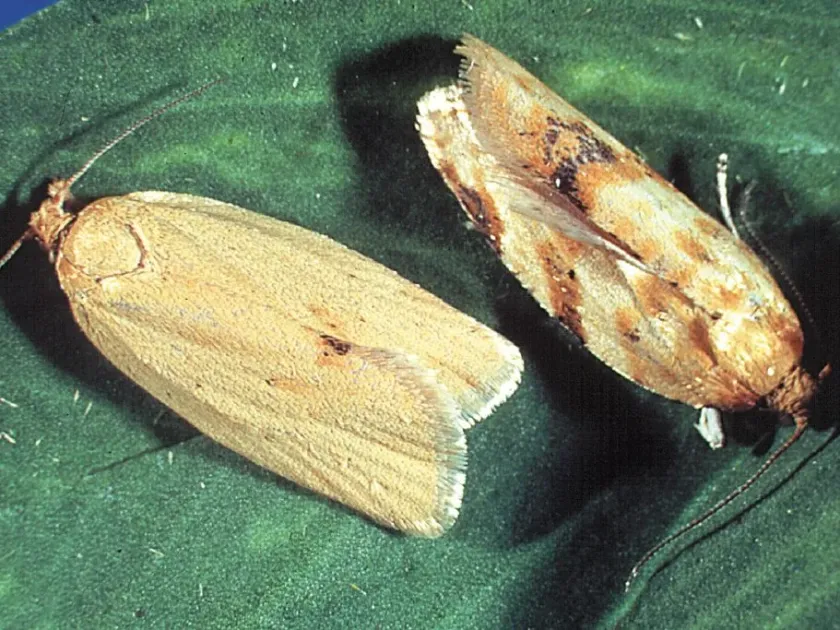
The Lucerne leafroller (Merophyas divulsana) is a moth belonging to the family Tortricidae, order Lepidoptera. Adult moths typically have a wingspan ranging from 12 to 16 millimeters.
The forewings exhibit a pale yellow to ochre color with darker markings, providing excellent camouflage against the foliage of the host plants, making them difficult to spot during daytime.
The larvae are small, spindle-shaped caterpillars, typically reaching lengths of up to 15 mm. Their coloration is usually pale green, allowing them to blend in with the leaves they consume.
The life cycle encompasses four distinct stages: egg, larva, pupa, and adult. Multiple generations can occur within a single growing season, depending on ambient temperatures and moisture.
These insects overwinter primarily as pupae or late-instar larvae, residing in sheltered areas such as plant debris, leaf litter, or the upper layers of the soil to survive harsh winters.
What it damages
The primary host for this pest is alfalfa (lucerne), but it can also affect other leguminous crops such as clover and various species of medics found in agricultural landscapes.
The larvae are responsible for the damage, as they feed on the young leaves, flower buds, and apical growth of the plants, which hinders normal development and reduces overall biomass.
Damage is typically observed early in the growing season and persists through the summer months, with infestation levels often increasing towards the mid-to-late stages of crop growth.
The destruction of generative organs is particularly harmful in fields intended for seed production, as it leads to a significant reduction in total yield and seed quality.
Heavy infestations reduce the photosynthetic capacity of the plants, resulting in stunted growth and a decline in the nutritional value of the harvested forage material.
Signs of infestation
The most characteristic sign of infestation is the presence of rolled or folded leaves, which are secured with fine silken webbing produced by the larvae during their feeding process.
Upon closer inspection, leaf tissues appear skeletonized, with only the harder veins remaining after the larvae have consumed the tender leaf parenchyma from within the webbed structures.
The presence of larval frass (excrement) deposited within the rolled leaves is a definitive indicator of an active population, signaling the need for immediate field assessment.
Affected plant tips may look twisted, deformed, or wilted, often showing signs of necrosis as the larvae continue to feed on the vital tissues of the growing shoots.
In cases of high population density, entire sections of the crop may show brown discoloration and loss of vitality, clearly distinguishing the infested areas from healthy plants.
Control measures
Integrated Pest Management (IPM) is essential for controlling this pest, starting with rigorous crop monitoring to determine the appropriate timing for any necessary interventions.
Timely harvesting of the alfalfa crop acts as a primary control method, as it physically removes the larval stages and disrupts the life cycle of the moth generations.
Deep tillage or plowing after harvest helps expose overwintering pupae and larvae to natural predators and adverse environmental conditions, reducing carry-over populations for the next season.
Selective insecticides can be applied when thresholds are reached, focusing on systemic products that can reach the larvae hidden inside the tightly rolled leaves.
- Utilize pheromone traps to monitor adult moth activity.
- Maintain crop rotation to break the pest's cycle.
- Encourage natural enemies through biological control programs.
Taxonomy
- Latin name
- Merophyas divulsana
- Order
- Lepidoptera (butterflies)
- Family
- Tortricidae
- EPPO code
- MERPDI
Discussion
No discussions yet — be the first.