
Merophyas leafroller
Merophyas
Description
How to identify
The Merophyas leafroller belongs to the family Tortricidae, order Lepidoptera. These moths are known for their distinct wing patterns and nocturnal behavior.
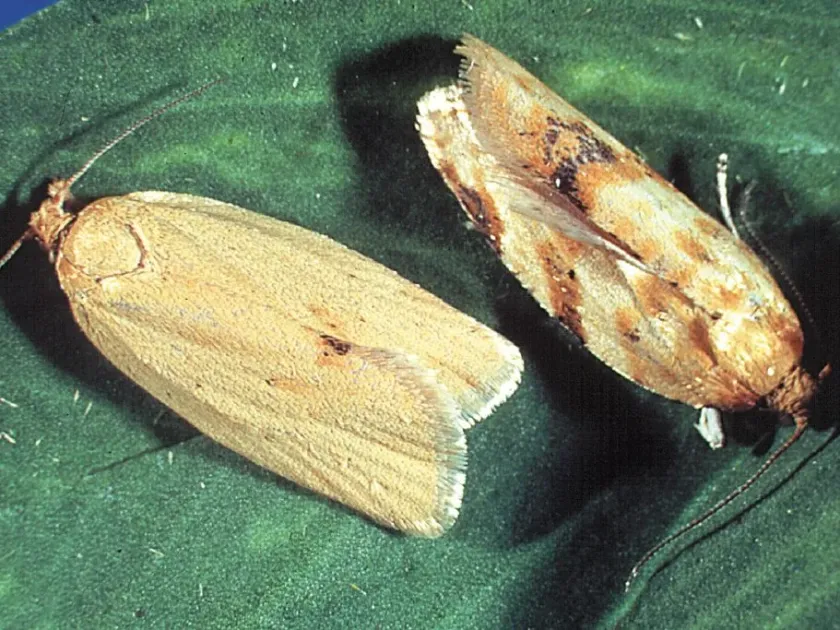
Adult moths are typically small with wingspans adapted for camouflage against bark and foliage, making them difficult to spot during daytime observations.
Larvae pass through several larval instars, growing significantly in size while exhibiting color changes as they progress through their development cycle.
The pupal stage occurs inside leaf rolls, which are securely fastened with silk threads produced by the larvae to protect them from environmental hazards.
Identification often relies on the morphology of the moth's wing venation and genital structures, as many species within the family show external similarities.
What it damages
The larvae are primary pests that consume leaves, buds, and fruitlets of various horticultural crops, leading to significant physiological stress for plants.
The host range is broad, covering many species of fruit-bearing trees and ornamental shrubs that are susceptible to feeding during the growing season.
Feeding habits often result in skeletonized leaves, deformed growth points, and surface scars on developing fruit, reducing the commercial value.
High infestation rates can lead to premature defoliation and reduction in photosynthesis, which negatively impacts the overall yield and fruit development.
Because the larvae prefer to feed within the protection of rolled leaves, they are shielded from natural predators and many topical pesticide applications.
Signs of infestation
The most prominent sign of infestation is leaves rolled into tubes or clumps, tied together with fine, silken webbing, where larvae reside.
Frass (larval excrement) accumulation inside or around these leaf nests is a clear indicator of active feeding by the Merophyas population.
Surface damage on fruit often appears as irregular, dried-out patches that eventually cork over, providing a gateway for secondary fungal pathogens.
Tips of shoots may appear stunted or curled, as the larvae favor the tender tissues of young, emerging foliage for their nutrition.
Using pheromone traps during the flight season is a standard method to detect adult moth presence and time intervention strategies effectively.
Control measures
Integrated pest management (IPM) for Merophyas begins with cultural practices like sanitation, such as removing infested plant debris and leaf litter.
Biological control agents, including parasitic wasps and predatory bugs, play a vital role in maintaining the pest population below economic damage thresholds.
Chemical control should be strictly timed based on monitoring data to target the most vulnerable larval stages while minimizing impact on beneficial insects.
Rotation of insecticide classes is essential to manage potential resistance, ensuring the long-term effectiveness of the selected chemical treatment program.
Monitoring using pheromone traps allows for precise application of control measures, reducing the overall quantity of chemicals needed in the orchard environment.
Taxonomy
- Latin name
- Merophyas
- Order
- Lepidoptera (butterflies)
- Family
- Tortricidae
- EPPO code
- MERPSP
Discussion
No discussions yet — be the first.