
Shaw's jird
Meriones shawi
Description
How to identify
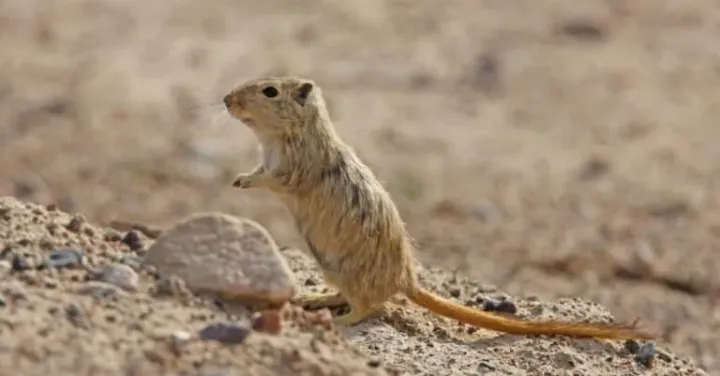
Shaw's jird belongs to the order Rodentia and the family Cricetidae. It is a medium-sized mammal with a robust build and a long tail ending in a distinctive tuft of hair.
The fur color ranges from sandy yellow to light brown, which provides camouflage in the desert and semi-desert environments of North Africa.
This animal is primarily nocturnal or crepuscular, making it difficult to detect visually during daylight hours.
Jirds are social animals that construct complex burrow systems with multiple entrances and chambers specifically designed for storing food supplies.
While physically similar to other species in the genus Meriones, it is distinguished by the specific structure of its molar teeth and the hair pattern on its hind feet.
What it damages
This rodent species causes significant damage to agricultural crops by feeding on cereals, legumes, and various vegetable plants.
Shaw's jirds actively consume wheat, barley, and millet seedlings, leading to thinning of crops and the necessity of reseeding affected areas.
During the ripening stage, these pests cut down plant stems to feed on the grain, causing direct losses in total yield.
Beyond direct consumption, the rodents damage root systems while digging their extensive burrow networks, which stunts plant growth and increases susceptibility to drought.
Substantial losses also occur in storage facilities, where jirds contaminate products with droppings and destroy stored grain reserves.
When it appears
Shaw's jird remains active throughout the year if climatic conditions allow, although reproduction peaks typically occur during the spring season.
In hot climates, these rodents may undergo short periods of torpor or reduced activity during the driest months to conserve energy.
The period of maximum damage to fields occurs during the active growth phase of young plants in spring when jirds require succulent food for rearing their young.
In autumn, pest activity is focused on gathering and storing seeds and plant parts in deep burrows to sustain them through the winter months.
During migration periods from desert regions into cultivated lands, the intensity of crop damage increases, necessitating continuous monitoring of adjacent areas.
Signs of infestation
The primary sign of infestation is the presence of characteristic burrow openings with mounds of excavated soil located near the entrances.
In fields, one can find grazed areas where plants have been cut at the base, clearly indicating rodent activity rather than insect damage.
Well-defined trails connecting burrows to feeding sites are a reliable indicator of high population density in the area.
Near habitats, one can observe gnaw marks on stems and discarded seed husks, which jirds leave behind after eating the inner part of the grain.
The discovery of distinctively shaped droppings and a characteristic odor near burrow entrances confirms the presence of an active colony.
Control measures
The primary control method involves the application of acute and anticoagulant rodenticides, which are inserted directly into the burrow systems.
Agricultural management is crucial: deep plowing of fields and the removal of weeds along field margins deprive pests of their food sources and shelters.
Physical destruction of burrow systems through mechanical soil cultivation during periods of low animal activity is highly effective.
Establishing protective strips and barriers around cultivated land is recommended to prevent the migration of rodents from natural habitats into crop fields.
- Regular population monitoring;
- Use of certified bait stations;
- Preservation of natural predators (raptors, foxes) in surrounding areas.
Taxonomy
- Latin name
- Meriones shawi
- Order
- Rodents
- Family
- Muridae
- EPPO code
- MERNSH
Discussion
No discussions yet — be the first.