
Red-tailed gerbil
Meriones erythrourus
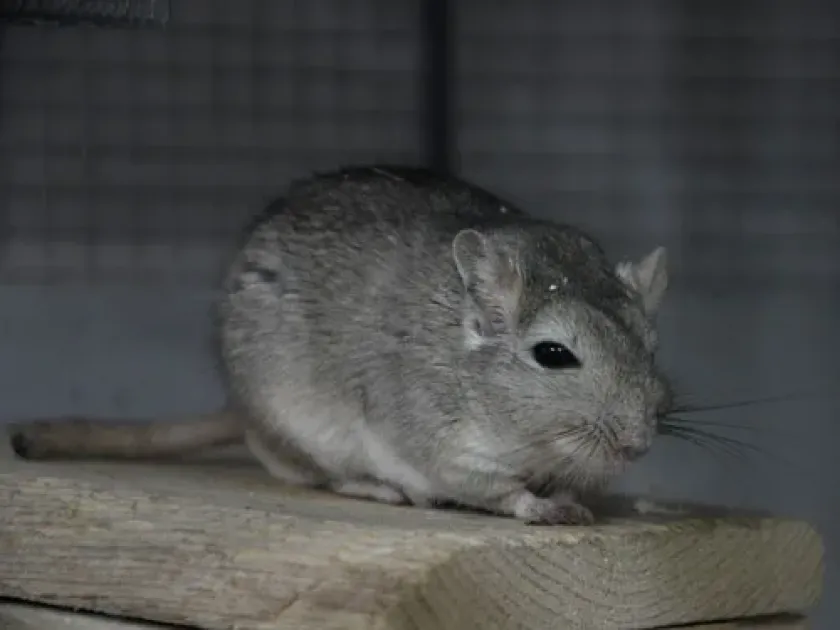
Description
How to identify
The red-tailed gerbil Meriones erythrourus belongs to the order Rodentia and the family Cricetidae. It is a rodent species naturally adapted to arid and semi-arid environments.
The species is characterized by a reddish-ochre coat on the back, lighter underparts, and a long tail that ends in a distinct dark-colored tuft of hair.
Adult individuals typically measure between 12 and 16 cm in body length. They possess large eyes and relatively short, rounded ears, which are well-suited for their crepuscular and nocturnal activity patterns.
They are highly adapted to digging, constructing complex underground burrow systems with multiple exits to manage extreme soil temperatures.
This gerbil usually lives in colonies, which allows for rapid population growth and significant impact when they invade agricultural areas.
What it damages
The red-tailed gerbil is a significant pest that primarily targets cereal crops, including wheat, barley, rye, and oats during various stages of development.
They damage crops by grazing on seedlings, severing stems, and consuming grain during the ripening stages, often transporting large quantities into their burrows for winter storage.
Besides cereals, they frequently infest vegetable crops, legumes, and melon patches, causing substantial losses in total yield and quality of the produce.
Extensive burrowing activities beneath the soil surface can also disrupt the root systems of healthy plants, leading to weakened growth and increased susceptibility to diseases.
Furthermore, these rodents can act as natural reservoirs for various zoonotic diseases, creating additional risks for workers and livestock in the agricultural sector.
When it appears
The active period of the red-tailed gerbil generally begins in early spring as soil temperatures rise and continues until late autumn, when weather conditions become harsh.
Their most intense feeding and hoarding activity coincides with the milk and dough stages of cereal grain development, which provides essential nutrients for their survival.
During the warm season, these rodents are capable of producing multiple litters, leading to exponential population increases if the food supply remains abundant.
Migration from natural rangelands into irrigated or cultivated fields often peaks during the dry season when surrounding vegetation dries out and crops provide the only available moisture.
In regions with milder winters, these rodents may maintain some level of activity, continuing to cause damage to winter crops throughout the colder months.
Signs of infestation
Initial detection of the pest is indicated by the presence of burrow holes with characteristic soil mounds located near field borders or within the crop rows.
Observers can identify well-worn pathways connecting the burrow network to the feeding areas, where plants show clear signs of systematic destruction.
- Seedlings that have been neatly cut at the base or entirely removed.
- Patchy areas in the field where cereal crops appear mowed or completely missing.
- Accumulations of grain or debris near the burrow entrances.
- Small fecal pellets and footprints along the well-used runways between colonies.
When infestation levels are high, damage becomes widespread, often resulting in significant economic loss for the farming operation if not addressed immediately.
Control measures
Effective management of the red-tailed gerbil involves a combination of mechanical, cultural, and chemical control strategies implemented as part of integrated pest management.
Deep plowing of the fields remains the most effective mechanical intervention, as it destroys the burrow systems and reduces the shelter available to the rodents.
Chemical control involving the use of approved rodenticides in bait stations or directly in burrow entrances is necessary during periods of high population density.
Proactive monitoring of field margins and the removal of weeds are essential cultural practices to reduce the attractiveness of the site to immigrating gerbil populations.
Ensuring compliance with local environmental regulations is crucial when applying baits to avoid harming non-target wildlife species in the surrounding habitat.
Taxonomy
- Latin name
- Meriones erythrourus
- Order
- Rodents
- Family
- Muridae
- EPPO code
- MERNER
Discussion
No discussions yet — be the first.