
Gerbils
Meriones
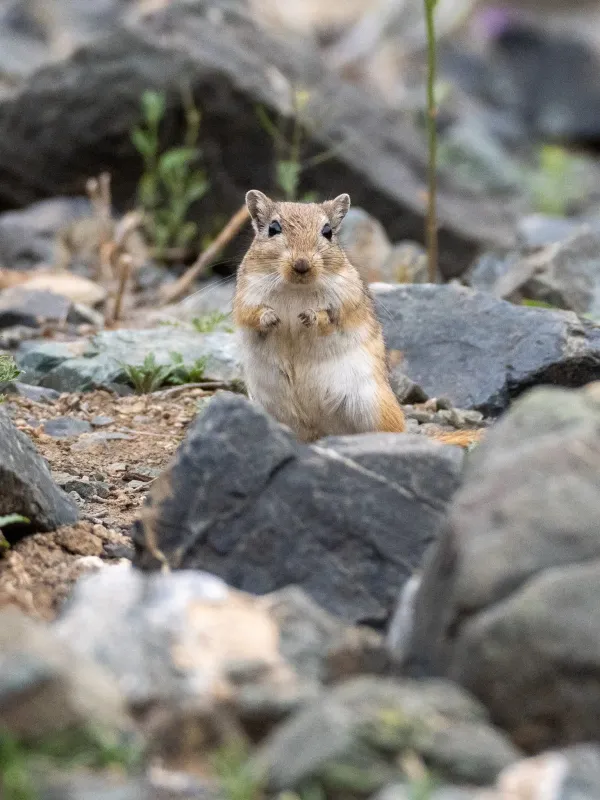
Description
How to identify
Gerbils (Meriones) belong to the order Rodentia and the family Muridae. They are small rodents characterized by their long hind limbs, which are adapted for jumping, and a tail often tipped with a tuft of hair.
These animals are primarily burrowers, constructing complex tunnel systems that serve as both nesting sites and underground food storage facilities throughout the year.
They possess large eyes and sensitive ears, which are evolutionary adaptations for detecting predators in open desert and steppe environments.
Gerbils are highly social animals that live in colonies, making them particularly difficult to eradicate once they have established a strong presence in a field.
Their biological success is largely due to a rapid reproductive cycle, allowing populations to explode within a short period given favorable environmental conditions.
What it damages
Gerbils cause significant agricultural damage by consuming seeds, seedlings, and the green matter of various crops, including wheat, barley, and pulses.
They undermine the root systems of plants, leading to weakened plant health and increased susceptibility to other diseases and environmental stress factors.
During the harvest season, these rodents actively collect stems and grains, transporting large quantities to their burrows, which leads to direct harvest losses.
By constantly digging and moving soil, they degrade the structure of the topsoil, which can contribute to localized erosion and nutrient depletion in infested fields.
Furthermore, they often strip the bark of young trees in shelterbelts, which can lead to the death of saplings and the compromise of wind protection for crops.
When it appears
Activity levels are highest in the spring when crops begin to germinate, providing a rich food source for the rodent colonies to expand rapidly.
Summer heat often drives gerbils to forage during the cooler twilight or night hours, though they remain active throughout the growing season.
Autumn is a critical period when they engage in intensive food hoarding, gathering all available resources from the fields to survive the winter months.
In winter, their activity depends on the regional climate; in milder regions, they remain active, while in colder areas, they retreat into deeper burrows.
The reproductive cycle is closely tied to rainfall; in years with significant spring precipitation, food availability increases, triggering a massive population boom.
Signs of infestation
The presence of gerbils is indicated by numerous burrow entrances with distinct conical mounds of excavated soil surrounding the openings.
Well-defined trails connecting multiple burrow entrances or leading toward vegetation patches are clear signs of frequent rodent traffic and foraging activity.
Clusters of cut plant stems, often left near burrow entrances for drying or consumption, serve as a telltale sign of a nearby hoarding site.
Fields infested with gerbils often show patches of thinning or completely bare ground where the soil has been heavily disturbed by constant digging.
In areas of high density, the presence of droppings near burrow entrances and the smell associated with colony activity are highly noticeable to trained observers.
Control measures
Deep tillage remains a primary agronomic method for controlling gerbils, as it effectively destroys tunnel systems and disturbs nesting habitats.
The use of rodenticides in the form of bait stations is often necessary to manage high populations, especially in large-scale commercial farming operations.
Implementing effective crop rotation and controlling weeds around field borders can reduce the available shelter and food sources for these pests.
- Encouraging natural predators such as owls and eagles by installing nesting boxes or perches.
- Using biological control agents that target rodent populations specifically.
- Flooding burrows in irrigation-supported areas to force rodents out of their nests.
- Continuous monitoring to identify and treat infestation spots before they spread.
A proactive management strategy involving both mechanical and chemical control is essential to prevent significant economic losses caused by gerbil infestations.
Taxonomy
- Latin name
- Meriones
- Order
- Rodents
- Family
- Muridae
- EPPO code
- MERNSP
Discussion
No discussions yet — be the first.