
Superb lyrebird
Menura novaehollandiae
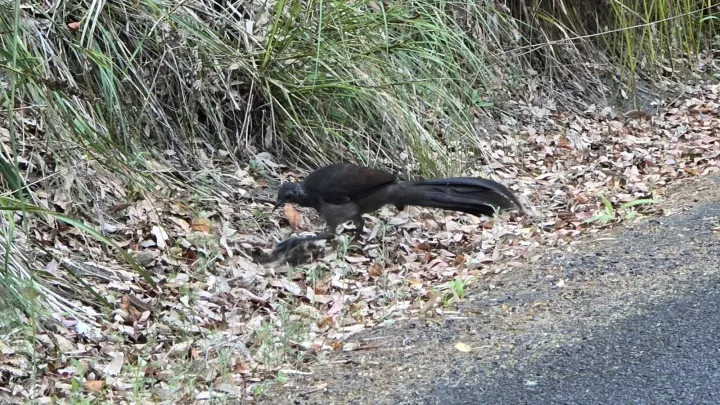
Description
How to identify
The superb lyrebird (Menura novaehollandiae) is a large, pheasant-sized passerine bird native to the rainforests of southeastern Australia.
Males are globally famous for their elaborate tail feathers that form a lyre shape during elaborate courtship displays.
These birds are ground-dwelling and possess extremely strong legs with sharp claws, which they use to churn through the forest floor.
They are known for their exceptional ability to mimic complex sounds, including human-made noises and other animal calls.
While they are an iconic species, their foraging behavior makes them a nuisance in managed landscapes and tree nurseries.
What it damages
The primary damage caused by lyrebirds is the extensive disruption of the soil structure and surface layer.
By vigorously turning over soil and leaf litter in search of insects, they can expose and damage the delicate root systems of young plantings.
In agricultural settings, their foraging can lead to significant soil erosion, especially on sloped terrains near forest edges.
They often destroy mulched areas by scattering organic material across large distances, undoing landscaping efforts.
Their activity effectively acts as a mechanical disturbance that hinders the natural regeneration of ground-level flora and nursery stock.
When it appears
Activity is most pronounced during the breeding season, which occurs during the Australian winter months (June through August).
During this period, males construct elaborate mounds of soil to attract females, causing significant localized surface damage.
Even outside the breeding season, lyrebirds remain territorial and continue their daily foraging routine throughout the year.
Increased soil moisture following rainfall events encourages deeper foraging, as invertebrate activity increases near the surface.
The duration and intensity of the damage are highest when food resources in the forest are temporarily scarce.
Signs of infestation
Large patches of cleared, turned-over earth are the most diagnostic sign of a lyrebird’s presence on a property.
Fresh mounds of soil surrounding the base of trees or shrubs often indicate where the bird has been actively excavating.
Missing or scattered mulch, combined with deep claw marks in the soil, suggests recent feeding activity by the species.
Young plants or seedlings found uprooted or partially uncovered are common indicators of localized lyrebird disturbance.
- Large cleared soil patches
- Scattered garden mulch
- Exposed root systems
- Distinctive claw marks in soft soil
Control measures
Physical barriers are the most effective way to protect sensitive crops and young trees from lyrebird interference.
Encircling sensitive nursery plants with wire mesh or plastic guards provides a simple but necessary defense against soil disturbance.
Replacing soft organic mulch with inorganic materials like stone or heavy gravel can deter the birds from foraging in specific areas.
Sonic bird deterrents or motion-activated sprinklers may provide temporary relief by discouraging birds from settling on private land.
Landscape design plays a role; maintaining a buffer zone of native forest vegetation can sometimes divert foraging birds away from high-value gardens.
Taxonomy
- Latin name
- Menura novaehollandiae
- Family
- Menuridae
- EPPO code
- MENUNO
Discussion
No discussions yet — be the first.