
Filbertworm
Melissopus
Description
How to identify
The filbertworm (Melissopus latiferreanus) is a member of the Tortricidae family of moths. This moth is a highly specialized pest that undergoes a complete metamorphosis, including egg, larva, pupa, and adult stages.
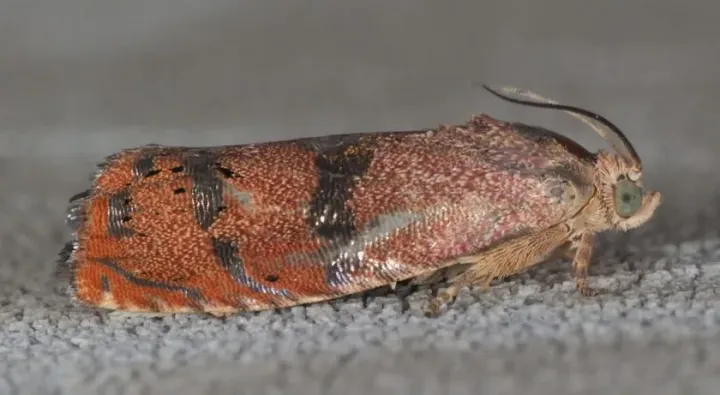
Adult moths have a wingspan of approximately 20 mm. They are easily recognized by their reddish-brown to dark brown wing coloration, which features a distinct metallic band across the wings.
The larvae, which are the main cause of damage, are creamy-white with dark brown or black heads. They are active and move quickly to bore into the developing nuts immediately after hatching.
Pupation occurs in soil or leaf litter, where the insects spend the winter inside protective cocoons. In late spring, they transform into adult moths to start a new generation.
Female moths lay eggs individually on the surface of the nuts or nearby leaves. A single female can deposit dozens of eggs, leading to localized but significant infestations.
What it damages
The primary hosts of the filbertworm are hazelnuts, filberts, and oak acorns. The larvae pose a major threat to commercial nut orchards by destroying the inner kernel.
By consuming the kernel, the larvae make the nuts completely unmarketable. Furthermore, their feeding activity creates entry points for fungal pathogens, which can spoil the entire batch of harvested nuts.
Severe infestations can result in significant yield losses, as one larva may move between multiple nuts, webbing them together and causing them to shrivel prematurely.
The economic impact is heightened because damage is often internal and not visible until the nuts are cracked, leading to high rejection rates during the post-harvest grading process.
Additionally, infected nuts are often shed by the tree earlier than healthy ones, which complicates the harvesting process and increases labor costs for cleaning the orchard floor.
When it appears
Adult moths typically emerge in late spring or early summer, depending on soil temperatures and local weather patterns. This period marks the beginning of the mating and egg-laying phase.
Larval emergence occurs approximately 1 to 2 weeks after the eggs are laid. This specific window is crucial for orchard managers to monitor the pest and implement control strategies.
The larvae spend the majority of the summer feeding inside the nuts. During this time, they grow rapidly before exiting the shell to find a suitable location for winter diapause.
By autumn, the larvae migrate into the soil or under bark to pupate and remain dormant throughout the winter months, awaiting the return of warmer temperatures.
While one generation per year is standard, warm and extended summers can sometimes lead to a partial second generation, further increasing the difficulty of pest management.
Signs of infestation
The most common sign of a filbertworm infestation is the presence of small, round entry holes on the surface of the nut shell, often accompanied by frass (larval waste).
Larvae often produce webbing that connects the nut to a nearby leaf or connects several nuts together. Detecting this webbing is a clear indicator of active feeding.
Premature nut drop during the peak summer months is a strong symptom of internal infestation. Opened nuts often reveal a larva or the empty cavity left by its feeding.
Discoloration of the shell or visible spots where the larva has bored into the kernel are also common markers used by inspectors to identify affected crops.
- Entry holes in the shell.
- Presence of sawdust-like frass on the nut surface.
- Webbing attached to the husk or leaves.
- Premature fruit drop.
Control measures
The first line of defense is orchard sanitation. Removing fallen nuts (drops) as soon as possible prevents larvae from exiting the shells and entering the soil to pupate.
Cultivating or tilling the soil around the base of the trees in late autumn or early spring can physically destroy overwintering cocoons and disrupt the life cycle of the pest.
Pheromone traps are essential for monitoring the flight patterns of adult moths, allowing growers to time their insecticide applications precisely when eggs are hatching.
Biological control agents, including parasitic wasps or entomopathogenic nematodes, can be used to manage populations in an environmentally friendly manner.
Chemical control, when necessary, involves applying registered insecticides at the optimal time to target young larvae before they bore into the nut shell, ensuring maximum efficacy.
Taxonomy
- Latin name
- Melissopus
- Order
- Lepidoptera (butterflies)
- Family
- Tortricidae
- EPPO code
- MELSSP
Discussion
No discussions yet — be the first.