
Two-striped slug
Meghimatium bilineatum
Description
How to identify
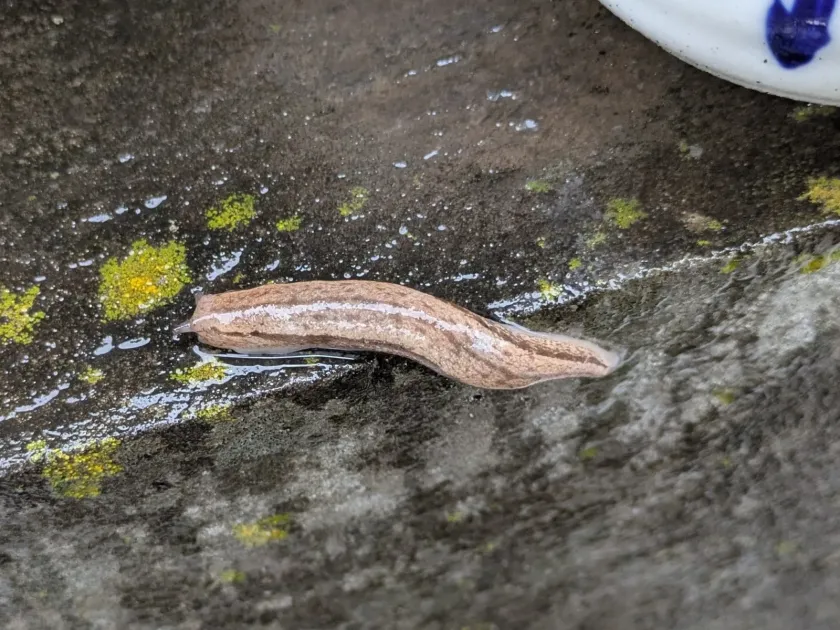
The two-striped slug (Meghimatium bilineatum) is a gastropod mollusc belonging to the Philomycidae family. It is characterized by the absence of a shell and a thick, fleshy mantle that covers the dorsal side.
Adult individuals typically measure between 4 and 6 cm in length. The common name refers to the two distinct dark longitudinal stripes running along the back of the body, which set it apart from other species.
Their body surface is covered with a layer of thick mucus, which is essential for protecting the slug from desiccation and facilitating movement across various surfaces.
The head features two pairs of tentacles: the upper ones serve as visual organs, while the lower ones are specialized for sensory perception and chemoreception.
When inactive, they tend to retract into a compact, protective shape to conserve moisture, often found under damp organic debris during daylight hours.
What it damages
This species is a highly polyphagous pest, meaning it feeds on a wide range of agricultural crops, including leafy vegetables, tubers, and various ornamental plants.
The most severe damage is typically observed on lettuce, cabbage, and young seedlings, where slugs can consume entire leaves, leaving behind only the coarse vascular network.
Fruits that rest on the soil, such as strawberries or tomatoes, are particularly susceptible to deep feeding damage, rendering the produce unmarketable.
In addition to surface foliage, they can damage the root systems and stems of plants, often leading to stunted growth or total wilting in young specimens.
Greenhouse environments provide ideal conditions for these slugs, where they can rapidly reproduce and cause catastrophic losses in delicate nursery crops.
When it appears
The activity cycle of the two-striped slug is strictly governed by humidity and temperature, peaking during rainy seasons and periods with high ambient moisture.
They are active throughout the growing season, from early spring when the soil warms up until late autumn before the onset of hard frosts.
During the day, they remain sheltered in cool, dark, and humid microhabitats, such as beneath stones, mulch, or dense vegetation to avoid dehydration from sunlight.
Reproduction involves laying eggs in moist, protected soil crevices where the larvae can develop successfully within a few weeks, depending on the thermal conditions.
Peak feeding activity occurs at night and during dusk, when the decrease in temperature and increase in surface humidity allow them to roam freely over crops.
Signs of infestation
The primary symptom of an infestation is the presence of irregular, ragged holes in the foliage of plants, often increasing in frequency near the base of the plant.
The trail of shiny, dried mucus is a hallmark sign of slug activity, often found on leaves, stems, and even the surrounding soil surface.
Damaged fruits exhibit deep, hollowed-out cavities which frequently become secondary sites for rot-causing bacteria and fungi to proliferate.
Early morning scouting often reveals the presence of slugs hiding under leaves or at the base of damaged plants, particularly after periods of rain.
Sudden wilting or "disappearing" seedlings are another classic indicator that slugs have been feeding on the tender, succulent tissues near the soil line.
Control measures
Effective management begins with sanitation: removing weeds, crop residues, and debris eliminates the critical refuges slugs rely on during the day.
Regular cultivation and hoeing of the soil disturb the habitat, effectively destroying egg clusters and making the environment less hospitable for the molluscs.
Physical barriers such as crushed eggshells, wood ash, or specialized copper tape can be placed around sensitive plants to discourage slugs from reaching them.
Encouraging natural predators such as hedgehogs, ground beetles, and birds can provide a significant degree of natural biological control in garden settings.
In cases of severe infestation, the application of molluscicides containing metaldehyde or iron phosphate is recommended as a last resort, strictly following label instructions.
Taxonomy
- Latin name
- Meghimatium bilineatum
- Order
- Molluscs
- Family
- Philomycidae
- EPPO code
- INCLBI
Discussion
No discussions yet — be the first.