
Meghimatium
Meghimatium
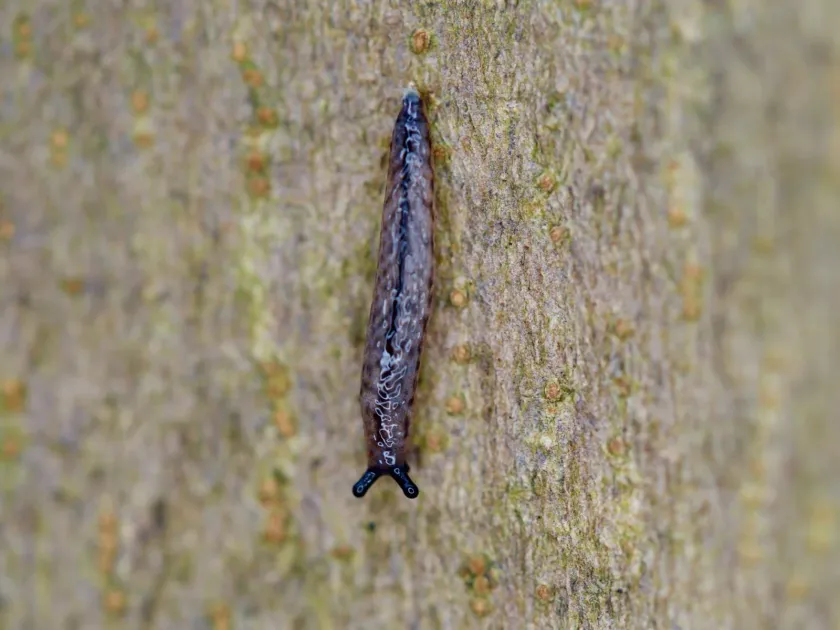
Description
How to identify
Meghimatium is a genus of terrestrial, shell-less slugs belonging to the family Philomycidae. These are relatively large slugs that are distinct due to the absence of a visible external shell.
Their bodies are elongated and covered with a layer of thick, protective mucus. The coloration usually ranges from gray to brownish tones, often featuring patterns or bands on the mantle.
A key characteristic of this genus is their ability to move actively across damp surfaces. When threatened or exposed to dry conditions, they often contract into a hemispherical shape to retain moisture.
Systematically, these slugs are classified within the order Stylommatophora. They are highly adapted to humid environments, which determines their presence in forest litter and cultivated areas.
Detection is often difficult due to their nocturnal habits. During the day, they remain hidden deep in the soil, under rocks, or beneath debris, avoiding detection until dusk.
What it damages
Meghimatium is a generalist feeder capable of damaging a wide variety of cultivated plants. They primarily target vegetable crops, berries, and ornamental perennials.
Seedlings and young shoots are at the highest risk. These slugs can consume the leaves of cabbage, lettuce, peppers, and eggplants very quickly, often destroying young plants overnight.
Beyond leafy greens, they feed on potato tubers and root vegetables such as carrots and beets. They create deep cavities in produce that comes into contact with the soil surface.
Ornamental plants, especially hostas and lilies, suffer significant aesthetic damage. The leaves often develop numerous irregular holes and ragged edges due to heavy feeding.
The damage goes beyond direct tissue consumption; the mucus trails they leave behind facilitate the spread of fungal and bacterial pathogens, causing rot in damaged parts.
When it appears
The activity of Meghimatium is strongly correlated with weather patterns and humidity levels. Their peak destructiveness occurs during rainy seasons and periods of mild, moist weather.
The life cycle involves laying eggs in moist soil or decaying organic matter. The eggs are quite resilient to temperature fluctuations, allowing the species to overwinter successfully.
In spring, once temperatures remain consistently above freezing, juveniles emerge. The primary period of feeding and reproduction lasts throughout the summer and early autumn.
During hot and dry periods, these slugs retreat into deep soil or find cool, shaded shelters. Activity drops significantly, but they recover rapidly after the first rainfall.
Development from egg to adulthood takes several weeks or months depending on the climate. Multiple generations may occur throughout a single growing season in favorable conditions.
Signs of infestation
The most visible indicator of Meghimatium presence is the distinct, shiny, dried silvery trails of mucus left on leaves and stems of plants.
Affected leaves appear heavily eaten, with large holes of irregular shapes or stripped margins. In severe cases, only the tough veins remain, leaving the plant looking skeletonized.
Deep, raw cavities are common on root vegetables and fruits resting on the ground. These wounds are often accompanied by early signs of decay due to secondary infections.
In the early morning, clusters of these slugs can often be found hiding under mulch, boards, or dense foliage located near vegetable beds.
Plant surfaces near feeding spots often show signs of mold growth, as the mucus trail serves as an excellent substrate for the development of opportunistic fungal pathogens.
Control measures
Cultural control is the foundation of management. It is crucial to regularly remove plant debris, weeds, and garden trash that provide daytime hiding spots for slugs.
Creating physical barriers using crushed gravel, sand, or wood ash around garden beds can discourage movement, as slugs struggle to cross dry and abrasive surfaces.
Manual collection in the evening or early morning remains one of the most effective and eco-friendly methods for controlling slug populations in small-scale gardens.
Beer traps or bait stations using fermented liquids can be used to attract and capture a significant number of slugs, effectively reducing the population size.
For severe infestations, specialized baits based on iron phosphate or metaldehyde can be used. Always follow local regulations and label instructions to ensure safe application.
Taxonomy
- Latin name
- Meghimatium
- Order
- Molluscs
- Family
- Philomycidae
- EPPO code
- INCLSP
Discussion
No discussions yet — be the first.