
Megaplatypus mutatus
Megaplatypus mutatus
Description
How to identify
Megaplatypus mutatus is a member of the Curculionidae family, specifically the Platypodinae subfamily, often referred to as ambrosia beetles due to their symbiotic relationship with fungi.
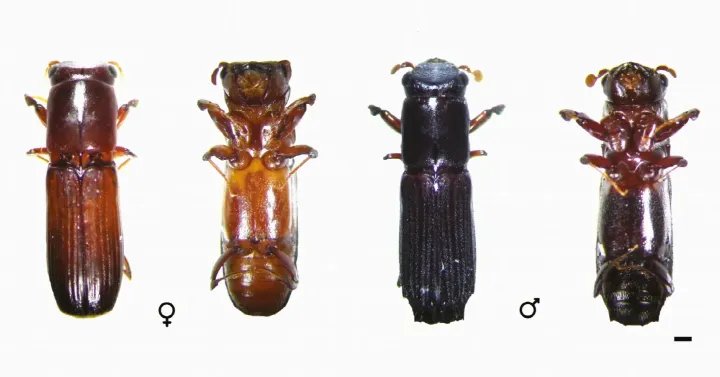
Adult beetles are elongated, cylindrical, and measure approximately 7-9 mm in length, possessing a dark brown or blackish color that aids in camouflage.
The species exhibits clear sexual dimorphism, with males and females having distinct structural differences adapted for their role in gallery excavation and brood care.
The larvae are legless, grub-like, and cream-colored, spending their entire development cycle inside the galleries created by the adults within the wood.
Unlike bark beetles that feed on phloem, these beetles rely on specific ambrosia fungi introduced into the tunnels, which serve as the primary food source for their larvae.
What it damages
This beetle is a significant wood-boring pest that attacks a wide variety of deciduous tree species, including both forest trees and agricultural plantations.
Common host plants include poplar, eucalyptus, maple, sycamore, and various fruit-bearing species like apple and stone fruits within the Rosaceae family.
The damage is caused by the adults boring deep, intricate tunnels into the xylem, which compromises the tree's vascular system and reduces its structural integrity.
While often targeting stressed or weakened trees, the species can also colonize healthy hosts if the local population density of the beetle is sufficiently high.
The internal galleries not only disrupt nutrient transport but also introduce wood-decay fungi, leading to severe crown dieback and long-term tree mortality.
Signs of infestation
The most visible indicator of an active infestation is the presence of fine, light-colored boring dust (frass) accumulating at the base of the tree or caught in bark crevices.
Small, perfectly circular holes on the bark surface signify entry points for the adult beetles as they establish their nesting galleries inside the sapwood.
In many cases, the infestation causes sap exudation or resin flow on the trunk surface, which may darken over time and become a distinct visual marker of distress.
Trees under heavy attack show clear symptoms of foliage decline, including premature yellowing, wilting of branches, and a general thinning of the canopy.
Evidence of tunnels can be observed if a tree is pruned or felled, revealing deep, stained passages characterized by the darkening associated with the ambrosia fungi.
Control measures
Management of M. mutatus is challenging due to the beetle's cryptic life cycle, necessitating a combination of cultural, monitoring, and chemical practices.
Sanitation is a primary control measure; infested trees must be removed and destroyed promptly to eliminate sources of further infestation within the plantation.
Systemic insecticides applied during the peak flight season can help protect valuable trees, as the chemical is translocated through the vascular tissue.
Pheromone-based trapping systems are essential for monitoring flight activity, allowing for precise timing of chemical applications when adults are exposed on the bark.
Improving general tree vigor through adequate irrigation and balanced fertilization can help prevent successful colonization by reducing the susceptibility of the host.
Taxonomy
- Latin name
- Megaplatypus mutatus
- Order
- Coleoptera (beetles)
- Family
- Curculionidae
- EPPO code
- PLTPMU
Discussion
No discussions yet — be the first.