
Megalothorax minimus
Megalothorax minimus
Description
How to identify
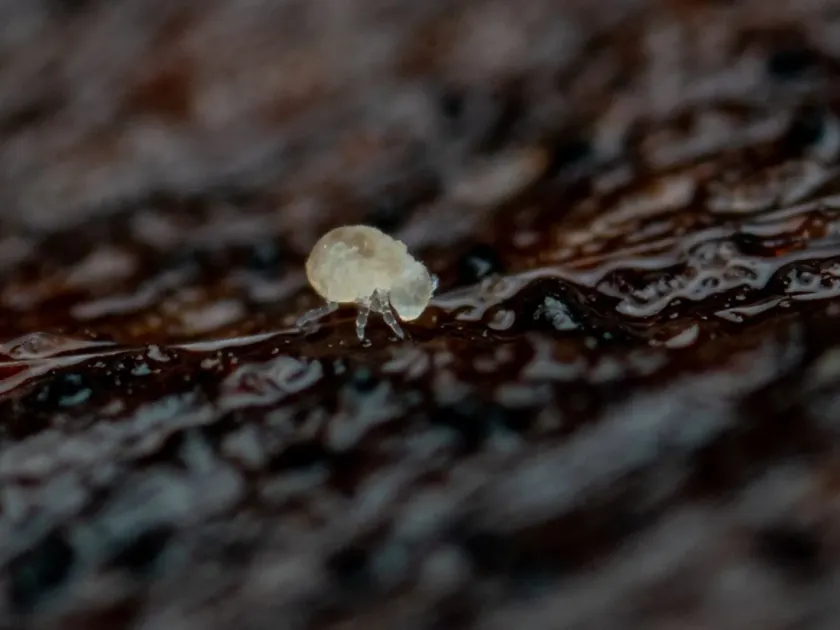
Megalothorax minimus is a minute member of the Collembola order (springtails), specifically belonging to the Megalothoracidae family.
These organisms are incredibly small, typically measuring between 0.3 and 0.5 mm in length, making them nearly invisible to the naked eye without a magnifying lens.
They possess a globular, translucent, or whitish body and are equipped with a furcula, an appendage that allows them to jump when disturbed.
The biology of this species is strictly linked to high-moisture environments, where they thrive in the upper soil layers or damp potting substrates.
They are primarily decomposers, but under favorable conditions, their populations can spike, leading them to feed on living plant tissues, thus becoming significant agricultural pests.
What it damages
Megalothorax minimus primarily attacks young seedlings by feeding on tender roots, hypocotyls, and emerging cotyledons.
This feeding behavior is particularly destructive in greenhouses where delicate vegetable or ornamental crops are being raised in high-density trays.
The small lesions caused by these springtails act as entry points for secondary pathogens, such as soil-borne fungi, leading to root rot and seedling damping-off.
Damage is often cumulative, as a high density of these insects can lead to widespread crop thinning and significant financial loss for growers.
Plants affected by this pest show signs of stunted growth and a general decline in health that is often misattributed to nutrient deficiencies or lack of water.
Signs of infestation
The first indicator is the presence of tiny, irregular feeding holes on the stems and leaves of seedlings near the soil surface.
Affected seedlings exhibit sudden wilting or yellowing, followed by a slow death even when environmental conditions appear optimal.
If you disturb the surface of the moist soil, you may notice tiny, white, jumping organisms moving quickly across the substrate.
The roots of damaged plants often appear brownish or necrotic at the tips, which is a direct consequence of both feeding and subsequent fungal colonization.
In greenhouses, check for patches of dead or weak seedlings in specific areas of the propagation tray, which indicates a localized outbreak of the pest.
Control measures
Proper water management is the most critical cultural practice; allowing the surface of the soil to dry out periodically effectively reduces the springtail population.
Sterilizing potting mixes through heat treatment or steam before seeding is highly recommended to eliminate existing populations of Megalothorax minimus.
Biological control agents, including entomopathogenic fungi or specialized soil nematodes, can be introduced to manage high numbers of the pest organically.
Where necessary, applying soil-applied insecticides approved for the target crop can suppress severe outbreaks, provided they are applied according to label instructions.
Regular sanitation of the growing environment, including the removal of weeds and plant debris, is essential to prevent the accumulation of these pests between production cycles.
Taxonomy
- Latin name
- Megalothorax minimus
- Family
- Neelidae
- EPPO code
- MGTXMI
Discussion
No discussions yet — be the first.