
Megalothorax
Megalothorax
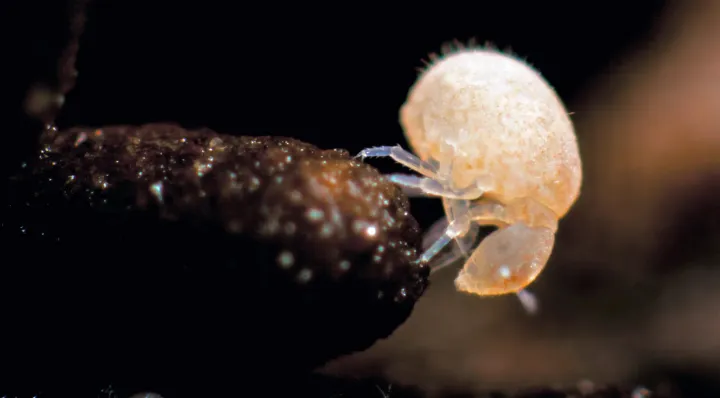
Description
How to identify
Megalothorax is a genus of springtails belonging to the order Collembola and the family Megalothoracidae. These are minute arthropods, often measuring less than 1 mm in length, which makes them difficult to detect without a magnifying glass.
They are characterized by a compact, rounded body structure and possess a specialized jumping organ called the furcula. Their morphology is adapted for movement within the tiny pores of moist soil substrates.
These organisms are highly moisture-dependent and thrive in humid environments. They inhabit the upper layers of soil, decaying organic matter, and the rhizosphere of plants where they find constant moisture and food.
The life cycle involves several molting stages, and they are capable of continuous growth. Because they are highly mobile and reproduce rapidly, a small population can quickly turn into a massive infestation under optimal humidity conditions.
In natural ecosystems, they play a role in soil decomposition, but in artificial environments like greenhouses, their population density often exceeds levels that the plant root system can tolerate without sustaining damage.
What it damages
Megalothorax is primarily a pest of seedlings and young plants in their early establishment phase. They target greenhouse-grown vegetables, ornamental plants, and nursery stock sensitive to root disturbances.
The damage is caused by the insects feeding on root hairs, delicate root tips, and the hypocotyl of emerging sprouts. This feeding disrupts the plant's ability to take up water and essential nutrients effectively.
Beyond direct feeding damage, they act as vectors for various fungal pathogens. The lesions created by their mandibles provide entry points for soil-borne diseases such as damping-off and root rot.
In cases of high infestation, the growth of the seedling is significantly stunted, and in severe instances, the entire root system can be compromised, leading to the collapse and death of the plant.
While established plants are more resilient to minor feeding, high population counts still pose a risk, as they constantly stress the root system, thereby reducing the plant's overall vigor and yield potential.
Signs of infestation
Early symptoms include unexpected wilting of seedlings despite adequate soil moisture. The plants appear sickly, lose their crispness, and show no signs of recovery even after irrigation.
A tell-tale sign of a Megalothorax infestation is the presence of tiny, white or grey organisms jumping on the soil surface, particularly noticeable immediately after watering or when the soil is disturbed.
Physical damage can be confirmed by inspecting roots under magnification. The roots may show microscopic feeding marks, discoloration, or signs of localized decay where the tissue has been breached.
Patches of uneven plant growth in trays or flats are a strong indicator of a localized pest issue. Often, these patches correlate with areas of higher soil compaction or moisture retention.
The presence of mold or persistent algal growth on the soil surface can serve as an indirect warning, as these conditions are strongly correlated with the environment Megalothorax requires for survival.
Control measures
The most effective management strategy is the optimization of irrigation. Allowing the surface of the soil to dry out slightly between waterings creates an environment hostile to springtails.
Prevention includes the use of high-quality, sterile potting mixes that are free from uncomposted organic matter. Ensuring good drainage in containers prevents the development of stagnant, moist pockets.
Cultural practices such as top-dressing the soil with a thin layer of dry sand or diatomaceous earth can physically block the movement of springtails and protect the base of the stems.
If chemical control is necessary, select products labeled for soil-dwelling pests, ensuring that application rates are strictly followed to prevent damage to the plants or the beneficial soil microbiome.
In integrated pest management (IPM) programs, the introduction of predatory mites that target soil-dwelling organisms is an effective way to keep Megalothorax populations under economic thresholds.
Taxonomy
- Latin name
- Megalothorax
- Family
- Neelidae
- EPPO code
- MGTXSP
Discussion
No discussions yet — be the first.