
African cocoa weevil
Mecocorynus loripes
Description
How to identify
The African cocoa weevil (Mecocorynus loripes) is a coleopteran insect belonging to the Curculionidae family. It is a specialized pest primarily affecting cocoa plantations in tropical regions.
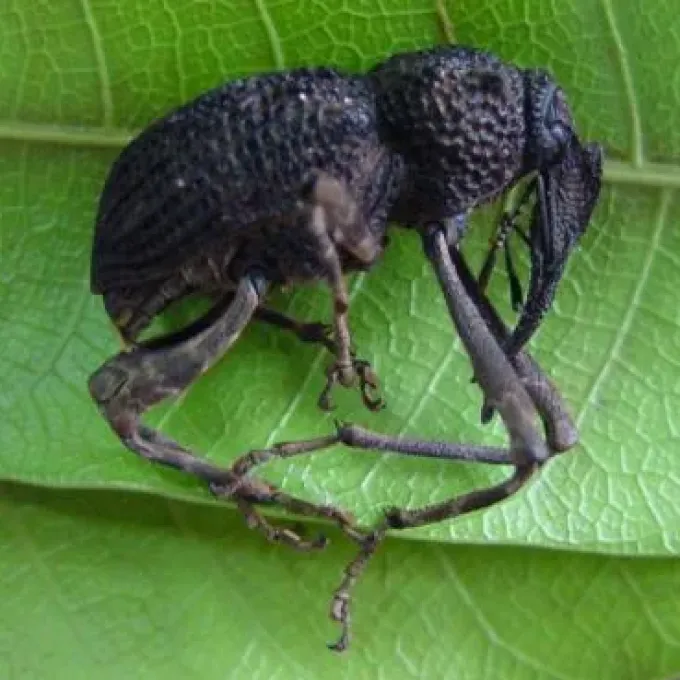
Adult weevils are characterized by a long rostrum and a robust, dark-colored body often covered in scales, which serves as camouflage against the bark of trees.
Their life cycle includes complete metamorphosis: egg, larva, pupa, and adult. The insects prefer to remain hidden during daylight hours, emerging to feed and mate at night.
Larvae develop within the woody tissues of the host plant, where they undergo several instars while consuming the cambium and bark layers.
Females typically oviposit into small crevices or intentional punctures made in the bark of the host tree, ensuring the larvae have an immediate food source upon hatching.
What it damages
The primary host of this pest is the cocoa tree (Theobroma cacao). While adults may graze on tender bark, the most severe damage is caused by the larval stage.
Larvae create extensive galleries within the inner bark and cambium, effectively girdling the tree or branches and disrupting the flow of water and nutrients.
Infested branches often exhibit reduced vigor, premature leaf drop, and eventually dieback. Large infestations can severely weaken or even kill young trees.
Mechanical damage caused by larval tunneling makes the trees physically unstable, increasing the risk of branch breakage during high winds or heavy fruit loads.
Secondary infections, such as fungal pathogens, often colonize the galleries and wounds created by the larvae, significantly exacerbating the overall damage to the plantation.
Signs of infestation
A classic sign of infestation is the presence of frass (larval excrement mixed with wood particles) ejected from tiny holes in the bark of the cocoa tree.
Wilting and yellowing leaves on specific branches provide a clear visual indicator that the internal conductive tissues are being compromised by larval feeding.
The bark surface may show small, localized depressions or scars where eggs were deposited, sometimes accompanied by sap or gum exudation from the wound.
Upon removing a small patch of affected bark, one can observe complex, winding tunnels filled with debris, which are diagnostic of a weevil infestation.
During the night, adult weevils can be spotted on the trunks using a flashlight, as they exhibit nocturnal activity patterns consistent with their need to avoid predators.
Control measures
Sanitation is the cornerstone of management: all severely infested branches must be pruned and burned immediately to destroy larvae before they reach maturity.
Integrated Pest Management (IPM) strategies include monitoring population levels using attractant traps to ensure that insecticide application is timed correctly for maximum effect.
Proper agronomic practices, such as adequate fertilization and weed control, keep trees healthy and more resilient to initial pest colonization.
Application of contact insecticides targeting the bark should be restricted to periods of peak adult activity to minimize impact on beneficial predatory insects.
Wounds left by sanitation pruning should be treated with protective paste or fungicides to prevent opportunistic pathogens from establishing in the weakened tissue.
Taxonomy
- Latin name
- Mecocorynus loripes
- Order
- Coleoptera (beetles)
- Family
- Curculionidae
- EPPO code
- MECOLO
Discussion
No discussions yet — be the first.