
Mecinus
Mecinus
Description
How to identify
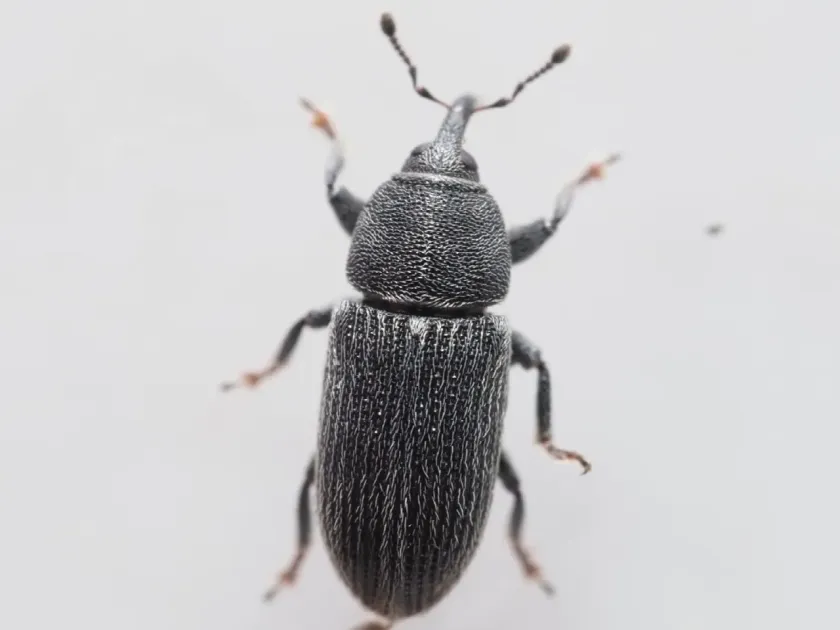
Mecinus is a genus of weevils (Curculionidae family) in the order Coleoptera. These are small beetles, typically measuring between 3 and 4 millimeters in length.
The body is elongated and covered with dense scales or hairs, usually displaying shades of gray, brown, or black, which helps them blend into their host plant environment.
Like other weevils, they possess a characteristic snout (rostrum), which they use for feeding and excavating sites for oviposition within the plant tissue.
Larvae are legless, C-shaped grubs, typically creamy-white with a darker, chitinized head capsule, specialized for internal development within stems or seed pods.
Proper identification usually requires taxonomic expertise, as many species within this genus share very similar morphological traits, making field diagnosis challenging.
What it damages
The genus primarily targets plants in the Plantaginaceae family, though specific species have adapted to various agricultural and ornamental hosts.
Adult beetles cause damage by grazing on the epidermis of leaves and young shoots, resulting in reduced photosynthetic area and plant stress.
The primary economic damage is caused by the larval stage, which tunnels into the host plant's stem, disrupting the vascular tissue and nutrient flow.
When larvae infest seed-bearing structures like pods or capsules, they consume the developing seeds, leading to significant yield losses for seed production.
Severe infestations cause stunted growth, stem deformation, and sometimes premature plant death, making them a serious threat to crop quality and viability.
When it appears
Mecinus overwinter as adults, hiding in the soil, leaf litter, or under plant debris in or near fields, emerging in early spring as temperatures rise.
Their peak activity phase correlates with the vigorous vegetative growth period of the host crops, during which they feed and seek mates.
Oviposition typically occurs in early summer, with females laying eggs directly into the tender tissues of the host plants.
Larval development takes several weeks, concluding with pupation inside the plant tissue, where they are protected from environmental factors.
The new generation of adults emerges in late summer to autumn, feeding briefly before entering diapause to survive the winter season.
Signs of infestation
The most common early sign of an infestation is the presence of small, circular holes or "window-paning" on the leaf surfaces caused by adult feeding.
Stunted growth or wilting in the top sections of the plant is a critical indicator of larval tunnels compromising the internal structure of the stem.
Galls or abnormal swellings on the stems are often indicative of larval development within the plant tissue, showing the host's reaction to the infestation.
Cutting open a suspect stem or seed pod often reveals the larvae or the presence of frass (powdery insect waste), confirming the pest's presence.
A general decrease in the uniformity of the crop, with patches of yellowing or drying plants, can signify an established population density in the field.
Control measures
Effective management begins with robust crop rotation, which breaks the pest's lifecycle and reduces the accumulation of local populations.
Deep autumn tillage is a highly recommended practice to bury overwintering sites, significantly reducing the number of adults that survive until spring.
Chemical control involving systemic insecticides is most effective when applied during the period when adults emerge but before they lay eggs.
Sanitation practices, such as removing and destroying infested plant material immediately after harvest, are crucial to prevent the spread of the pest.
- Monitoring with pheromone or sticky traps to determine population peaks.
- Eliminating wild host plants, particularly Plantago species, from field margins.
- Applying entomopathogenic fungi as a biological alternative to synthetic chemicals.
Taxonomy
- Latin name
- Mecinus
- Order
- Coleoptera (beetles)
- Family
- Curculionidae
- EPPO code
- MECUSP
Discussion
No discussions yet — be the first.