
Martyringa
Martyringa
Description
How to identify
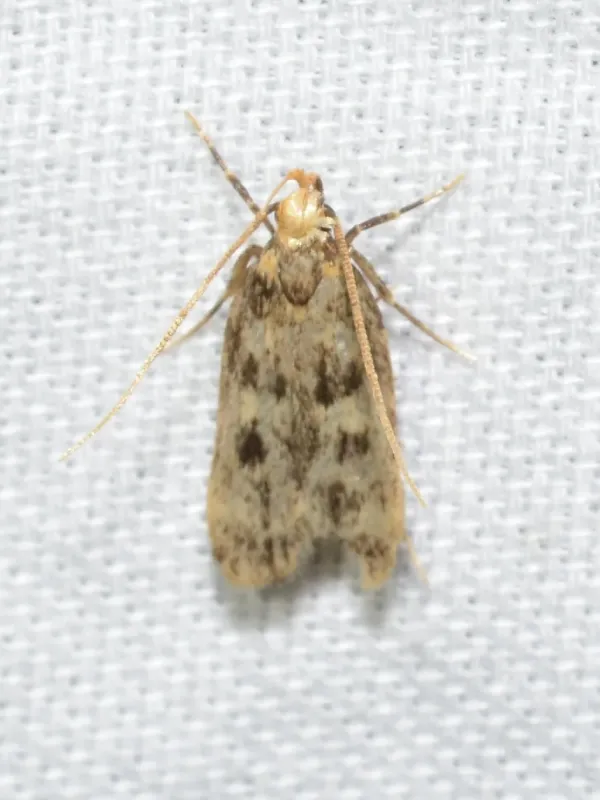
Martyringa is a genus of moths belonging to the Oecophoridae family. These insects are often overlooked due to their nocturnal habits and camouflaged appearance in their natural habitats.
Adult moths typically have slender wings with a dull, brownish or greyish coloration, providing effective camouflage against tree bark, stems, or grain sacks in storage facilities.
Accurate identification of Martyringa species usually requires examination of the moth's morphological characteristics, specifically the wing venation patterns and genitalia.
The larvae, or caterpillars, are the active feeding stage of the insect. They possess a well-developed chewing mouthpart structure suited for consuming plant tissues and dry, organic materials like seeds.
These moths are highly adaptable, capable of surviving in varied environments, from wild forests to high-density agricultural storage warehouses where food sources are abundant.
What it damages
Martyringa poses a dual threat to agriculture: it can damage crops in the field during the growing season and destroy significant quantities of harvested grain in storage.
In the field, larvae bore into the stems of cereal crops, which disrupts nutrient flow and can lead to the wilting and eventual death of the affected stalks.
Within warehouse environments, the larvae infest stored grain products, including wheat, barley, and processed cereal remnants, making them unsuitable for consumption.
Infestation is often accompanied by the production of silk webbing, which binds grain particles together and facilitates the growth of mold and fungus.
Heavy infestations not only cause direct weight loss of the grain but also lower the quality and market value, making the product unacceptable for milling or seeding.
When it appears
The lifecycle of Martyringa is heavily dictated by ambient temperature and seasonal changes, which influence their development rate and reproductive activity.
Adult flight typically begins in late spring, following the emergence of moths from overwintered pupae or larvae, marking the start of the breeding season.
The duration of the lifecycle varies; in outdoor conditions, it is seasonal, while in controlled storage environments, the moths may breed continuously throughout the year.
High temperatures during the summer months generally accelerate the metabolic rate of larvae, leading to more frequent generations and potential population explosions.
Winter survival is typically achieved through diapause, where larvae remain dormant in protected areas such as debris, cracks in storage walls, or within grain kernels.
Signs of infestation
The most immediate sign of a Martyringa infestation is the presence of adult moths resting on warehouse walls, ceilings, or near grain storage bins during the night.
Visual confirmation of larvae can be made by spotting fine webbing or small, irregularly shaped holes in the grain surface, indicating active feeding tunnels.
In growing crops, look for yellowing or premature wilting of stems, which often serves as a primary indicator of larval tunneling within the plant stalk.
Accumulation of fine grain dust or powdery frass near the base of storage structures is a clear sign that larvae are breaking down the stored material.
Utilizing pheromone traps is a highly effective way to detect early activity of Martyringa moths before visual damage to the crop or stored goods becomes severe.
Control measures
Managing Martyringa requires a multi-faceted approach that prioritizes hygiene, structural integrity, and targeted intervention strategies.
- Deep cleaning of grain silos and warehouses before the harvest season to remove all residual debris.
- Implementation of fumigation protocols in storage facilities using registered insecticides to eliminate larval and adult stages.
- Maintenance of low-temperature and low-humidity conditions in warehouses to inhibit pest reproduction and fungal growth.
- Rotation of crops and timely harvesting to reduce the exposure time of grains to field-based infestations.
When infestation levels exceed the economic threshold, professional application of contact insecticides may be necessary to protect the remaining stock and neighboring crops.
Taxonomy
- Latin name
- Martyringa
- Order
- Lepidoptera (butterflies)
- Family
- Lecithoceridae
- EPPO code
- MRTRSP
Discussion
No discussions yet — be the first.