
Marchalina
Marchalina
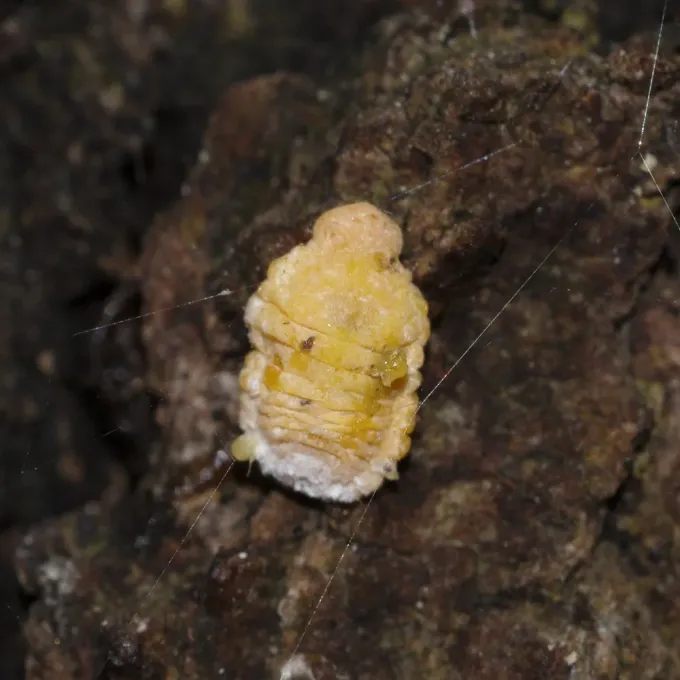
Description
How to identify
Marchalina hellenica is a species of scale insect belonging to the family Margarodidae. The adult females are characterized by the production of large amounts of white, cotton-like wax that covers their bodies and egg masses.
The insect is a sedentary pest, with the female spending most of its life cycle attached to the bark of coniferous trees. It is essentially a sap-sucking insect that causes significant physiological stress to the host tree.
Reproduction in Marchalina hellenica is typically parthenogenetic, meaning females produce offspring without mating with males. This strategy allows the population to grow rapidly and colonize new trees efficiently.
The first-instar nymphs, commonly called "crawlers," are the only mobile stage. They are oval, small, and highly active, allowing them to disperse to new branches or be carried by wind to nearby trees.
The insect goes through three nymphal stages before reaching adulthood. Throughout these stages, the insect remains hidden under its white waxy secretion, which serves as a protective layer against environmental stress.
What it damages
The primary host of Marchalina hellenica is the pine tree, especially the Turkish pine (Pinus brutia). However, it is also known to infest other conifer species, causing damage to needles and branches.
By sucking the sap directly from the phloem of the tree, the pest drains the plant of essential nutrients. This weakens the tree's health and makes it significantly less resistant to other abiotic and biotic stressors.
The most visible sign of damage is the yellowing and premature shedding of needles, leading to thinning of the crown. In severe cases, the entire tree can undergo a decline, resulting in branch dieback or death.
The insect excretes large quantities of honeydew as a byproduct of its feeding. This sweet substance accumulates on the bark and needles, creating an ideal environment for the growth of sooty mold.
Sooty mold prevents the tree from performing photosynthesis properly, which further degrades the host's vigor. Combined with the direct sap removal, this leads to a drastic reduction in tree growth and timber quality.
When it appears
Activity starts in early spring as nymphs emerge from their waxy overwintering sites. They actively crawl on the trunk to find optimal feeding spots on the bark.
During late spring and early summer, the nymphs continue to develop and settle, creating their waxy covers. This is the period when the population becomes most visible due to the accumulation of white cottony secretions.
Summer is the peak period for adult activity. The females produce eggs within their waxy chambers, and the population density reaches its maximum, causing the most significant impact on the host.
In autumn, the growth rates slow down as temperatures drop. The insects prepare for the winter by seeking shelter in deep cracks of the bark, which provide insulation and protection from cold winds.
Wintering occurs primarily in the adult or late nymphal stage. During this period, the pest is relatively inactive, yet it remains firmly attached to the tree throughout the colder months.
Signs of infestation
The most distinct sign of an infestation is the appearance of white, fluffy, cotton-like masses on the trunks and twigs. These patches are easy to spot against the rough dark bark of pine trees.
The presence of a sticky, shiny substance (honeydew) on the bark and needles is another classic indicator. This substance is often followed by the development of black sooty mold.
Ant activity is a strong indicator of an infestation. Ants are attracted to the honeydew produced by Marchalina hellenica and often protect the scale insects from natural predators.
Visually, infested trees show signs of decline, such as a dull or yellowish needle color. Close inspection of the bark reveals the sessile insects covered by their waxy protective layers.
In cases of heavy infestation, the tree may show signs of branch death. If you scrape away the white wax, you will find the insect body, which is usually brown or reddish-brown.
Control measures
Biological control using natural predators, such as the ladybird beetle Novius cardinalis, has proven highly effective. Introducing or protecting these beneficial insects is a cornerstone of integrated pest management.
Managing ant populations on the trunks can indirectly reduce the scale insect population. By removing the ants that protect the scale insects, natural enemies can more effectively prey on the colony.
In urban landscapes or parks, systemic insecticides applied via trunk injection can provide effective control. This method ensures that the chemical moves through the tree's sap, directly targeting the feeding pest.
Sanitation is critical; heavily infested trees should be removed or pruned to reduce the source of further spread in the forest area. This helps to protect the health of surrounding trees.
Monitoring the forest for early signs of the pest is crucial. Early detection allows for timely interventions, preventing the infestation from reaching a level where it causes irreversible damage to the stand.
Taxonomy
- Latin name
- Marchalina
- Order
- Hemiptera (bugs, aphids, leafhoppers)
- Family
- Marchalinidae
- EPPO code
- MARCSP
Discussion
No discussions yet — be the first.