
Giant oceanic manta ray
Manta birostris
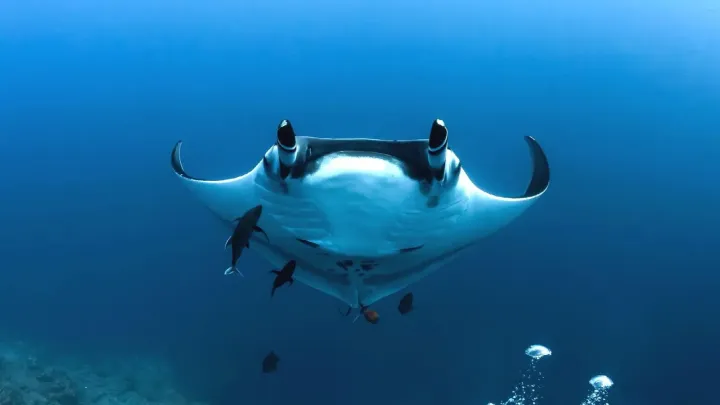
Description
How to identify
The giant oceanic manta ray, Manta birostris, belongs to the family Myliobatidae and the order Myliobatiformes.
It is a large cartilaginous fish recognized by its massive pectoral fins and cephalic lobes used for filter feeding in the ocean.
The species lives exclusively in marine environments, preferring tropical and subtropical waters worldwide.
Its biological cycle involves slow reproduction and long life spans, which are typical for megafauna in aquatic ecosystems.
This animal is an active swimmer, constantly patrolling the open ocean and coastal regions far from agricultural fields.
What it damages
The giant oceanic manta ray is not an agricultural pest and poses zero threat to any crops or plant production systems.
As a filter feeder, its diet consists entirely of zooplankton and small fish, having no interest in plant tissues or agricultural produce.
The classification of this species as a plant pest is entirely erroneous and lacks any scientific evidence in agronomical literature.
There are no recorded instances of this marine animal affecting orchards, fields, or greenhouse crops in any part of the world.
Farmers do not need to concern themselves with this species, as it has no biological capability to interact with agricultural crops.
Control measures
No pest control measures are required for the giant oceanic manta ray, as it does not interact with the agricultural sector.
Conservation efforts for this species are encouraged globally, as it is considered vulnerable due to environmental changes in the ocean.
Agronomists should ignore misleading data regarding this marine fish and focus on managing actual threats such as insect pests or pathogens.
Protecting the marine habitat where these creatures live is essential for biodiversity, but it is unrelated to plant protection strategies.
Management practices should always be based on verified data, focusing on species that actually compromise the economic viability of agricultural production.
Taxonomy
- Latin name
- Manta birostris
- Family
- Mobulidae
- EPPO code
- MNTABI
Discussion
No discussions yet — be the first.