
Cotton bollworm
Manta
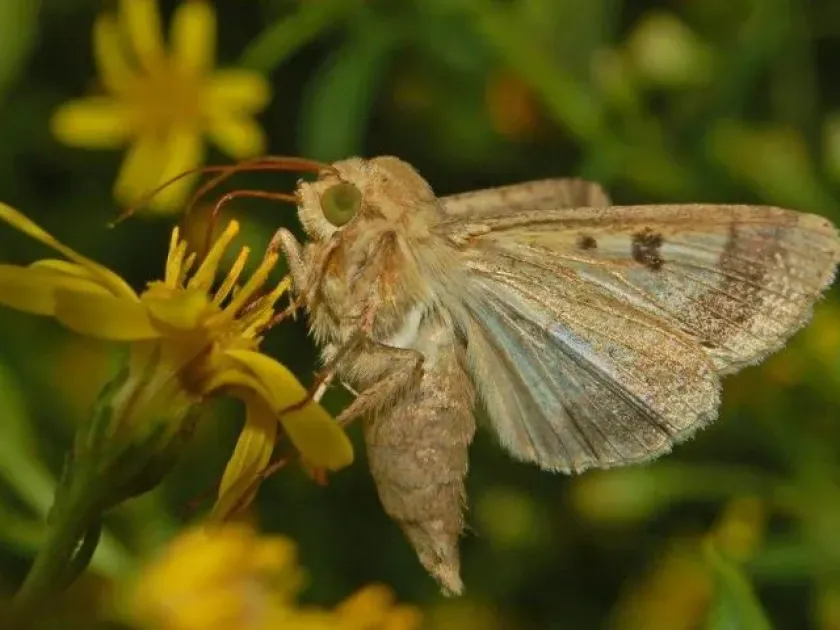
Description
How to identify
The cotton bollworm (often identified as *Helicoverpa armigera*, with *Manta* used as a historical or taxonomic synonym) is a member of the Noctuidae family, order Lepidoptera.
Adult moths are characterized by a variable color pattern, usually ranging from light brown to olive green, with distinct markings on their wings.
The larvae are highly mobile and exhibit a wide range of colors, which is an evolutionary adaptation to different host plants and environmental conditions.
This species is known for its remarkable ability to undergo diapause, allowing it to survive harsh winter conditions as a pupa deep in the soil.
Their flight capability is extensive, enabling them to disperse over long distances, which makes localized control efforts particularly challenging.
What it damages
As a highly polyphagous pest, the cotton bollworm attacks an immense variety of agricultural crops, including cotton, maize, tomato, and various legumes.
Larvae primarily target the reproductive parts of plants, such as squares, bolls, ears, and fruits, causing direct and immediate economic loss.
Feeding damage is not limited to the physical consumption of plant tissue; it also creates entry wounds that facilitate secondary infections by pathogens.
In maize, larvae tunnel into the cobs, destroying kernels and reducing crop yield, while in cotton, they hollow out the bolls, rendering them unharvestable.
High infestation rates can lead to total crop failure if intervention is not timely, highlighting the need for proactive management strategies.
When it appears
The seasonal activity begins when air temperatures consistently exceed 18°C, triggering the emergence of overwintering pupae from the soil.
Multiple generations occur throughout the growing season, with overlapping life stages often making continuous monitoring an absolute necessity.
The peak activity period usually aligns with the reproductive stage of the primary host crops, which are most susceptible during flowering and fruit set.
Environmental factors such as rainfall and humidity significantly influence the survival rate of eggs and first-instar larvae during the peak summer months.
As daylight hours shorten and temperatures drop in the autumn, the final generation of larvae prepares to enter the soil to begin the pupation process.
Signs of infestation
The presence of eggs on the underside of young leaves is often the first visible indicator of an impending infestation within a field.
Small circular holes or 'mining' patterns on leaves indicate that young larvae have begun feeding, often before they migrate to the reproductive organs.
The accumulation of frass (larval excrement) on fruit surfaces or leaf axils is a clear diagnostic feature of active larval feeding in the vicinity.
Visible damage to fruits, such as holes in tomato skin or damaged grain husks, confirms that the larvae have reached a more destructive developmental stage.
Monitoring using pheromone-baited traps provides a reliable quantitative method to assess moth populations and determine the timing for necessary treatments.
Control measures
Integrated Pest Management (IPM) is crucial, starting with cultural practices like deep plowing to expose and kill overwintering pupae in the soil.
Biological controls, including the release of parasitic wasps like *Trichogramma* species, have proven effective in reducing egg populations naturally.
Selective insecticides should be applied based on economic thresholds, ensuring that applications target the most vulnerable larval stages of the insect.
Resistance management is a key concern, requiring growers to rotate classes of pesticides to prevent the development of insecticide-resistant strains.
Field margins and buffer zones should be managed to eliminate alternate host weeds that allow the pest to survive and reproduce outside of the main crops.
Taxonomy
- Latin name
- Manta
- Family
- Mobulidae
- EPPO code
- MNTASP
Discussion
No discussions yet — be the first.