
Pine weevil (Magdalis rufa)
Magdalis rufa
Description
How to identify
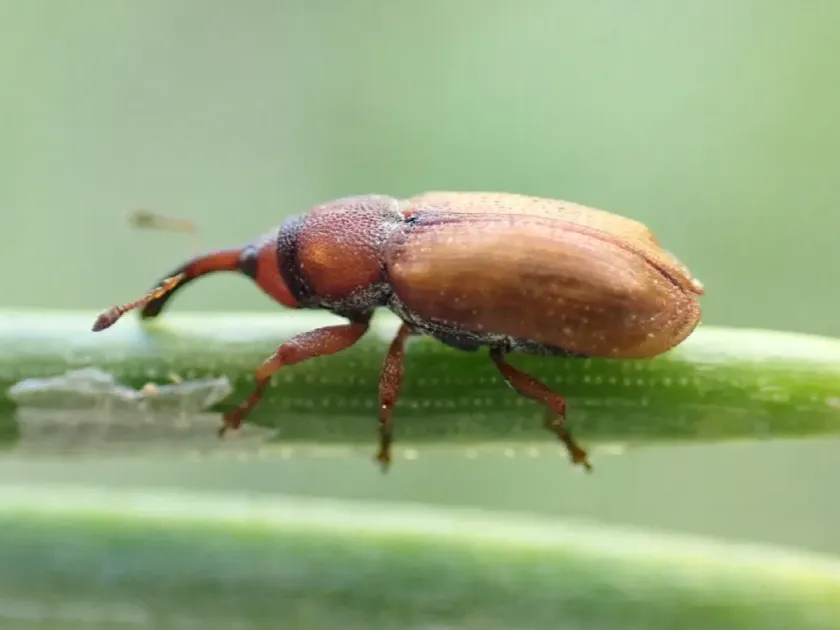
The pine weevil (Magdalis rufa) is a member of the Curculionidae family. These beetles typically measure between 3 and 5 mm in length and possess a reddish-brown coloration that helps them blend into pine bark.
The body is cylindrical and slightly convex, typical of the genus. They feature a distinct rostrum (snout) and elbowed antennae, which are key morphological characteristics used for identification.
The larvae are legless, curved, and white with a hardened brown head capsule. They spend their entire developmental phase hidden beneath the bark of host trees.
Found across Eurasian coniferous forests, this beetle prefers pine species, particularly the Scots pine. Its presence is often linked to forest health and specific environmental conditions.
Correct identification often involves examining the specific damage patterns on branches and the small emergence holes created by adult beetles during the spring season.
What it damages
Both adult beetles and larvae contribute to the damage caused by Magdalis rufa. They feed on different parts of the pine, leading to systemic stress within the host tree.
Adult beetles damage trees by feeding on needles and chewing small, shallow cavities into young shoots. This feeding habit weakens the plant and can cause the yellowing and premature shedding of needles.
Larvae feed beneath the bark by excavating meandering galleries. This activity disrupts the cambium layer and vascular system, hindering the tree's ability to transport nutrients and water effectively.
In young pine stands or nursery settings, this damage is particularly severe. It can lead to stunted growth, branch dieback, or, in extreme cases of infestation, the total death of the sapling.
Repeated attacks by this pest reduce the overall vitality of the stand, making the trees more susceptible to secondary infestations by bark beetles or wood-boring insects.
When it appears
The life cycle begins in spring, with adult beetles emerging in May or early June. This emergence coincides with the seasonal growth flush of pine trees.
After a period of supplemental feeding, the beetles mate and females deposit eggs into the bark of thin branches. This specific site selection provides the offspring with immediate access to food upon hatching.
Larvae spend the entire summer feeding and growing within the host plant tissues. They continue to excavate tunnels as they mature, deepening their impact on the tree's health.
Overwintering occurs as larvae inside the wood or under the bark. This strategy allows the pest to survive harsh winter temperatures, ensuring a quick start to the next generation in spring.
Under standard conditions, the lifecycle is annual. However, in cooler regions or unfavorable years, the development may be delayed, sometimes spanning up to two years.
Signs of infestation
Early warning signs include small, localized feeding wounds on young branches. These look like tiny punctures where the bark has been scraped away by the adult beetle.
The most visible symptom is the yellowing or browning of needles on specific twigs or branch tips. This "flagging" indicates that the larval tunnels have restricted the flow of sap.
Removing the bark of an affected branch reveals an intricate network of galleries packed with fine frass (wood dust). These tunnels are the definitive sign of larval infestation.
- Adult beetles observed on pine needles in late spring.
- Small, circular emergence holes in the bark of thin branches.
- Wilting and eventual dieback of young shoots.
- Presence of fine wood powder around the base of branches.
Overall thinning of the crown and visible resin flow at the points of damage are also common indicators of a Magdalis rufa infestation.
Control measures
Sanitation felling is the most effective management tool. Removing and destroying infested wood before the new generation of beetles emerges significantly reduces the local population.
Silvicultural practices focusing on stand health are vital. Ensuring optimal growing conditions prevents trees from becoming stressed and thus less attractive to the weevils.
In forest nurseries, chemical control using systemic or contact insecticides may be necessary during the peak emergence of adult beetles in the spring.
Trapping techniques, such as using fresh pine logs as bait, can help concentrate beetle activity. Once the beetles colonize the bait, the wood is burned to eliminate the brood.
Promoting natural biological control, such as protecting insectivorous birds and parasitic wasps, helps maintain lower population levels and preserves ecosystem balance.
Taxonomy
- Latin name
- Magdalis rufa
- Order
- Coleoptera (beetles)
- Family
- Curculionidae
- EPPO code
- MAGDRU
Discussion
No discussions yet — be the first.