
Magdalis lecontei
Magdalis lecontei
Description
How to identify
Magdalis lecontei is a species of snout beetle (weevil) belonging to the family Curculionidae, known for its association with coniferous trees.
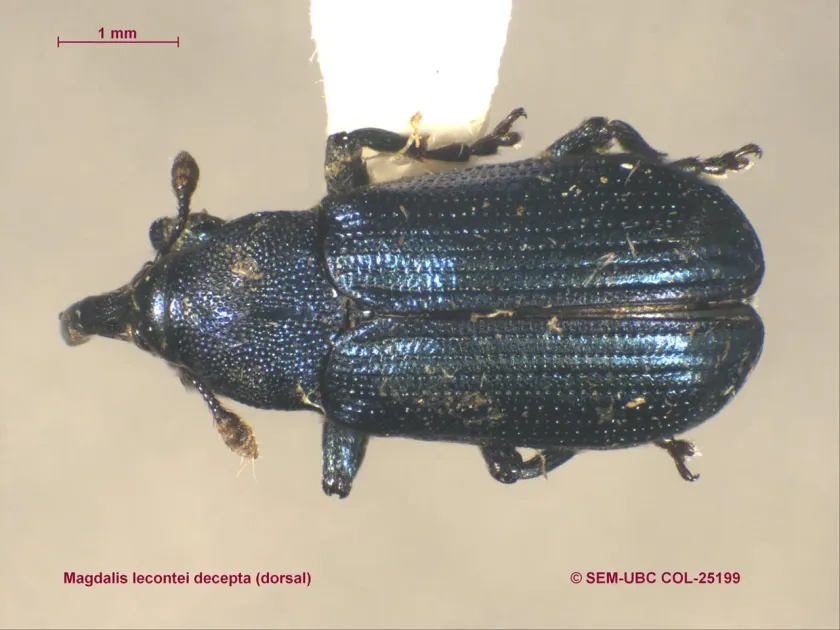
The adult insects are characterized by their elongated bodies and pronounced rostrum, typical of the Magdalis genus, with a dark, often black or deep brown coloration.
The larvae are apodous (legless), typically cream-colored with a sclerotized dark head capsule, specialized for boring into host plant tissues.
As members of the order Coleoptera, these insects possess hardened forewings (elytra) that protect their bodies and flight wings during movement.
Identification often involves examining the specific punctation and texture of the pronotum and elytra, which are diagnostic traits for this species within its family.
What it damages
Magdalis lecontei primarily targets trees within the genus Pinus (pine), making them a notable concern in silviculture and nursery management.
Adults cause damage by feeding on needles and tender young shoots, which can lead to stunted growth and physical deformation of the plant structure.
The larvae are responsible for more significant damage, as they create extensive galleries beneath the bark, disrupting the vascular flow of water and nutrients.
Severe infestations can result in the dieback of branches, weakened tree health, and even the eventual death of younger or highly stressed specimens.
By damaging the protective bark and inner wood, these weevils create entry points for secondary pathogens and other wood-boring insects, compounding the damage.
When it appears
Adult activity typically commences in the spring, coinciding with the rise in temperatures that initiates the growth season for host pine trees.
Mating and oviposition occur throughout the late spring and early summer, as females deposit eggs into crevices of the bark on suitable host trees.
The larval stage occupies the summer months, during which they feed extensively, slowly boring deeper into the branch tissues as they mature.
Overwintering occurs primarily at the larval stage within the wood, providing the insect with protection against low temperatures and environmental stressors.
The life cycle is closely synchronized with the phenology of the host trees, ensuring that emerging adults find fresh shoots for initial feeding.
Signs of infestation
Small, circular exit holes on the surface of the bark are a primary visual indicator that the life cycle has been completed and adults have emerged.
The presence of fine wood frass or boring dust, often found in branch crotches, is a clear sign that larvae are active beneath the bark layer.
Flagging, where specific branches or the crown of the tree turn yellow or brown, indicates localized vascular failure due to larval tunneling.
Visible thinning of the foliage or premature needle drop can be secondary symptoms of a heavy infestation affecting the overall tree vitality.
- Circular emergence holes
- Fine boring dust (frass)
- Branch dieback (flagging)
- Yellowing or fading foliage
- Bark patches showing feeding damage
Control measures
Sanitation practices, including the prompt pruning and destruction of infested branches, are the most effective non-chemical control methods available.
Promoting overall tree vigor through proper irrigation and balanced fertilization helps trees develop natural defenses against weevil colonization.
Targeted insecticide applications during the adult flight period can be used to disrupt the mating cycle and prevent the egg-laying process.
Integrated Pest Management (IPM) strategies, including the use of monitoring traps, are recommended to assess population levels before implementing control.
Regular inspections of nursery stock and forest plantations are crucial for detecting infestations early, allowing for localized treatments to limit spread.
Taxonomy
- Latin name
- Magdalis lecontei
- Order
- Coleoptera (beetles)
- Family
- Curculionidae
- EPPO code
- MAGDLE
Discussion
No discussions yet — be the first.