
Elm weevil
Magdalis frontalis
Description
How to identify
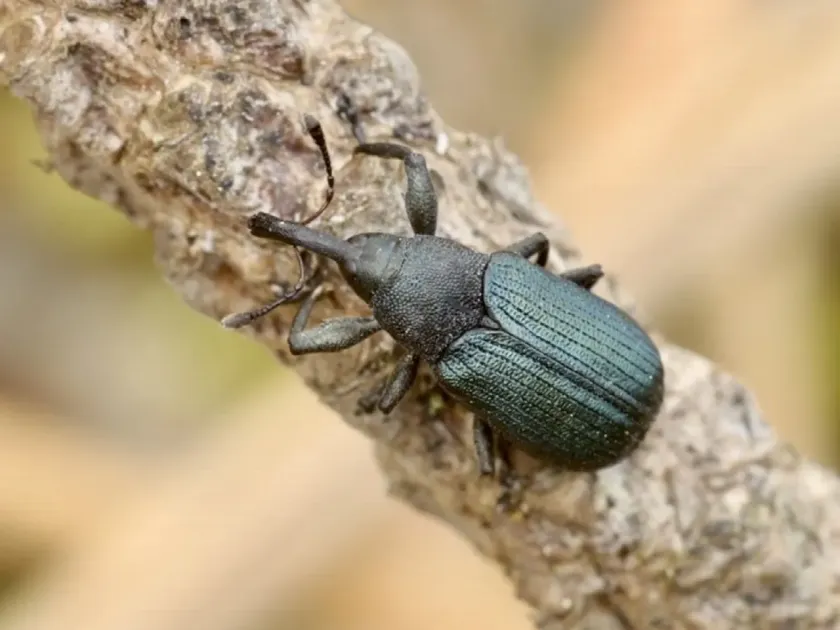
The elm weevil (Magdalis frontalis) is a member of the order Coleoptera and the family Curculionidae. These small beetles typically measure between 3 to 5 mm in length and possess the elongated rostrum characteristic of the weevil family.
The adult beetle is usually black or dark brown in color, with a body surface covered in fine punctures and sparse, inconspicuous pubescence. The larvae are white, legless, and have a distinct yellowish head, adapted for living and feeding beneath the bark of host trees.
This species is specifically associated with plants of the elm family (Ulmaceae). Adults are diurnal, preferring sunny spots within the canopy where they feed on young leaves and shoots prior to the reproductive phase.
Mating and oviposition occur on the trunks or branches of the host tree. The female creates small incisions in the bark to deposit her eggs, ensuring that the emerging larvae have immediate access to the nutrient-rich cambium and phloem layers.
The life cycle is closely linked to the environmental conditions and the physiological state of the host tree, with outbreaks often occurring in stands experiencing stress from drought or mechanical damage.
What it damages
The primary hosts of the elm weevil are various species of elm (Ulmus), including the smooth-leaved elm and the wych elm. This pest poses a significant threat to both young trees in nurseries and mature trees in urban parks and forests.
Both adults and larvae inflict damage, but the larval stage is the most destructive. Larvae excavate intricate, meandering galleries within the cambium, which disrupts the flow of nutrients and water throughout the trunk and branches.
As a result of larval activity, the tree's vascular system becomes impaired, often leading to the wilting and eventual death of individual branches or the entire tree. Severely infested trees are also highly susceptible to secondary pathogens, including fungi.
Adult beetles cause minor damage in the spring by feeding on buds and leaves, creating small holes. While less fatal than larval activity, this feeding weakens the tree's vigor early in the growing season.
Dense populations of the elm weevil can cause rapid decline in elm populations, particularly in environments where trees are already struggling due to urban stressors or adverse weather conditions.
When it appears
Adults emerge from their overwintering sites in the spring, typically during May, as temperatures rise to a level suitable for activity and subsequent reproduction.
The period of maturation feeding and mating lasts for several weeks. During this time, the beetles are highly mobile, searching for suitable hosts and locations to deposit their eggs on the bark.
Larval development occurs throughout the summer and autumn. As they grow, their galleries become more extensive, causing increasing damage to the tree's vital layers as they prepare for the upcoming winter season.
The species overwinters primarily in the larval stage, protected beneath the bark or within the outer sapwood, where they survive low temperatures before pupating in the following spring.
There is typically one generation per year. Under favorable conditions, the population can grow significantly, leading to increased infestation pressure on susceptible host trees in the vicinity.
Signs of infestation
The most distinctive sign of elm weevil presence is the appearance of small, circular exit holes on the bark, created by adult beetles as they emerge in the spring.
Feeding damage by adult beetles can be observed on leaves, which show multiple small holes, potentially leading to yellowing or premature leaf drop as the season progresses.
Peeling back a piece of damaged bark reveals complex, interlaced larval galleries often packed with frass (wood dust), confirming the presence of the pest.
The progressive wilting of the crown, starting from the upper canopy and moving downwards, is a strong indicator of vascular blockage caused by larval feeding in the trunk.
Frequent visits by woodpeckers to specific elm trees can also be a secondary indicator that the tree is heavily infested with boring larvae, such as those of the elm weevil.
Control measures
Proactive management of the elm weevil relies on maintaining tree vigor through good silvicultural practices, as healthy trees are better able to defend against larval infestation.
Sanitation is critical; infested trees or heavily damaged branches should be removed and destroyed before the new generation of adults emerges to prevent the spread of the population.
- Application of systemic insecticides during the spring flight period to prevent egg-laying.
- Use of trunk injections for targeted treatment of valuable ornamental specimens.
- Deployment of adhesive traps to monitor beetle activity and reduce the number of adults in local areas.
Systemic treatments are most effective if applied early, before the larvae have penetrated deep into the wood where the chemicals are less likely to reach them.
Regular inspections throughout the growing season are recommended to identify initial signs of infestation and allow for timely intervention before the pest can cause extensive damage.
Taxonomy
- Latin name
- Magdalis frontalis
- Order
- Coleoptera (beetles)
- Family
- Curculionidae
- EPPO code
- MAGDFR
Discussion
No discussions yet — be the first.