
Cherry bark beetle
Magdalis cerasi
Description
How to identify
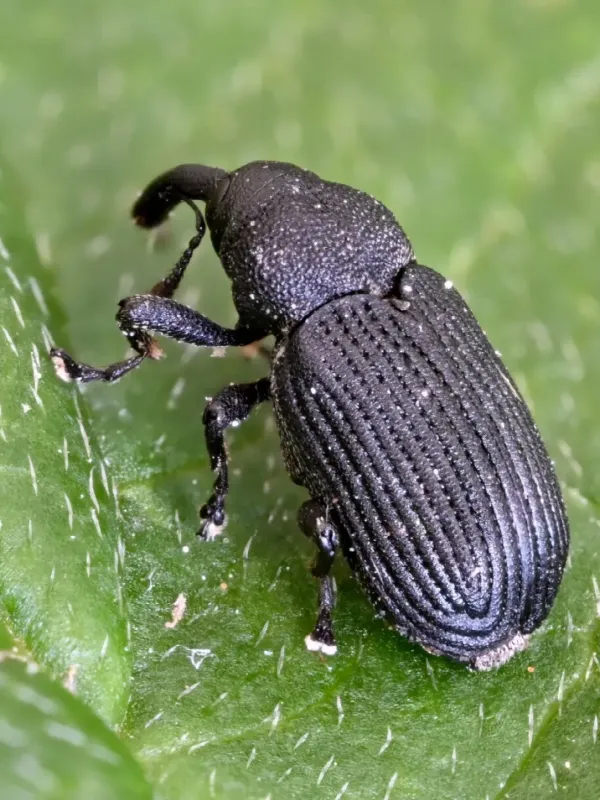
The cherry bark beetle (Magdalis cerasi) is a species of weevil (family Curculionidae) known for causing damage to stone fruit trees throughout its distribution range.
The adult beetle is small, typically measuring 3–5 mm in length, with a body color ranging from black to dark brown and a distinct snout characteristic of all weevils.
The larvae are white, legless, C-shaped grubs with a brownish head capsule. They spend their entire developmental period concealed beneath the bark of host trees.
This species has one generation per year. The insect overwinters as a mature larva inside the tunnels it has bored into the tree's inner bark and cambium layer.
In spring, the larvae pupate within their galleries. Upon emerging, the adult beetles bore circular exit holes through the bark to reach the surface for feeding.
What it damages
The primary hosts of this beetle include cherry, sweet cherry, plum, apricot, and sloe. Other orchard trees may occasionally be affected if they are in poor health.
Adult beetles cause damage by feeding on leaves and young shoots, resulting in small holes or skeletonization, which reduces the tree's photosynthetic capability.
The larvae are far more destructive, as they tunnel through the living tissue beneath the bark, disrupting the flow of sap and essential nutrients to the canopy.
Heavy infestations can lead to the death of individual branches or even the whole tree, especially if the tree is already stressed by drought or other pathogens.
Damage sites often become entry points for secondary infections, such as fungi or bacteria, which can cause cankers and other structural defects in the tree trunk.
When it appears
Adult beetles typically appear in orchards during the flowering period of host trees, usually between April and May, coinciding with rising spring temperatures.
The period of active feeding and mating lasts throughout May and June. During this time, adults are often found in the canopy on young, succulent foliage.
Females lay their eggs in small slits they carve into the thin bark of twigs and branches during early summer, ensuring the larvae have immediate access to food.
Once hatched, the larvae immediately bore into the bark, where they continue to develop throughout the summer and autumn months, preparing for the winter diapause.
Effective monitoring should be intensified during the spring months, as this is when adult beetles are active and vulnerable to chemical or mechanical controls.
Signs of infestation
The most visible sign of an infestation is the presence of tiny, circular exit holes in the bark, which look as if they were made by a very fine drill bit.
Leaves showing irregular holes or early signs of wilting in late spring can indicate adult beetle feeding or damage to the vascular system of the branch.
Bark surface irregularities, such as cracking or dark, sunken patches, often reveal the presence of larval tunnels underneath during inspection of the trunk.
Fine, brown frass (bore dust) may be found around the entry points or at the base of the tree, indicating active larval feeding within the wooden tissues.
Trees that appear weak, with thinning canopies or prematurely yellowing leaves, should be thoroughly inspected for these signs to assess the severity of the pest load.
Control measures
The most effective cultural control is rigorous sanitation, which involves pruning and burning branches showing signs of exit holes or necrosis to destroy the larvae.
Maintaining tree vigor through proper fertilization and watering is crucial, as healthy trees are better able to withstand or recover from low-level infestations.
Applying white lime wash to the trunks in early spring can deter females from laying eggs in the bark, providing a simple yet effective barrier.
Chemical control with systemic or contact insecticides should be timed to match the adult emergence period, typically just before or after petal fall.
Biological control, such as encouraging insectivorous birds and parasitic wasps in the orchard, can help keep the population of these weevils at a manageable level.
Taxonomy
- Latin name
- Magdalis cerasi
- Order
- Coleoptera (beetles)
- Family
- Curculionidae
- EPPO code
- MAGDCE
Discussion
No discussions yet — be the first.