
Magdalis carbonaria
Magdalis carbonaria
Description
How to identify
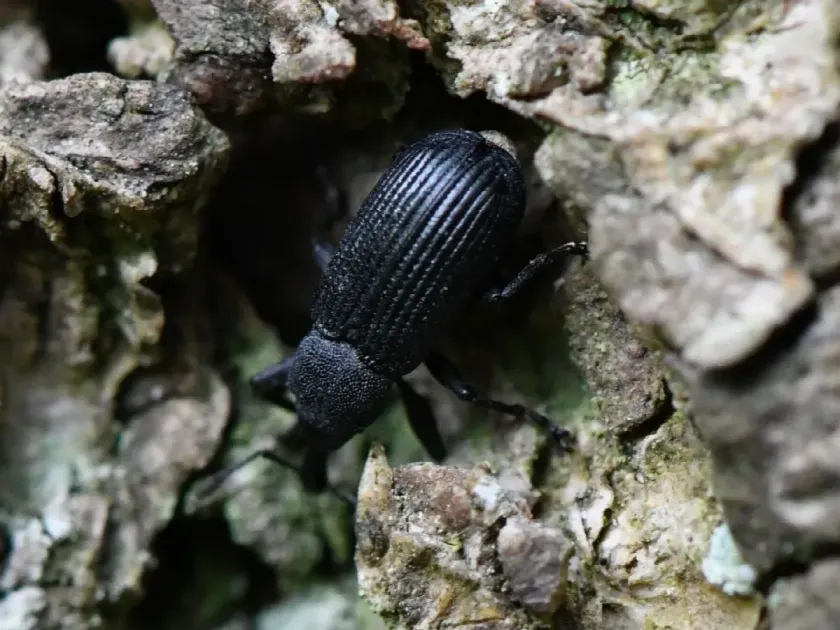
Magdalis carbonaria is a species of weevil belonging to the Curculionidae family, order Coleoptera. The adult beetle is characterized by its uniform coal-black coloration with a slight metallic luster, reaching a length of 3 to 5 mm.
Adults possess a distinct rostrum (snout) typical of weevils. The elytra (wing covers) display prominent longitudinal striae composed of small punctures, giving the beetle a rugged, textured appearance upon closer inspection.
The larvae are apodous (legless), creamy-white to yellowish in color, and feature a darker head capsule. They spend their entire development phase hidden beneath the bark or within the wood of the host plant.
Pupae are soft and pale, developing within specialized cells carved out by the larvae just before pupation. These cells are situated right beneath the bark, providing protection against environmental fluctuations.
This beetle is an oligophagous species, primarily attacking specific woody plants, which dictates its distribution and prevalence within forest edges and orchard environments.
What it damages
The primary damage is caused by the larvae, which feed on the cambium and phloem layers under the bark. Their tunneling activities disrupt the vascular flow, leading to the wilting and eventual death of branches or, in severe cases, the entire tree.
Common hosts include pome fruit trees like apples and pears. Additionally, the pest is known to impact various hardwood trees such as birch and alder, which can serve as reservoirs for infestations near orchards.
Adult beetles contribute to damage by feeding on buds and young leaves, creating small, irregular holes. While this feeding behavior is generally less lethal than larval activity, it can weaken the tree during the critical early spring growth phase.
Young trees are particularly susceptible to severe injury. When larvae girdle the trunk or main branches by tunneling around the circumference, the supply of nutrients is completely cut off.
In high populations, the collective activity of this pest can lead to significant economic losses, reducing fruit yields and shortening the lifespan of affected plantations.
When it appears
Adults emerge from their overwintering sites in early spring, typically correlating with the bud-break phase of host trees. This timing allows them to feed on fresh plant tissues before mating.
Following a period of supplementary feeding, females deposit eggs into cracks or specially prepared punctures in the bark of thin branches, ensuring the larvae have immediate access to food upon hatching.
Larvae hatch and immediately bore into the bark. They spend the entire summer feeding and developing within the cambium, creating winding galleries that are characteristic of this species.
Pupation usually occurs by late summer. The new generation of adults often remains within their pupal cells throughout the autumn and winter, emerging only when temperatures rise the following spring.
This single-generation life cycle means that effective management must focus on the spring emergence period to prevent the next generation from establishing itself under the bark.
Signs of infestation
Early symptoms of infestation include the wilting and premature browning of leaves on specific branches, which may look as though they have been scorched by heat or fire.
Small, circular exit holes in the bark indicate where mature beetles have emerged. Near these holes, one might notice fine, powdery frass (boring dust) accumulating on the bark surface.
If the bark is carefully peeled back on a suspect branch, the winding tunnels packed with frass become clearly visible, confirming the presence of Magdalis carbonaria larvae.
General tree decline, reduced annual shoot growth, and dieback of the crown are often observed in heavily infested trees, pointing to a long-term disruption of the tree's vascular system.
In the spring, observant growers may spot the adult beetles themselves resting motionless on the branches, especially during overcast days, which is a prime time for visual monitoring.
Control measures
The most effective management strategy is the physical removal and destruction of infested branches. Pruning infected wood and burning it helps significantly reduce the population of the pest.
Maintaining high orchard hygiene and vigor is crucial. Proper irrigation, fertilization, and site maintenance improve tree health, making them less attractive to the weevils for egg-laying.
Chemical control can be implemented by applying insecticides during the adult emergence phase in early spring, targeting the beetles before they have a chance to lay eggs.
On smaller scales, manual collection of beetles in the morning when they are less active can be an environmentally friendly alternative to extensive chemical applications.
- Sanitary pruning of infested wood.
- Timely application of contact insecticides.
- Monitoring for exit holes and frass.
- Proper fertilization to encourage rapid tissue healing.
Taxonomy
- Latin name
- Magdalis carbonaria
- Order
- Coleoptera (beetles)
- Family
- Curculionidae
- EPPO code
- MAGDCA
Discussion
No discussions yet — be the first.