
Magdalis barbicornis
Magdalis barbicornis
Description
How to identify
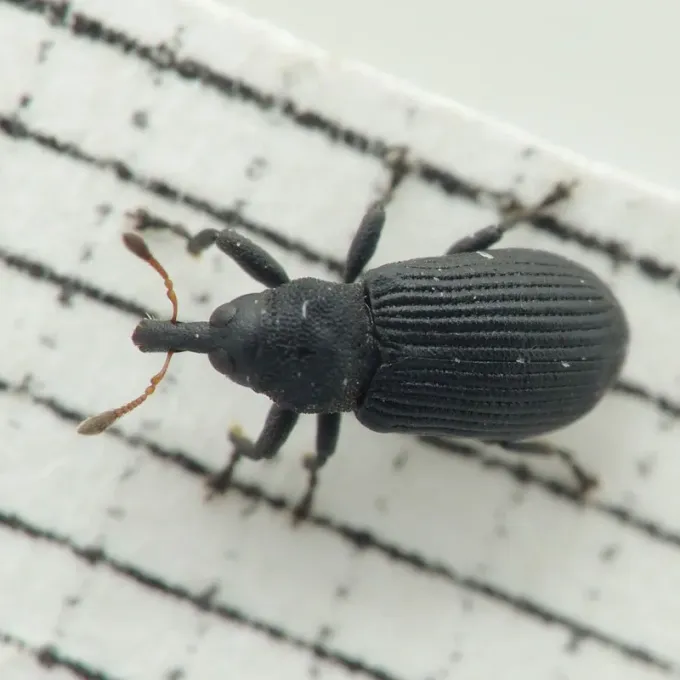
Magdalis barbicornis is a species of snout beetle belonging to the Curculionidae family within the order Coleoptera. Adult beetles typically measure 3–5 mm in length and feature a characteristic elongated rostrum or snout.
The insect body is usually dark, ranging from deep brown to black, often exhibiting a slight metallic luster. Males of this species are distinguished by longer and more pronounced antennae compared to the females.
The larvae are C-shaped, legless, and white with a distinct brown head. Because they develop within the wood and under the bark, they are rarely seen by gardeners during the early stages of their development.
The life cycle involves complete metamorphosis, including egg, larva, pupa, and adult stages. The insect typically has one generation per year, overwintering primarily as a larva inside the host plant's wood.
Adult beetles emerge in early spring, coinciding with the budding and flowering of fruit trees. They actively feed on tender new foliage and buds before initiating the mating process.
What it damages
This pest targets various fruit trees within the Rosaceae family, most notably apple, pear, plum, cherry, and hawthorn trees.
The larvae cause the most significant damage by tunneling into the branches and trunks. These galleries disrupt the flow of sap and nutrients, which eventually leads to the wilting and death of affected branches.
Adult beetles feed on young leaves, buds, and green bark, which can weaken the tree's overall vigor and reduce the yield potential for the growing season.
Young saplings in nurseries are at particular risk; larval galleries can girdle the tree, causing severe deformities or the death of the entire plant.
Infested trees are also prone to secondary attacks by other pests and wood-rotting fungi, which often enter through the exit holes created by the beetles.
Signs of infestation
A primary indicator of infestation is the presence of tiny, circular exit holes on the bark, resembling holes made by a needle or thin pin.
In spring, gardeners may observe irregular feeding damage on new leaves and buds. Damaged areas often exhibit localized necrosis or browning of tissues.
Premature drying of specific branches is a strong sign of internal larval activity. When the bark is removed, winding galleries packed with frass (wood dust) are usually visible.
Reduced annual growth and sparse foliage on certain parts of the canopy often suggest that the tree's vascular system has been compromised by boring larvae.
Visible scars or slight swelling on the bark may indicate where eggs were deposited by the female beetle, serving as an early warning for potential infestation.
Control measures
Sanitation is the most critical control measure. Pruning and destroying infested branches before the new generation of adults emerges helps break the life cycle of the beetle.
Maintaining high horticultural standards, including proper fertilization and irrigation, is essential. Healthy trees are significantly more resistant to pest colonization.
Chemical control using systemic insecticides can be effective if applied during the adult emergence period, typically right before or during the green tip stage of the tree buds.
Using sticky or mechanical trapping bands on the trunks of fruit trees can help monitor and reduce the movement of adult beetles, minimizing their ability to spread through the orchard.
Implementing an integrated pest management strategy that includes monitoring for population spikes ensures timely intervention and better protection for fruit-bearing trees.
Taxonomy
- Latin name
- Magdalis barbicornis
- Order
- Coleoptera (beetles)
- Family
- Curculionidae
- EPPO code
- MAGDBA
Discussion
No discussions yet — be the first.