
Magdalis
Magdalis
Description
How to identify
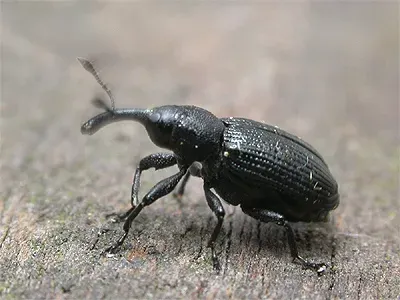
The genus Magdalis belongs to the Curculionidae family of beetles, commonly known as weevils. They are relatively small insects, typically measuring 3–6 mm in length.
The most distinctive feature of these beetles is their well-developed snout or rostrum, which is characteristic of the weevil group.
The body color usually ranges from black to brown or metallic bronze, providing camouflage against the bark of host trees.
Larvae are legless, C-shaped grubs, typically whitish with a small, darker brown head capsule. They are exclusively wood-boring and live in hidden galleries.
Adults are capable of flight and are generally more active during warm, sunny days, which helps them colonize new trees in orchards or forests.
What it damages
Magdalis species primarily infest various fruit and deciduous trees, including apple, pear, and plum, as well as some coniferous species.
The larval stage causes the most severe damage by tunneling under the bark and into the wood, effectively severing nutrient flow within the branches.
Adults feed on leaf buds, young shoots, and bark, which can cause significant stress to the tree, especially during the early growing season.
Infested branches often exhibit dieback, and in cases of heavy infestation, young trees may suffer from stunted growth or complete death.
The damage often creates entry points for other opportunistic pathogens and secondary pests, such as bark beetles, leading to further tree decline.
When it appears
Adults emerge from their overwintering sites in the early spring, coinciding with the swelling of fruit buds and the beginning of sap flow.
The peak flight and mating season usually lasts from late spring to early summer, depending on local climate conditions and tree species.
Eggs are laid in small incisions made in the bark of thin branches or twigs, where the larvae will later hatch and develop.
Larvae remain inside their tunnels throughout the summer and autumn, preparing to overwinter within the host plant tissue.
Pupation occurs inside the wood in the following spring, completing the cycle as the new generation of adults emerges.
Signs of infestation
The presence of Magdalis is often indicated by small, circular exit holes on the bark of twigs, which look like pinpricks.
One of the clearest signs is the sudden wilting or browning of terminal shoots, often mistaken for other diseases or environmental stress.
Removing a piece of bark from a suspected branch will reveal the characteristic serpentine tunnels packed with fine wood dust, known as frass.
Affected branches are often brittle and break easily under slight pressure, which is a common observation during late spring inspections.
- Dieback of twigs and small branches.
- Pin-sized exit holes on bark.
- Accumulation of wood dust (frass).
- Reduced vigor and leaf chlorosis on affected branches.
Control measures
Pruning and destroying infested branches is the most effective cultural method to reduce the local population of the pest.
Applying contact or systemic insecticides during the peak activity of adults in spring can significantly prevent egg-laying and larval damage.
Maintaining optimal tree health through proper fertilization and watering helps trees withstand minor infestations and recover faster.
Monitoring for adults during the flowering period is crucial for timing chemical applications and ensuring effective management in commercial orchards.
Avoid leaving pruned wood or debris in the orchard, as this provides a breeding ground for these weevils to survive and multiply.
Taxonomy
- Latin name
- Magdalis
- Order
- Coleoptera (beetles)
- Family
- Curculionidae
- EPPO code
- MAGDSP
Discussion
No discussions yet — be the first.