
Sengi
Macroscelides
Description
How to identify
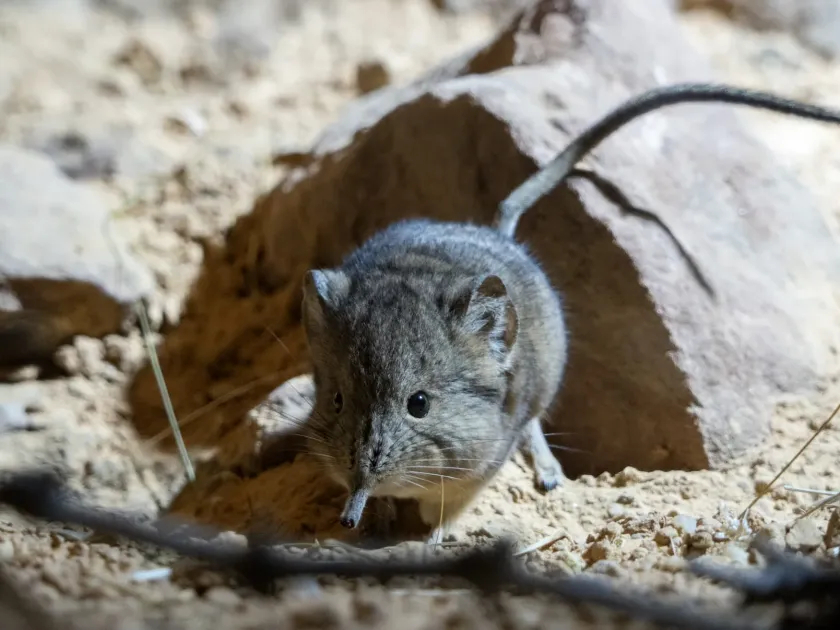
Sengi, commonly known as elephant shrews, belong to the family Macroscelididae and are small mammals distinguished by their long, flexible, trunk-like noses.
They are taxonomically classified in the order Macroscelidea, which is entirely separate from the rodent order, reflecting their unique evolutionary path and distinct anatomy.
These animals are characterized by their strong, elongated hind limbs, which enable them to move quickly across the ground with agile, jumping movements.
They typically weigh between 50 and 500 grams and vary in length, often reaching up to 30 centimeters, depending on the specific species and their habitat.
Identifying them in the field involves looking for their unique footprints and observing their swift, darting movements, often during daylight or crepuscular hours.
What it damages
Sengis are not considered agricultural pests because their primary food sources are insects, spiders, and other small invertebrates found in the topsoil.
They do not target crop roots, stems, or leaves, making them neutral or even beneficial members of the agricultural ecosystem rather than threats to production.
While they may occasionally consume fallen seeds or grains, such behavior is insignificant and does not lead to measurable crop loss or economic damage.
Their role in the ecosystem as insect predators helps keep populations of potentially harmful invertebrate species in check, acting as natural biological control agents.
Agronomists generally view the presence of sengis as a sign of an ecological balance rather than a problem that requires remediation or pest control.
When it appears
Sengis are active throughout the year, as they do not hibernate and tend to maintain a consistent level of activity regardless of the season.
Their activity levels are more closely linked to the availability of invertebrate prey, which tends to increase during warmer or wetter months, driving more frequent foraging.
During extreme weather conditions, such as severe droughts, they may reduce their foraging distance and stay closer to their established burrows or rock crevices.
Breeding cycles, which can be triggered by seasonal changes, lead to temporary increases in territory monitoring and foraging activity to meet the energy demands of reproduction.
Since they are territorial, their presence remains stable over time, and they rarely show seasonal migratory behavior that would bring them into new farming areas.
Signs of infestation
The most common sign of their presence is the appearance of distinctively shaped tracks on soft or sandy soil, showing the clear impressions of their long hind feet.
Small, shallow conical pits in the ground indicate areas where they have been foraging for insects, using their sensitive noses to probe beneath the surface layer.
Their burrows are typically simple tunnels under rocks or thickets, and finding such structures without corresponding damage to crop plants confirms their presence.
The lack of characteristic rodent-like gnawing marks on plant parts or stored grains is a key diagnostic feature distinguishing them from true agricultural pests.
Observation of the animals themselves is rare due to their skittish nature, but motion-activated camera traps often capture them patrolling their home ranges.
Control measures
There are no established pest control protocols for sengis because they are not harmful to agricultural productivity and have no negative impact on crop health.
The use of chemical pesticides or rodenticides for managing sengis is strictly discouraged, as it can cause indiscriminate harm to beneficial local wildlife.
If their activity creates minor disruptions in garden or field infrastructure, simple non-lethal measures such as clearing debris or modifying habitat patches are sufficient to deter them.
Maintaining high levels of biodiversity on farmland is recommended, as sengis contribute to the healthy functioning of the ecosystem through their insectivorous diet.
Strategic soil management and weed control practices effectively keep agricultural land managed without ever needing to target these harmless small mammals.
Taxonomy
- Latin name
- Macroscelides
- Family
- Macroscelidae
- EPPO code
- MAKRSP
Discussion
No discussions yet — be the first.