
Avocado weevil
Macrocopturus aguacatae
Description
How to identify
The avocado weevil (Macrocopturus aguacatae) is a member of the Curculionidae family within the order Coleoptera. It is a small, specialized insect that has evolved alongside the avocado tree (Persea americana).
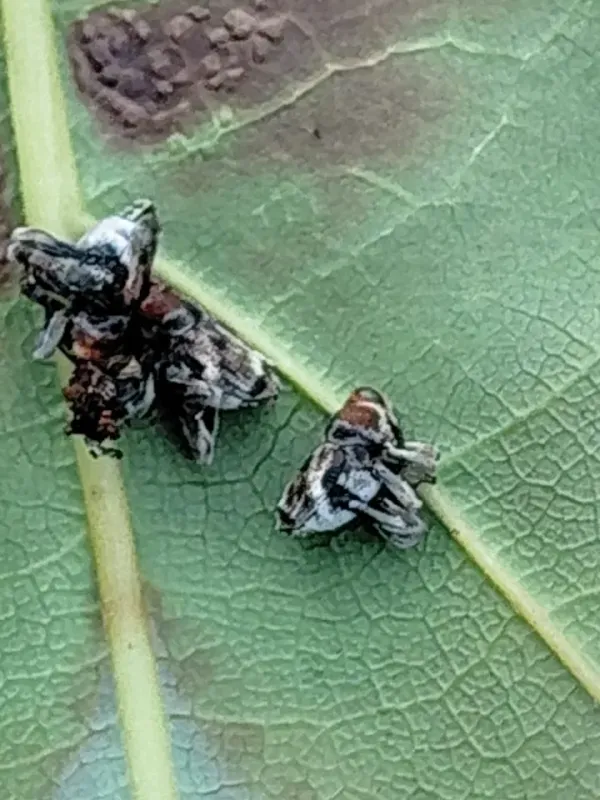
Adults typically possess a cryptic, mottled color pattern, providing camouflage against the tree bark. Their body shape is typical of the weevil family, characterized by a long, pronounced snout used for feeding and oviposition.
The life cycle involves four distinct stages: egg, larva, pupa, and adult. The development process is entirely dependent on the host plant, with larvae being the primary stage responsible for internal tissue damage.
Identifying this pest in the field requires close inspection of stems, branches, and fruits, as the insects are small and tend to stay hidden in crevices or deep inside plant tissue.
As a specialized pest, M. aguacatae presents a significant phytosanitary risk in regions where avocados are produced, often requiring strict quarantine protocols to prevent its spread.
What it damages
The avocado weevil feeds primarily on the stems, branches, and fruits of the avocado tree. The larvae are the most damaging stage, as they bore deep tunnels into the host tissue.
Tunneling in branches disrupts the flow of water and nutrients, which often results in the dieback of branches, weakened tree vigor, and eventual yield loss.
When the larvae infest the fruit, they burrow through the flesh, creating galleries that spoil the fruit and render it entirely unmarketable for both local and export consumption.
Infested trees show reduced photosynthetic capacity due to premature leaf drop, and heavy infestations can severely stunt the growth of young trees in an orchard.
Additionally, the physical damage caused by the weevils creates entry points for secondary pathogens, such as fungi and bacteria, which can lead to further tissue decay and tree decline.
Signs of infestation
The first visual signs of an infestation include tiny circular exit or entry holes on the surface of the branches or fruit skin, created by the adults and larvae.
Exudation of sap or resin around the penetration points is a common defensive response by the tree, leaving visible, hardened droplets on the bark.
Yellowing, wilting, and sudden leaf fall on individual branches are clear indicators that the vascular system of the branch has been compromised by larval tunneling.
The presence of 'frass' or wood-like debris near the feeding sites on branches or the surface of the fruit is a diagnostic sign of active larval feeding.
Widespread premature drop of young, damaged fruits, showing small black punctures, indicates that the weevil population in the orchard has reached an economic threshold.
Control measures
Management of the avocado weevil should focus on Integrated Pest Management (IPM) practices to reduce reliance on heavy chemical interventions.
Sanitation is paramount: all fallen fruit must be collected and disposed of correctly, as they provide a continuous breeding ground for the weevil population.
Pruning out and burning infested branches helps reduce the internal larval population and prevents the further spread of the pest within the orchard.
Chemical control using systemic or contact insecticides is effective if timed correctly with the peak emergence periods of the adult weevils.
Biological control methods, such as encouraging natural predators and parasitoids, are essential components of long-term sustainable management in avocado production.
Taxonomy
- Latin name
- Macrocopturus aguacatae
- Order
- Coleoptera (beetles)
- Family
- Curculionidae
- EPPO code
- COPUAG
Discussion
No discussions yet — be the first.